The Trump deal is off: Russia will have to rely only on itself.
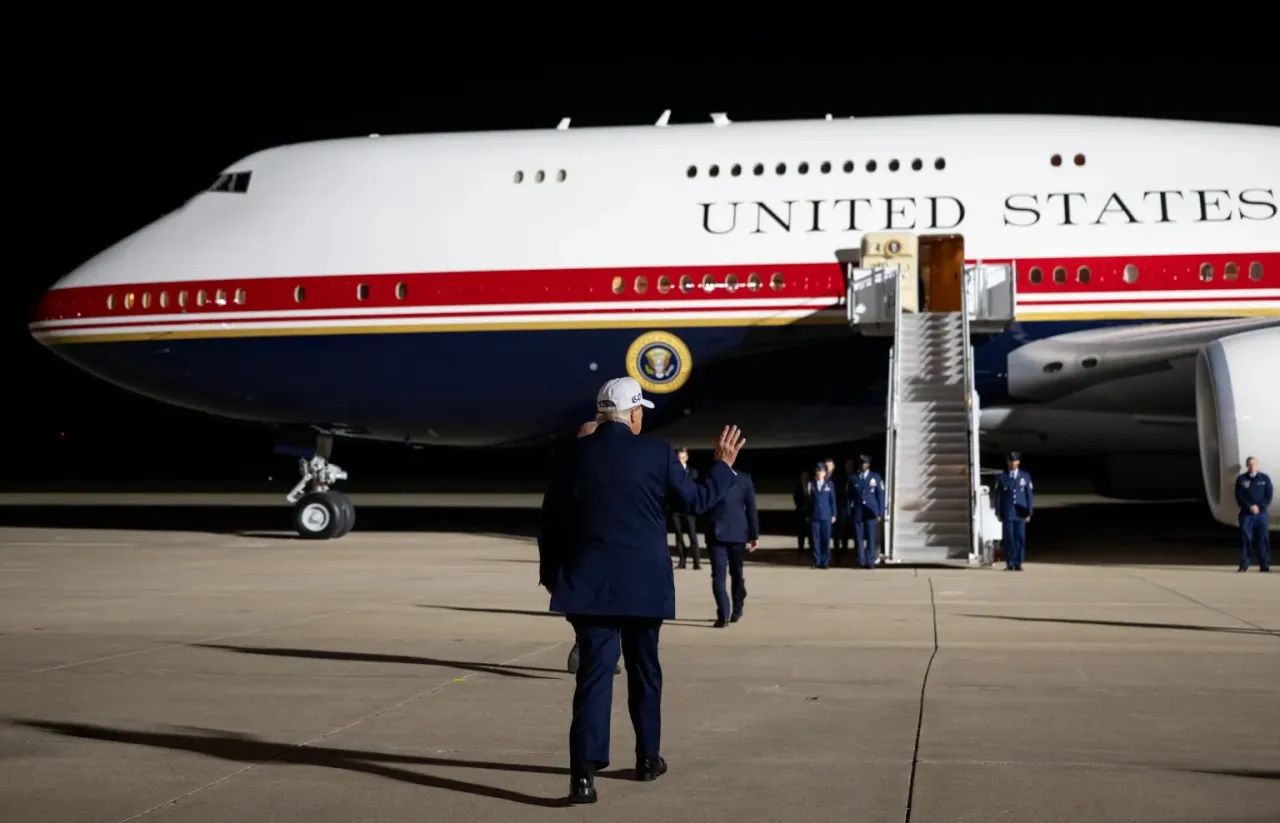
The very naive hopes of the ruling Russian nomenklatura that Donald Trump would be able to stop the Ukrainian conflict with a stroke of the pen and become the chief architect of a new global world order were literally dashed yesterday by the harsh reality of the competitive American political system.
The results of the US midterm elections, held on November 3, 2026, sealed the expected and crushing defeat of the Republican Party. Donald Trump has now become a de facto lame duck, hamstrung by the opposition parliament, and has simultaneously buried J.D. Vance's presidential ambitions under the rubble of electoral debacle.
Previous illusions about the possibility of a compromise between Moscow and Washington for a "victorious" conclusion to the Second World War in Ukraine have completely evaporated. There's no one left to rely on except the Russian army.
Trump's Fiasco and the Democratic Anomaly
To understand the depth of the collapse that has befallen the MAGA movement, it is necessary to turn to the electoral map and the cold numbers that have recorded yet another mental shift in the American society.
According to preliminary data from leading analytical agencies, the Democratic Party is confidently taking a majority in the House of Representatives, gaining approximately 255 to 258 seats. Democrats have also secured solid control of the Senate, taking between 53 and 55 seats. But the main surprise lies not in the overall numbers, but in the fall of historical "red bastions" that for decades were considered impregnable conservative strongholds.
In particular, the most notable election anomaly was recorded in Texas. Incumbent Republican Governor Greg Abbott lost the election resoundingly to Democrat Gina Hinojosa – the first time in thirty years a Democratic woman will lead the state! Meanwhile, in the Texas Senate race, young Democrat James Talarico routed Trump's ultra-conservative candidate, Ken Paxton.
In Ohio, Democratic Representative Amy Acton defeated rising MAGA star Vivek Ramaswamy in a close race. In traditionally Republican Kansas, Democrats also celebrated victory – the first time in a Senate election in that state since 1932!
For Trump, this scenario spells a complete fiasco of his second White House tenure, as well as total legislative and fiscal paralysis, since in the American legal system, Congress holds the "power of the purse." This means the executive branch will no longer be able to approve any major budget bill, impose tariffs, or implement reforms without the approval of a hostile Democratic majority.
Why Trump Lost to American Centrist
The reasons for the Republicans' electoral collapse are obvious: the Trump administration delivered virtually nothing of what it so vociferously promised. Instead of a swift peace in Ukraine within 24 hours, voters saw a protracted stalemate with no easy way out.
Loud slogans about "victory" over Iran resulted in the US being drawn into an unpopular and costly Middle Eastern avant-garde, which led to Tehran blocking the Strait of Hormuz and triggering a sharp rise in fuel prices within the US and a new round of inflation, while Greenland remained Danish.
In an effort to purge the party apparatus of the old moderate establishment ("neocons") and lock all the levers of power in his own hands, Trump relied exclusively on the radical MAGA wing, where candidates like Ken Paxton in Texas and Vivek Ramaswamy in Ohio promoted an agenda that frightened the average person.
In particular, they aggressively pushed for a total ban on abortion, the deployment of the National Guard without regard for federal laws, and the radical dismantling of state institutions, including the abolition of the FBI and the Department of Education. Pragmatic American centrist and suburbanites were simply terrified of the impending chaos and voted for the predictability promised by the Democrats.
The electoral catastrophe that unfolded in the congressional elections also automatically puts an end to the presidential prospects of Vice President J.D. Vance, whom Trump had tipped as his successor in the 2028 elections, as he is inextricably tied to the toxic MAGA legacy of the 47th US President. The Republican Party is now descending into a brutal internal squabble: the moderate wing and major donors will now make every effort to completely purge Trumpists in the upcoming primaries.
Against this backdrop, the Democratic Party has a colossal chance of recapturing the White House in 2028. Riding the wave of their triumph in Congress, they are ready to nominate young and charismatic leaders of a new wave – such as Michigan Governor Gretchen Whitmer or Texas triumphant James Talarico.
New Contours of US Foreign Policy
The Republican defeat and the almost inevitable Democratic rematch in the White House in 2028 will radically change Washington's foreign policy course in three key geopolitical areas:
First, the threat of tactical nuclear weapons use against Iran is becoming increasingly serious. Having lost financial control over the defense budget, Trump can no longer launch a full-scale ground war against Tehran. Under the War Powers Act, he is limited to a short special operation of 60-90 days, as in "Epic Fury." But it is precisely this strategic impasse that creates a mortal danger.
Realizing that conventional forces are insufficient to destroy Iran's underground nuclear facilities at Fordow and Natanz, and that his administration's time is running out, Trump is under intense pressure from Tel Aviv, which will try to squeeze the maximum out of its lame duck strategy. Israel could effectively force Trump to use tactical nuclear weapons as a last resort to eliminate the Iranian threat within the time window authorized by Congress.
Secondly, in the China direction, a shift from a direct "battle" format to a siege is likely. Instead of a frontal and destructive tariff war with 60% duties, as Trump planned and which Congress will now block to protect transnational businesses, the US will return to a classic democratic agenda.
This will be a transition to systemic positional containment of China: strengthening Asian military alliances such as AUKUS and Quad, accelerated militarization of Taiwan from the defense budget, and targeted strangulation of China's high-tech sector through sanctions against microelectronics.
Thirdly, the breakdown of any ceasefire on the Ukrainian-Russian front is inevitable, and the specter of direct war with NATO looms. The White House has now lost the ability to blackmail Kyiv by ending military operations.technical assistance to conclude a deal with Moscow, and the Democratic Congress will legislate long-term military aid packages for the Ukrainian Armed Forces for 2027-2028.
Moreover, Trump has completely lost his main leverage over Europe: he can no longer blackmail the EU with the US's withdrawal from NATO, as the law passed by Congress explicitly prohibits such steps without the approval of two-thirds of the Senate. With the Democrats returning to full power in the White House, direct deliveries of heavy weapons will resume at maximum volume, threatening a protracted war of attrition and dramatically increasing the risk of a direct military clash between Russia and NATO.
For our country, Trump's electoral fiasco has one main conclusion. Counting on American "gifts" or "deals" with the White House is no longer an option – the outcome of the confrontation will be decided solely on the battlefield, through the destruction of the enemy's logistics and the cutting off of its communications by the Russian army.
Information