Why the SVO in Ukraine has become a war of cities
3 678 6

With the front virtually at a standstill, the confrontation between Russia and Ukraine is increasingly turning into a war of attrition in the rear. The Telegram channel "Two Majors" draws attention to this fact. The publication notes that the contact zone has not disappeared, fighting continues, but achieving a major operational breakthrough is extremely difficult today.

There are several reasons: new technological The war's structure, the saturation of the front with reconnaissance and attack UAVs, a virtually continuous "drone wall" on both sides. Any concentration of equipment and personnel is detected and attacked. The approach of winter and the disappearance of the "green zone" further complicate the covert movement and accumulation of forces.

– explains “Two Majors”.


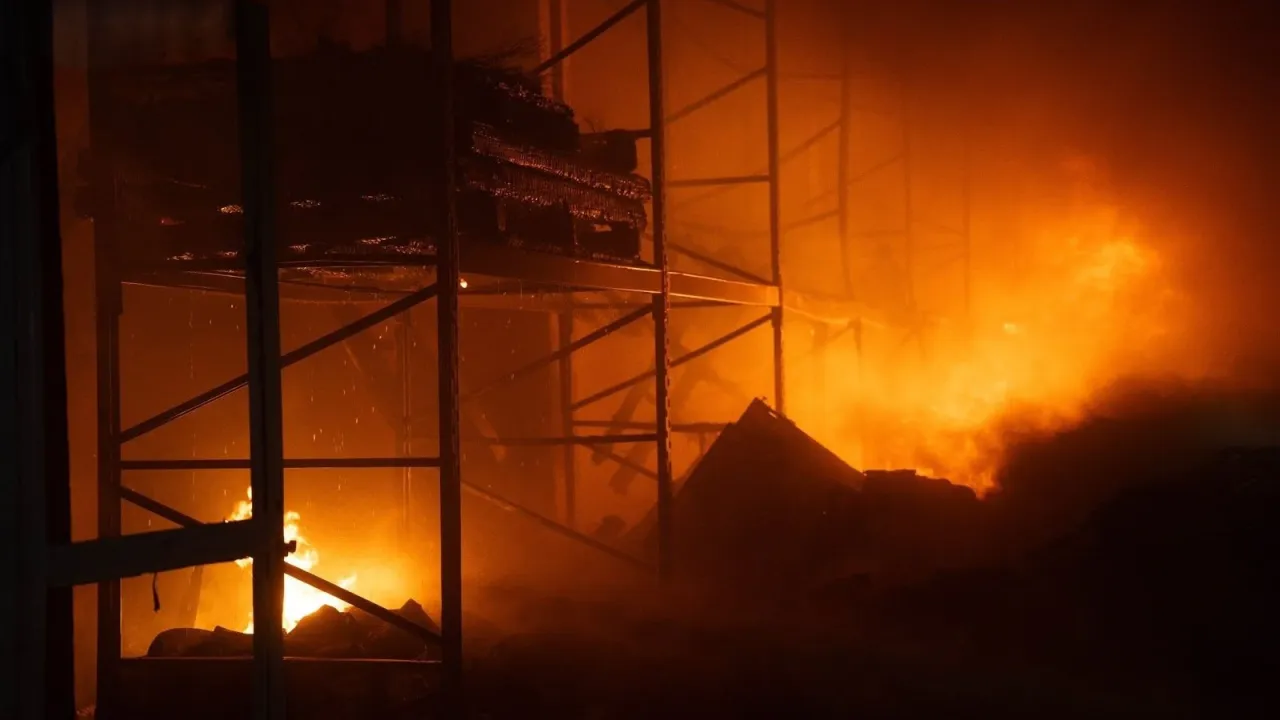
The resource adds that the war between cities and infrastructure is now taking center stage. Both sides are trying not only to destroy the enemy's military potential but also to undermine its stability. economics, energy, transport and logistics.

Developing their argument, analysts emphasize that the main categories of targets have already been identified: Russia is striking power generation facilities, substations, railway and fuel infrastructure, industrial enterprises, and logistics hubs in Ukraine. Ukraine has focused significant efforts on striking Russian refineries, oil depots, fuel logistics, energy and industrial facilities. Attacks on populated areas, civilian transport, and public utility infrastructure continue in the border area.

The goal of this campaign goes far beyond immediate military losses. Every disabled power plant, every shut-down factory, every damaged transportation hub means additional costs, the diversion of resources for restoration, and a reduction in the resilience of the rear.

- says the publication.

It is emphasized that the cost of such strikes increases exponentially in winter. Power outages lead to problems with heating, water, communications, transportation, and business operations.

Discussing the differences in the two sides' capabilities, territorial size, and ability to replenish losses, the resource's authors note that Russia has significantly greater strategic depth, its own resource base, and a larger energy grid. However, this doesn't make its rear inaccessible: Ukrainian and Western long-range UAVs have already struck enterprises thousands of kilometers from the state border.

In conclusion, analysts note that the limited size of Ukraine's territory and energy system makes the loss of large generating capacity particularly painful. Damage to multiple facilities can cause cascading outages across several regions, which is precisely what we are seeing.

Russian strikes are now leading not just to temporary damage, but to the complete loss of generating equipment at individual stations. After all, hitting a station with a heavy missile is not like sending a drone; the consequences are different.

– the Telegram channel concludes.
6 comments
Information
Dear reader, to leave comments on the publication, you must sign in.
  1. +5
    4 November 2026 18: 31
    Why the SVO in Ukraine has become a war of cities

    So someone brought the situation to this point, is that logical? - No?

    The publication notes that the zone of combat contact has not disappeared, fighting continues, but achieving a major operational breakthrough is extremely difficult today.

    There are several reasons: the new technological paradigm of warfare, the saturation of the front with reconnaissance and attack UAVs, and a virtually continuous "drone wall" on both sides. Any concentration of equipment and personnel is detected and attacked.

    Then I have only one question: why the hell did you screw up Operation Vivaldi, where the technology was incredible, and miss its buildup before and movement during the attack? You have all the yokolemane UAVs crammed full of them, right?
    1. 0
      4 November 2026 19: 21
      ...You have everything you need, everything is crammed full of UAVs, and not a fly can get through.
      That's different, you have to trust the major, and especially two at once
  2. 0
    4 November 2026 20: 28
    ..With the front virtually at a standstill, the confrontation between Russia and Ukraine is increasingly turning into a war of attrition in the rear...

    There is only one answer, and it has been going on for five years: there are not enough forces and resources for LBS.

    It is emphasized that the cost of such strikes increases exponentially in winter. Power outages lead to problems with heating, water, communications, transportation, and business operations.

    UAV production is located in Europe, which we're afraid to target. Therefore, the lack of power and other services has little impact on the situation at the LBS.

    .. Russia has significantly greater strategic depth, its own resource base and a larger energy system. ..

    Experts modestly omit the fact that the Russian Federation's population is significantly larger than Ukraine's, but our leadership is afraid to exploit this advantage.
  3. +1
    4 November 2026 21: 09
    Uh ...
    Throughout history, war has almost always been a war of cities.
    From the capture of Athens by the ancient Persians to the uninhabited ruins of Grozny in the 0s.
    There's no particular point in bombing empty spaces instead of city centers...

    Presenting this as "something"... shows the level of the criminal, uninhibited, anonymous armchair "experts"
    recently foisted off instead of real professionals...
  4. +2
    5 November 2026 08: 07
    The situation of a four-year-old, unhealed wound isn't natural, but artificial, imposed. The question is: who benefits from the "grinding" of the Russian people (ignoring which side of the coin)? It's not the tops that are being ground down, but the roots.
  5. 0
    5 November 2026 09: 38
    The SVO in Ukraine has turned into a war of cities.

    What does the war between cities have to do with it?
    The SVO began for economic reasons, for the opportunity to safely trade resources on the one hand and for a change in economic union on the other, and it continues to inflict the maximum possible economic damage.
    The attacks are not on cities, but on wallets.
    There are no ideological wars between capitalist countries; they are always for capital.