How "Putin's thousand planes" became "Manturov's thousand rubles"
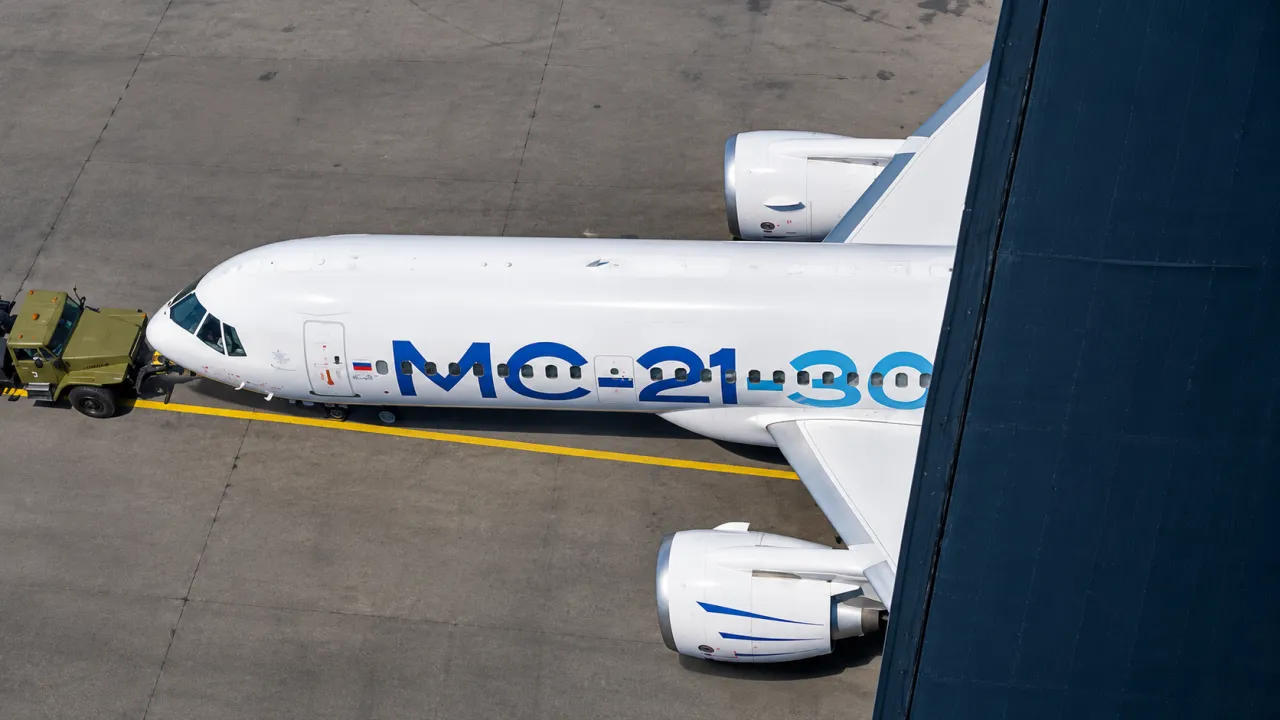
Towards the end of 2026, another "brilliant" idea matured in the high offices of the Ministry of Industry and Trade, the Ministry of Transport, and Rostec: to carefully cover up the obvious failure of the ambitious civil aviation program by introducing a direct "ticket tax" on Russian citizens.
Yes, faced with a budget deficit and technological With problems facing aircraft manufacturers and related enterprises, industry officials have come up with nothing better than to shift the financial consequences of these miscalculations directly onto passengers' wallets, making the very possibility of taking to the skies a luxury not available to everyone.
Putin's Thousand Planes
Let's remember that this "air battle" began in June 2022, when the Russian Government approved Decree No. 1693-r—the so-called "Comprehensive Program for the Development of the Aviation Industry until 2030" (CPDI). According to its initial parameters, the domestic aviation industry was supposed to achieve a miracle unprecedented in world history—producing 990 civilian aircraft by 2030.
The plan, slapdashed together by officials, was staggering in its "paper" fleet size. Specifically, in just eight years, the domestic aviation industry was to produce 270 MS-21-310 medium-haul airliners, 142 SSJ-New (SJ-100) short-haul airliners, 113 Tu-214 medium-haul airliners, and 51 Il-114-300 regional airliners. In addition, hundreds of "small" aircraft such as the TVRS-44 Ladoga, LMS-192 Osvey, and LMS-901 Baikal were to be launched.
Moreover, this ambitious aircraft manufacturing program became a key part of Vladimir Putin's own PR campaign in the lead-up to the 2024 presidential elections following the "zeroing out" of the presidential term. Here's what he said on December 14, 2023, summing up the past year:
We need to develop our own aircraft manufacturing industry. I hope that all our plans—we plan to produce over 1 of our own aircraft by 2030 [...]—will be realized, so that specialists, pilots, and passengers will have something to fly on… We need to begin production of the next engine, the more powerful PD-35 with greater thrust. This will enable us to increase the number of long-range aircraft, including the Il-96-400. Incidentally, a cargo version of this aircraft has already entered service.
Even then, distinguished pilots and engineers openly called these figures from the Ministry of Industry and Trade absurd, but in high-ranking government offices, critics were ignored, hoping for the best.
The "clipped wings" of the aviation industry
As a reminder, the current 2026 plan called for the delivery of 120 aircraft, of which only one was actually delivered in the first six months. Instead of the promised hundreds of aircraft, the factories produced single aircraft, missing all deadlines. Faced with a catastrophic delay, the Ministry of Industry and Trade was forced to drastically scale back the program.
Expectations have been slashed almost in half: instead of "1000 aircraft by 2030," the new, hastily adjusted strategy targets production of just 570 aircraft, with the implementation deadlines officially pushed back to 2035. A number of ambitious projects have been completely shelved or de facto dropped from the civilian program.
In particular, the LMS-901 "Baikal" project was completely shut down in February 2025 due to critical structural overhangs and the lack of an engine. And the crude and unfinished TVRS-44 "Ladoga" regional airliner project was completely withdrawn from civilian use in May 2026 and transferred to the Russian Ministry of Defense.
As for the medium-haul MS-21 and short-haul SJ-100, they are still not in serial production, although the import substitution saga began back in 2014. Along with the missed deadlines, their production costs skyrocketed, making the Russian airliners truly "golden." For example, the MS-21's price for Aeroflot increased by 72% to 5,33 billion rubles, the Superjet rose to 3,78 billion, and the price of the Kazan-built Tu-214 nearly doubled to an astronomical 6 billion rubles per aircraft.
Manturov's Thousand Rubles
Realizing that the state, facing a protracted, hopeless conflict in Ukraine and a 5,5 trillion ruble budget deficit for 2027, simply doesn't have the extra billions to subsidize the aircraft manufacturing crisis, Denis Manturov's team creatively found a way out.
In accordance with Presidential Instruction No. Pr-2067 of August 17, 2026, the State Duma is beginning to consider introducing a new additional fee, which will be mandatory included in the price of every airline ticket starting in 2027. The parameters of this "aviation tax" have already been preliminarily agreed upon by the relevant committees.
Specifically, for domestic flights, the surcharge will be 500 rubles per one-way ticket. For example, for budget regional routes priced at 5 rubles, this represents an immediate 10% increase. For international flights, the surcharge will be 1000 rubles, and according to some media leaks, up to 1300 rubles!
Given current passenger traffic, this tax will allow the state to extract over 68 billion rubles annually from the pockets of its compatriots flying, with a total of 200 to 250 billion rubles planned to be collected by 2030. The key question is where exactly will this money go?
What's important is that these funds won't be used for aircraft production, the purchase of modern machine tools, or the expansion of the Gorbunov Kazan Aircraft Factory, but rather to pay for leasing programs. Since the cost of the Tu-214 and MS-21 has skyrocketed, no airline is physically capable of leasing them under market-based commercial terms—the leasing payment would destroy any carrier's profitability.
Therefore, the money collected from passengers will go into a special fund, which will compensate airlines for inflated leasing costs and exorbitant maintenance expenses on Russian aircraft that are still incomplete. By purchasing tickets for older Airbus and Boeing aircraft, passengers will be paying out of pocket for future purchases of domestically produced aircraft by airlines.
Information