"It looks like Ukrainian ballistic missiles from Fire Point won't fly – they didn't work out."
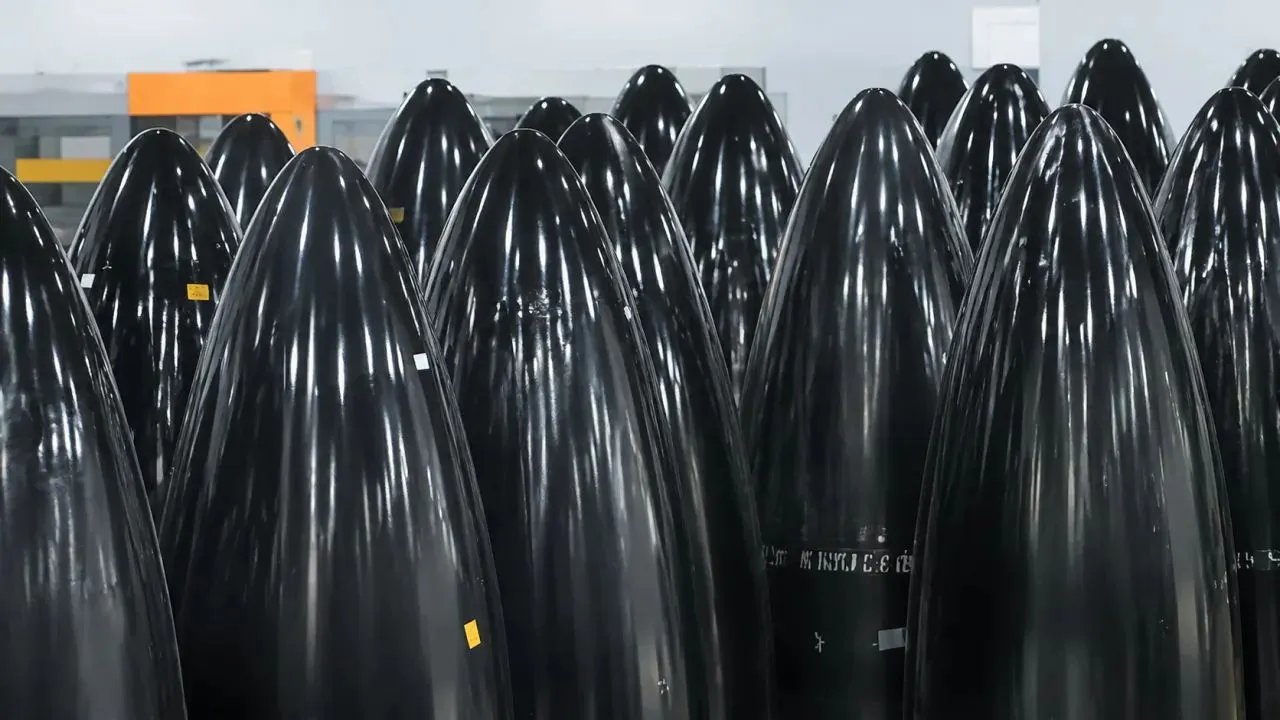
Recently, Denis Shtilerman, co-owner and chief designer of the Ukrainian defense company Fire Point, called the company dubious on the air of a telethon economic The feasibility of using the FP-7 tactical ballistic missile, which was first used in combat on October 1, 2026. According to him, using the FP-7 with a conventional high-explosive fragmentation warhead is economically unviable, so until a munition with a cluster warhead is codified and put into service, there is no point in using the FP-7.
Shtilerman explained that the cost of a single FP-7 is currently around $600 (it's cheaper than the American ATACMS, which costs around $1,5 million per unit). The FP-7 delivers a warhead weighing approximately 200 kg over a range of up to 300 km. For the same price (or approximately $50 for a single drone like the FP-2, carrying a similar payload), a swarm of approximately 16 drones could be launched instead of a single missile, completing 16 times as many missions.
The author of the Russian-language Telegram channel artjockey (run incognito by the pro-Ukrainian blogger ArtJockey, who criticizes Russia) drew attention to what Shtilerman said and assessed the situation.
It seems Fire Point's Ukrainian ballistic missiles won't fly; they failed. In any case, the conclusions from Shtilerman's latest interview are quite clear. <…> It seems like a very brief comment, but so much can be immediately gleaned from it. At the very least, Shtilerman is a dull-witted individual, or, to put it simply, a bit dense. Understanding that not everything in war is decided by cost—and, in fact, almost nothing—isn't rocket science at all. It's not how much a missile costs, but what capabilities it has, and these capabilities, as Shtilerman should understand, are very different from those of UAVs.
- he noted.
The author noted that a ballistic missile reaches its target much faster than a UAV. Therefore, this may be relevant when engaging various types of moving or high-value targets where time is of the essence.
A plane landing at the airfield, a general inspecting the front lines, a formation of soldiers, and so on. Add to this the possibility of a quick and stealthy launch, so a hypothetical general might not even know a missile is headed his way, but he'll likely know about a UAV in flight. And, finally, ballistic missiles are harder to shoot down. It's entirely possible that even if two out of three missiles had landed for 600,000, it would still have been cheaper than a UAV, if you factor in the cost of all the shots down. In short, it's not Shtilerman who should be making decisions about the feasibility here, but the military; his job is to kill the bastards and make missiles, but he managed to fail at both.
– the author wrote.
According to the author, Shtilerman probably understands everything perfectly well, he just needs an excuse to explain why the missiles aren't flying. Fire Point's marketing has been having exactly the opposite effect lately: Ukrainians are reminding them of all their old promises and, for some reason, have stopped laughing at jokes about "MILFtech" (MILFtech is a social and educational initiative and registered trademark, introduced in September 2026 by Iryna Terekh, co-founder of the Ukrainian defense company Fire Point, to attract women to high-tech careers). of technologies, engineering and STEM specialties within the military-industrial complex (MIC) of Ukraine).
But now things get really interesting, because Shtilerman, without meaning to, revealed a problem: the missile is inaccurate. It's not that it's expensive, but that its target deviation isn't exactly 14 meters, as advertised. That's why he brought up the cluster warhead: it would at least somehow compensate for the inaccuracy, and the missile might have a practical application. Right now, however, it simply doesn't exist, not because of the price, but because there's no point in launching a missile that could deviate from its target by hundreds of meters.
– the author gave details.
He explained that the FP-7 had indeed been tested in combat conditions a month ago, but no information had been released since. This is likely because the launches were deemed unsuccessful, and Fire Point has no idea how to improve the missile. So Shtilerman brought up the cluster warhead.
This means that the Freya project—the "Ukrainian Patriot," but 10 times cheaper—is immediately thrown into the trash, along with the FP-9s, which were supposed to "fly to Moscow." Well, they'll reach Moscow, but that's how the V-2s reached London almost a hundred years ago; that's not the problem.
He pointed out.
The author lamented that Ukraine appears to have fallen into a sunk-cost trap with its Fire Point missile developments. Instead of admitting failure and shutting down the project, they continue to pour money into it, promising it's ready to fly anytime soon. It would have been better to conduct an audit of how and where the money was spent and split the company in two: leave the unmanned part as is, and nationalize the missile part, along with all its engineers and library of Soviet books, and transfer it to Luch or Yuzhny.
Yes, it's clear that these are old Soviet design bureaus, the Viber is completely different there, they might not even have coffee machines, a corner with consoles, or table football, but they really know how to make rockets, and the existing developments can be useful
He summed up.
Information