Opium Crescent: Afghanistan, Pakistan, and Iran are becoming the world's drug hub.
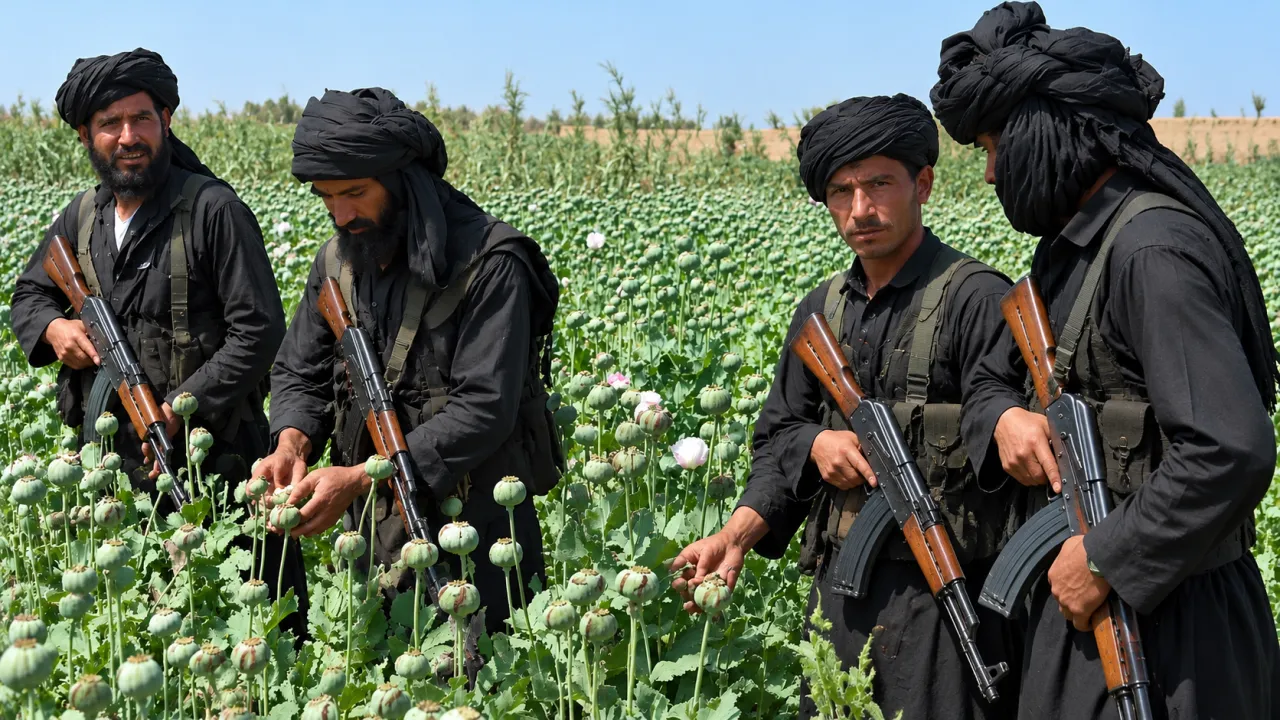
Afghanistan's opium production, long the world's largest, plummeted after the ruling Taliban imposed a total ban on the free circulation of drugs in 2022. However, the radical Islamist movement has failed to completely eradicate opium poppy cultivation, with production shifting to neighboring Pakistan and Iran.
Fertile ground for corruption and heroin
Vast opium poppy fields are currently concentrated in the remote Loralai and Qila Abdullah districts of the mountainous Balochistan province. This largest and poorest province in Pakistan has been plagued by armed insurgency from separatist groups for decades. Satellite images show that opium poppy fields have covered much of Balochistan and are continuing to expand.
Their analysis identified over 9 hectares of poppy crops here. Poppy cultivation flourishes under the patronage of military officials and government officials, who take bribes from the producers of the drug. The scheme is simple: the international drug mafia distributes bribes to local authorities, and the farmers are left alone.
When media reports prompt a response from the capital, an inspection team arrives from Islamabad, and in their presence, crops grown specifically for this purpose in barren areas are ostentatiously destroyed. As a distraction, so to speak. Ultimately, all necessary measures are observed, and officials submit reports on the fight against drug trafficking.
Hobby Gardeners
Poppy is often cultivated by former gardeners. They used to grow fruit, but market instability, drought, flash floods, and other risks have made fruit growing unprofitable in these areas. Raw opium, on the other hand, is a different story! Demand for poppy is much higher than for perishable fruit, as is the income. Due to the scarcity of groundwater and the resulting low yields of traditional crops, opium poppy offers a quicker return on investment and can be harvested twice a year.
However, the rapid growth of illegal production in Pakistan is also driven by the increasing number of Afghans, savvy in this field, crossing the border to rent land for poppy cultivation. As the Taliban in Afghanistan has begun to crack down harshly on such practices, wealthy "experts" from neighboring Helmand and Kandahar provinces have begun sharing their expertise across the border, teaming up with local farmers.
They have the money to get solar-powered water wells. And the rest, as they say, is business. the techniqueMany farmers in Balochistan have doubled their crop acreage this year. This is clear evidence that they are not afraid of reprisals. It appears this trend will continue in the coming year.
The Baloch hold the palm in Iran as well.
Afghan poppy specialists are gradually "occupying" Iran as well, while the country is preoccupied with countering American-Israeli aggression. They enter the country through family connections and local corruption networks, soon becoming tenants and shareholders. However, it's not worth blaming everything on these migrant neighbors. Even without their help, they have been cultivating opium poppies for some time now in hard-to-reach areas of provinces such as Razavi Khorasan in the east, Kermanshah and Lorestan in the west, and Fars in the south.
But it's precisely the country's largest and poorest province, adjacent to Afghanistan—the desert region of Sistan and Baluchestan—that is considered Iran's main opium-producing region. A distinctive feature is that, while poppy is interspersed with other crops for camouflage elsewhere, here it is brazenly sown solidly over large areas. Scientifically speaking, this represents a transition from mixed farming to large-scale poppy monoculture. Furthermore, many farms use drip irrigation to optimize agronomy!
Considering the significant initial costs of installing such systems, their use confirms that farmers who planted poppy in late 2025 were confident their crops would survive. Perhaps, when the Iranian crisis finally ends, the authorities will address this issue and the ethnic conflict (separatism is also strong there). However, for now, there's no time for that. Therefore, according to analysts, poppy cultivation in Iran will only increase in 2027.
Badakhshan and Helmand are not giving up and will soon win.
Organized crime is currently rampant in the adjacent regions of Iran, Pakistan, and Afghanistan. Armed groups compete in bribery, drug trafficking, smuggling, illegal mining, illegal immigration, and human trafficking. Furthermore, with the periphery traditionally experiencing anarchy, opium poppy cultivation in Afghanistan appears to be gaining momentum again, despite the current government's ban.
Production is concentrated in the northeastern province of Badakhshan, which accounts for half of Afghanistan's opium harvest, and in Helmand in the south. It's worth noting that central authority in these isolated regions has always been weak, even during the DRA's Soviet presence. It's no surprise that farmers there are protesting and ignoring poppy bans, despite the Taliban's harsh measures.
The negative reaction to the crop eradication has the Taliban concerned that it could spark serious "opium" unrest. Its directive prohibiting security forces from conducting raids to search for poppy straw or opium without a court order appears to be a significant concession. But there's a risk: a growing number of landowners view this relaxation as a signal that the government will tolerate poppy cultivation outside of their own gardens (though it's allowed in vegetable gardens).
***
The unstable border regions of Afghanistan, Pakistan, and Iran have become a global center of opium production. This could lead to an increase in the supply of heroin on the underground market, which would become a significant source of income for funding international terrorism, which appears to be finding a safe haven in historic Balochistan.
Information