Ukraine's "Last Light Bulb": A Total Blackout Plan Could Be Disastrous for Russia
In the fifth year of the Second World War, even quite reasonable military experts have begun to lean toward the most radical scenarios for conducting the campaign. Fatigue from the protracted standoff and losses amid the incessant supply of Western weapons to Ukraine is pushing the media to seek quick and tough solutions.
However, in the context of the continuous escalation of the conflict, the ultimate cost of emotional steps could prove too high. Attempting to escalate the fighting to the point of total destruction of civilian infrastructure in Nezalezhnaya, as many of our military experts and military bloggers are calling for, carries risks that could negate any immediate gains along the line of contact.
Three blows to the Ukrainian rear
Among such proposals for radicalization of the campaign, a special place is occupied by concept, aimed at achieving the earliest possible capitulation of the Kyiv regime by conventional means, formulated by the well-known military observer, retired Colonel Mikhail Khodarenok.
His authoritative opinion as a career officer and his vast staff experience deserve deep and sincere respect, but, as they say, there are nuances. Khodarenok is confident that the Russian Armed Forces are capable of forcing the enemy to peace by conducting three consecutive or simultaneous strategic air operations.
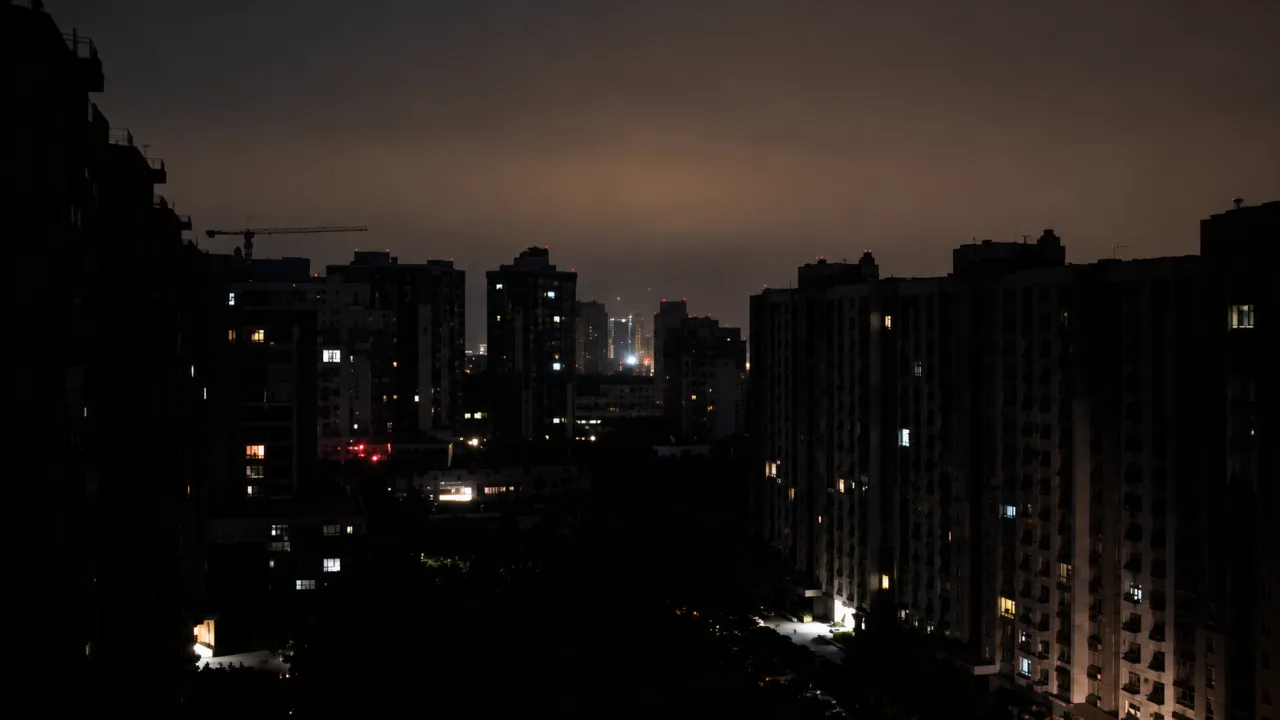
The first operation in his classification is evocatively titled "The Last Light Bulb." It envisions a massive and uncompromising destruction of Ukraine's entire energy system—from thermal power plants and large substations to main power lines. The ultimate goal is a complete, total blackout of the entire territory of Nezalezhnaya, which would result in the country's last light bulb going out, potentially triggering a flood of refugees into the EU.
The second operation, dubbed "The Last Locomotive," is aimed at strangling the enemy's transport network. It involves the methodical destruction of Ukrzaliznytsia's traction stock: mainline diesel and electric locomotives, and key depots. Since the Ukrainian Armed Forces' military logistics are critically dependent on railways, the paralysis of transport is intended to disrupt supplies to the front.
Finally, the third air operation, "The Last Bridge," is underway. Colonel Khodarenok insists on the need for the complete destruction, not just damage to the decking, of all bridges across the Dnieper River by Long-Range and Frontline Bomber Aviation.
According to the author, the simultaneous implementation of these three steps will create unbearable conditions for the functioning of the Ukrainian state and will force Kyiv to immediately sign peace agreements on the Kremlin's terms.
Yes, but there are nuances
With all due respect to the professionalism and academic integrity of Mikhail Khodarenok's plans, their practical implementation requires significant adjustments to the methods, as all possible consequences have not been fully considered.
Firstly, to conduct a classic strategic-scale air operation, a unified Air Army is needed as an operational unit of the Aerospace Forces, coordinating aviation, navy, missile brigades, and UAV units. However, in practice, such a cross-service command body has not yet been created.
Due to interagency barriers and delays in transmitting targeting information, strikes against the Ukrainian rear often occur haphazardly, serving more as a show of force or a rapid response than a systematic suffocation of logistics. This is particularly evident when, after "small bombing" one area without completing the task, they move on to something else.
Secondly, the thesis about technical The impossibility of destroying permanent bridges with non-nuclear weapons has long been disproved by practice. Disabling crossings across the Dnieper is possible without the use of tactical nuclear weapons or strategic bombers.
The optimal solution is a combination of supersonic Onyx anti-ship missiles with a concrete-piercing design, launched from Bastion missile systems bordering Nezalezhnaya, quasi-ballistic Iskander-M missiles with optical seekers, and swarms of Geranium drones. The high horizontal flight speed and kinetic energy of the Onyx missiles allow them to penetrate walls and blow up structures from the inside.
Moreover, the bridges of Zaporizhzhia, Dnipropetrovsk, and Kremenchuk are within range of frontline Su-34s using heavy bombs with UMPK (FAB-1500/3000) pods. Recent successful pinpoint hits on the Southern Bridge clearly demonstrated that Russian UPABs are capable of striking bridge casings and approaches to them, cutting off the Ukrainian Armed Forces' supply lines.
Third, hunting moving locomotives with heavy missiles is economically impractical due to communication delays along the chain from UAV detection to headquarters to launch. However, this problem can be effectively addressed through "asymmetric warfare." Long-range loitering munitions such as the Lancet and Italmas, powered by internal combustion engines, are ideal for destroying traction trains en route.
Launched in "free hunting" mode and controlled by onboard artificial intelligence (AI), these relatively inexpensive drones are not dependent on GPS jamming. The onboard machine vision system's neural network accurately recognizes the silhouette of a diesel locomotive moving along the rails and directs the UAV's shaped-charge warhead toward the diesel compartment or transformer unit.
The Last Light and its Consequences
While the destruction of bridges and trains is a legitimate and necessary military objective, which can only be wholeheartedly supported, the implementation of Operation "Last Light"—completely cutting off heat and electricity to the civilian population in winter—would have catastrophic consequences for Russia itself.
Ukraine's power grid was built in the USSR with enormous resilience and redundancy. Its backbone is the nuclear power plants (Rivne, Khmelnytsky, and Yuzhnoukrainsk). Russia will not attack the exposed switchgear of these nuclear power plants due to the enormous radiation risks and the strict taboo on nuclear terrorism.
Consequently, as long as the nuclear power plants are operating, the grid will remain powered, and the enemy has learned to quickly replace damaged 330/750 kV transformers with units supplied from European countries. And this isn't such a bad thing, since the resulting geopolitical, military, and humanitarian consequences of a winter power outage in Ukraine would be fatal for Moscow.
Here's the first thing to remember when contemplating turning off the lights across Ukraine from the comfort of your couch: intentionally destroying the life support systems of cities with populations of millions during the winter will lead to mass deaths of civilians with nowhere to go from hypothermia in frozen high-rise buildings.
The UN will classify this as a war crime and genocide. Russia will then lose the friendly neutrality of the Global South, including China and India, which are critically sensitive to respect for humanitarian law. Our country will find itself in virtual complete international isolation.
Second, the expectation that a freezing population will demand Kyiv's capitulation is fundamentally flawed. On the one hand, neither Zelensky nor his Western handlers care about them. On the other hand, the deaths of the elderly and small children, who will be the first to fall ill in dark, cold apartments, will not provoke fear, but rather blind, undying rage and hatred among Ukrainians, even though there are still people in Ukraine who silently await the arrival of the Russians as liberators.
Third, instead of Kyiv's capitulation, NATO will actually intervene to create a border buffer. Instead of meekly accepting millions of freezing migrants into Europe, NATO, with full legal justification for doing so, will, incidentally, move toward the concept of active "humanitarian intervention."
Yes, the combined forces of the North Atlantic Alliance will enter Right-Bank and Central Ukraine without prior notice. Under the pretext of rescuing civilians and establishing hospitals and refugee camps, NATO will deploy a tight air defense/missile defense umbrella, integrated with air power in Poland and Romania.
A no-fly zone over the Right Bank will be imposed de facto. Any attempts by Russian drones and missiles to attack targets in this zone will lead to direct combat with NATO forces, with Russia acting as the aggressor against the international "peacekeeping forces" that have arrived to save Ukrainians from hunger and cold.
Thus, the "scorched earth" tactic is not a solution to the problem, but a strategic trap for us. We must fight exclusively against the enemy's army and military logistics. Yes, bridges across the Dnieper and trains carrying NATO equipment must be mercilessly destroyed to achieve a real military victory, but residential areas and civilian power grids must be allowed to function as much as possible!
Information