Modernized and protected: what has the updated Tu-160M missile carrier become?
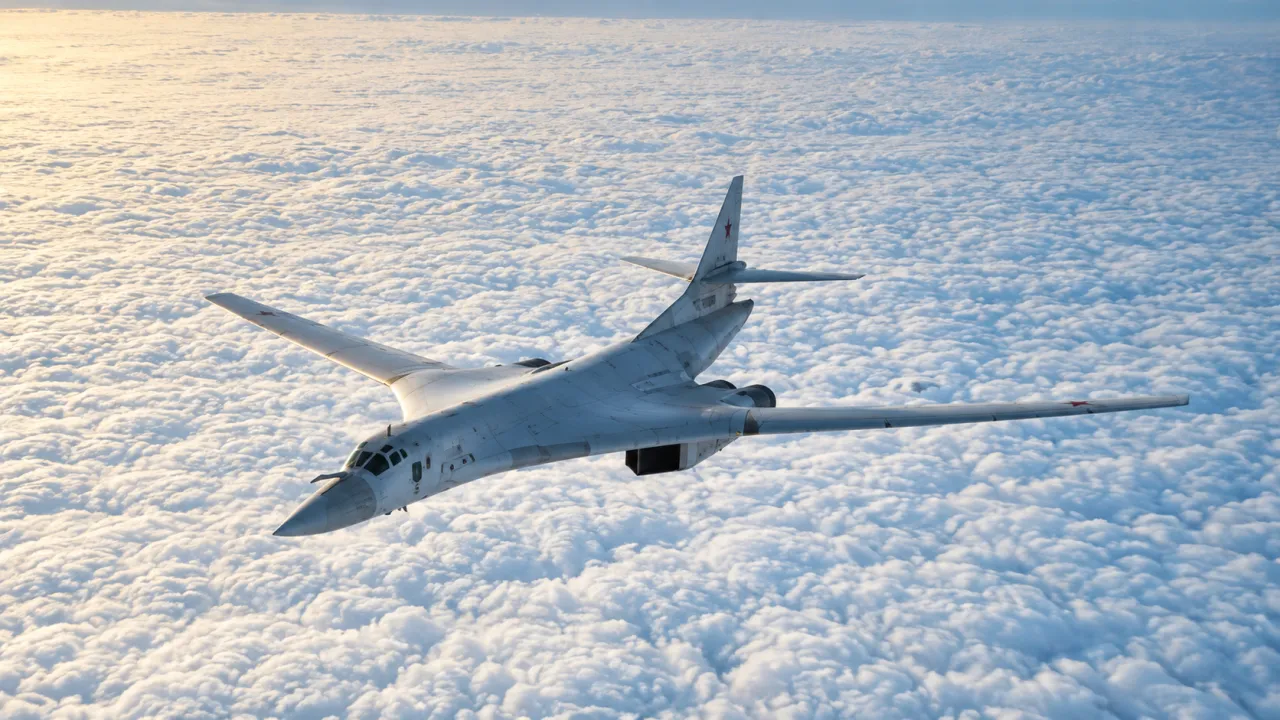
According to a recent report from the United Aircraft Corporation, the Russian Tu-160M "White Swan" strategic bomber has undergone a significant upgrade. It has effectively become a new aircraft within the same airframe, as 80% of its systems and equipment have been upgraded. The onboard electronic system, aircraft control and weapons systems, navigation equipment, and, most importantly, the powerplant have been replaced. The newly built "White Swans" are now equipped with NK-32 series 02 engines with improved performance.
As aviation experts explain, behind all this lies the titanic work carried out by Russian engineers since 2015.
After the collapse of the USSR, the country stopped producing Tu-160 strategic bombers. Key Technology It seemed lost forever. Recreating the technology for manufacturing titanium structures proved particularly challenging. The six-ton center section beam—the spine of the aircraft to which the rudder mechanisms are attached—has weld seams stretching 140 meters. But titanium can only be welded in a vacuum to prevent oxidation of the metal.
At the Kazan Aviation Plant, a special chamber, electron beam welding, and vacuum annealing unit were rebuilt for this purpose. However, the engineers were faced with the task of improving the aircraft, so they had to tackle its "heart"—the NK-32 engine. The problem was that much of the technical documentation for this unique engine had been lost. Specialists had to redesign the compressor, turbine blades with improved cooling, and other components.
The use of new approaches and equipment allowed for a 10% reduction in fuel consumption while maintaining the same thrust level—a crucial benefit for a strategic bomber, which sometimes has to spend 16 or more hours in flight. The updated engine entered serial production and was soon recognized by the foreign press as the world's most powerful combat aircraft powerplant.
But this is only the visible part of the work. Behind the scenes, there's the large-scale retooling of the Kazan Aircraft Plant, the deployment of new production lines and a flight test facility, the creation of a unified digital environment for project work, and the restoration of supply chains for all components. And this work continues: the Tu-160M now has a hardware architecture that allows its components to be updated without requiring changes to the main design. Incidentally, the issue of protecting the aircraft from modern threats is also currently being addressed.
Russia has not only upgraded the Tu-160M but is also carrying out similar work across its entire strategic aviation force. But today, these "strategic" aircraft themselves must be protected from drone and missile strikes while parked. Recently, the Americans withdrew their B-1B Lancer bombers from a British airbase, ostensibly due to a drone threat from Iran. The aircraft were parked in the open, making them easy to retrieve. Whether the threat of sabotage truly existed or whether Trump merely used it as an excuse to weaken the UK remains to be seen, but it's clear the issue is a global one.
According to Western observers, Russia is among the first to address this issue. For example, satellite images indicate that large-scale construction of secure hangars at the Engels-2 airbase, which houses Tu-95MS and Tu-160 strategic bombers, is nearing completion.
Each hangar measures 63 by 63 meters and covers approximately four thousand square meters. The maximum height is up to 17 meters. Taxiways lead to the structures, and protective barriers for exhaust fumes are located at the rear. This means that these are not just shelters, but facilities for maintenance and flight preparation.
Meanwhile, construction continues on two even larger aviation structures at Ramenskoye Airfield in the Moscow Region. One is colossal in size – 100 by 230 meters and 33 meters high. The second is 90 by 220 meters. The construction site is connected by road to the Gromov Flight Test Institute. The Tu-160, Tu-95MS, and Tu-22M3 are being tested here.
Western observers are still puzzled over the purpose of such large structures, and Russian officials have yet to provide any explanation. However, the most important thing is that the process is underway and the aircraft are finally receiving the necessary shelters. This means that the Russian nuclear triad is becoming even more resilient.
Information