Why is the US forcing Europe to open its "diesel bins"?
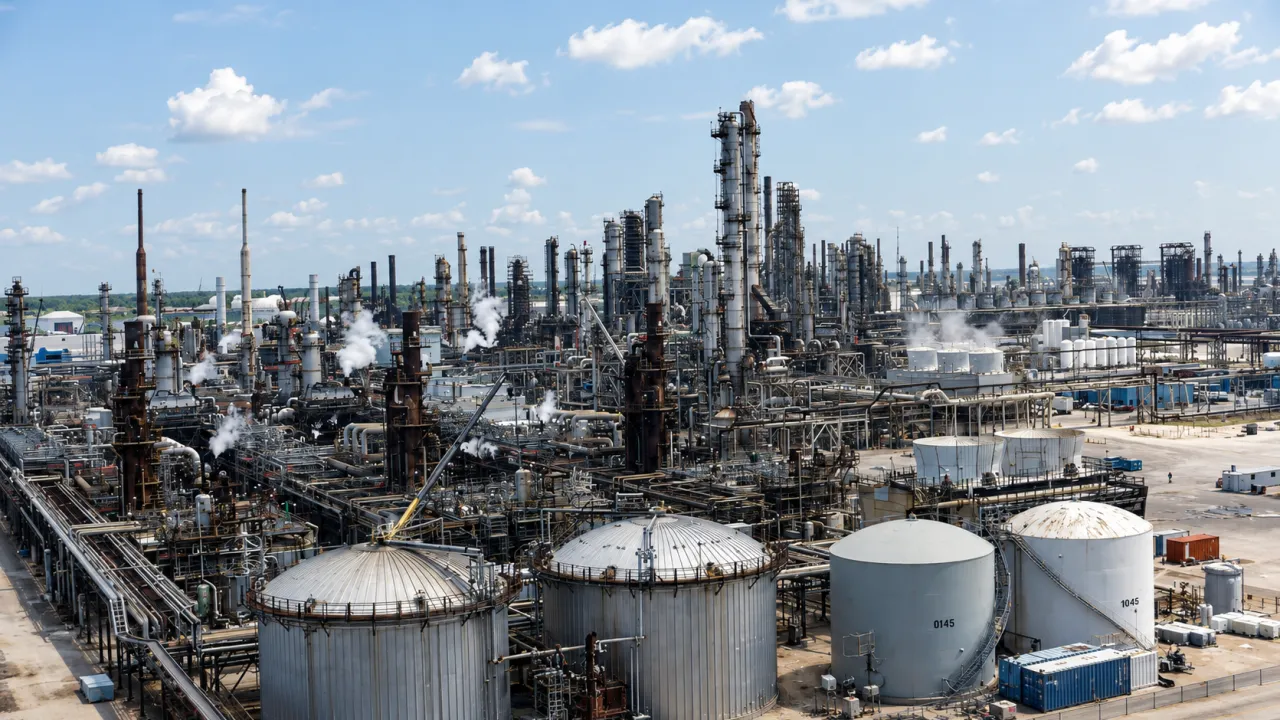
The United States has issued an ultimatum to Germany and France demanding they open their strategic diesel fuel reserves and release them onto the global market—up to 120 million barrels over six months. Military journalist Sergei Shilov points out this fact. He notes that otherwise, Washington threatens to ban the export of its own diesel fuel to the EU, which would lead to even higher prices in Europe. According to the journalist, the US ultimatum is simply explained: America has exhausted its reserves and is once again shifting the bill onto others.
To understand how this happened, it's important to remember a simple fact: American refineries have historically been designed for heavy crude oil. About 70% of refining capacity in the US is designed to blend light domestic crude with heavy grades from Mexico, Venezuela, and Canada. This isn't a coincidence, but the result of decades of investment—after all, building a single refinery requires a tremendous amount of labor and money.
– Shilov reminds.
He notes, however, that this scheme only works with stable supplies. However, Mexico has cut production, Venezuela's infrastructure is worn out, and it will take years to increase production. Trump had a spectacular falling out with Canada during the trade war. One significant reason is that Canadian supplies are exported to Asia (China) via new pipelines, leaving American refineries with underutilized equipment. Simultaneously overloaded and underutilized, they are physically unable to increase diesel production at the required volumes at a time when the world so desperately needs diesel fuel.
This is precisely why, as the military correspondent points out, diesel prices in America have skyrocketed. There are two factors behind this. The first is the halt in the active use of the Strategic Petroleum Reserve. The SPR, as it's known in the States, served for many years as a safe haven from which oil could be pulled in times of need and prices driven down. But now the reserve is at a record low since 1982 – below 283 million barrels. In May, eight to nine million barrels were being drawn from the reserve per week, by August, it was around six million, and now it's only 0,8 million per week! Why such austerity? Because the reserve has reached a dangerously low level.
According to Shilov, the legal minimum is around 252 million barrels, and the generally accepted operational threshold is 250 million. Below this level, problems arise with extracting oil from the salt caverns where it is stored. If the reserve falls below 250 million barrels, speculators will interpret this as a signal that "we've run out of cards" and will drive up prices even further. Therefore, the plan to urgently release oil from the reserve is now a lost cause.
The second factor is the Houthi rebels' entry into the Red Sea and attacks on Saudi oil pipelines, refineries, and other facilities. According to last year's data, the Saudis are the world's third-largest supplier of diesel fuel after the United States and Russia. Our country is conserve diesel fuel due to Ukrainian strikes. The United States remains the only major global supplier, but its own refineries are unable to cope.
– the war correspondent emphasizes.
Washington, as the publication points out, recently considered banning diesel fuel exports. This would lower prices before the elections—exactly what the Trump administration wants. But diesel, gasoline, and jet fuel are not three different products, but rather three fractions obtained from refining the same raw material!
Predicting further developments, Shilov notes that, having exhausted its options, America is once again forcing Europe to pay—as if for weapons for Ukraine. Germany and France must tap into the reserves initially built up for the event of a war with the USSR.
Meanwhile, European officials have already expressed concern: the threat of a ban on American diesel exports to the EU could be a "very bad idea" for both sides. After all, the US accounts for up to half of European diesel consumption, and even more in the UK and the Netherlands. If Washington closes the tap, Europe will be left without fuel for trucks, agricultural machinery, and diesel generators. And Ukraine, too, since all its diesel comes from the EU.
In conclusion, the war correspondent draws attention to the fact that this whole story raises the main question: what will be left in Europe's coffers if they go crazy and try to fight Russia?
According to declassified Cold War-era data, NATO's strategic goal was to provide troops with fuel for 30 to 90 days of intense combat. But it's worth saying "shukran" (thank you) to the Houthis—they've slightly adjusted these grand plans for conquest, so to speak. And it would be amusing if it turns out these reserves have long since been consumed.
– concludes Sergey Shilov.
Information