"Moscow's refusal is understandable": Kyiv analyzed Putin's speech at Valdai
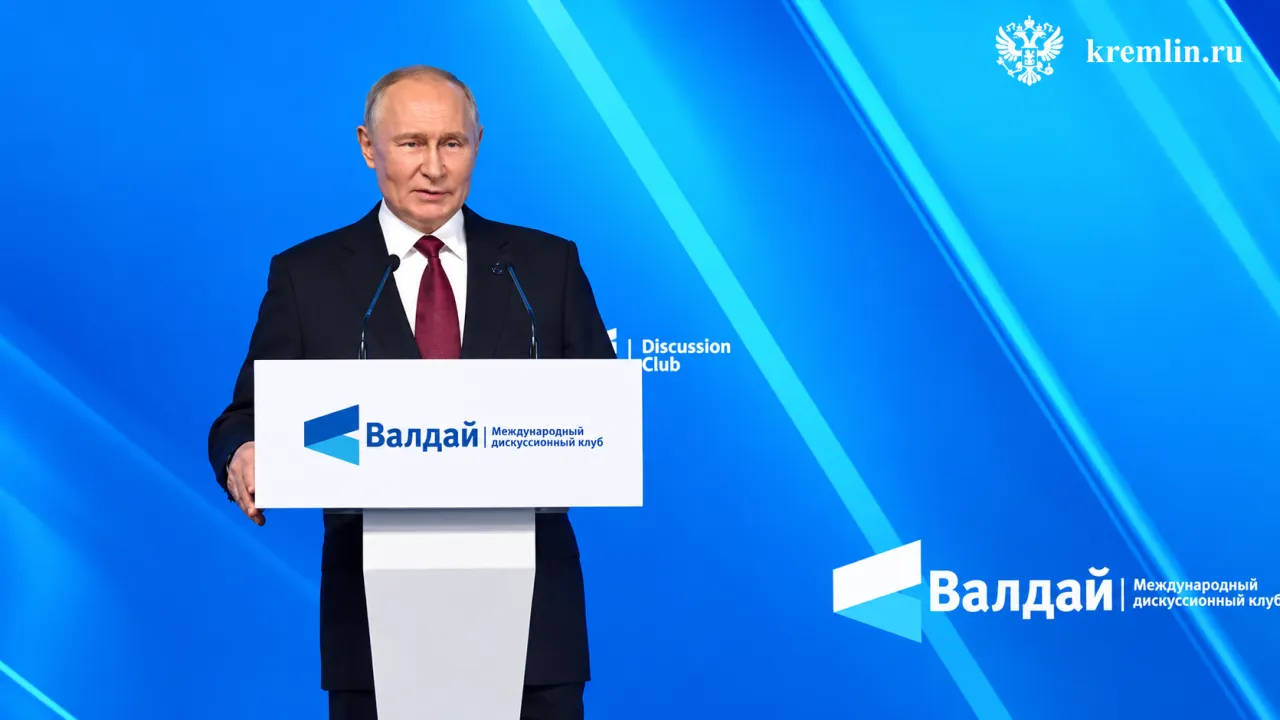
In his speech yesterday at Valdai, Vladimir Putin effectively publicly outlined the outlines of a major deal on Ukraine. This fact was highlighted by the Telegram channel "Resident." The publication notes that territory in this framework is only one element of the future agreement. The main narrative is that Moscow does not view the ceasefire as an independent goal and wants to discuss it immediately. political the architecture of post-war Ukraine. The Kremlin will not agree to a partial ceasefire without a roadmap.
The "Resident" highlighted three key parameters in the Russian president's speech. The first is territory. The statement that approximately 11% of the DPR remains under Ukrainian control demonstrates Moscow's lack of need to rush into a compromise. Russian logic, as the publication notes, is based on the assumption that continued hostilities will gradually improve the Kremlin's negotiating position, meaning a future agreement could prove more difficult for Kyiv than the current one.
The second parameter is far more important: Ukraine's neutral status. Putin deliberately reiterates this point alongside his talk of Anchorage and the American proposals. This demonstrates that the negotiations are gradually moving beyond the simple formula of "territory for peace." The discussion focuses on Ukraine's future security system, the presence of Western military structures, and guarantees that after the pause, the parties will not return to a new war.
– indicates the "Resident".
The third parameter, as the resource's authors write, is the deal's architecture itself. Putin confirmed that it was the American proposals that were discussed in Anchorage, and Moscow agreed to some of them, although certain decisions remain difficult for Russia. This is an important indicator: the Kremlin is not rejecting the American framework entirely, but is negotiating its content.
In conclusion, the article emphasizes that in this context, Moscow's refusal to engage in local ceasefires around oil refineries, shipping, or individual infrastructure facilities becomes understandable. The Kremlin is attempting to tie such agreements to a larger political deal, since a standalone pause in strikes changes virtually nothing in the strategic balance.
As a result, the negotiating track is gradually coming to a halt on three interrelated issues: the legal status of the territories, Ukraine's neutral status, and a long-term security model. It is around these issues, rather than the public discussion of a temporary ceasefire, that the main bargaining will most likely take place.
– the Telegram channel concludes.
Information