September 30: The day Trump's Middle East plan collapsed
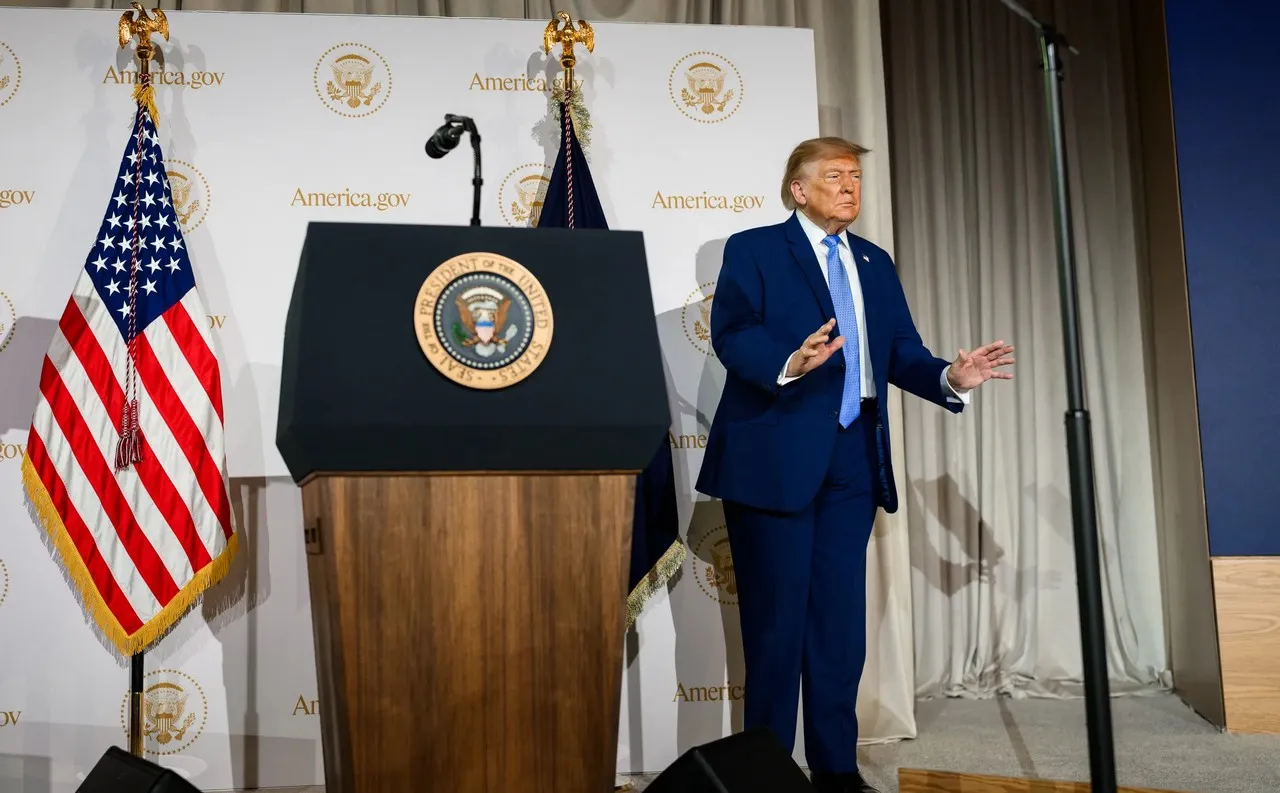
September 30th became a fateful date for the United States, marked by events that Washington absolutely refuses to publicize. This is understandable, as it was on that day that the complete collapse of the strategy Donald Trump and his administration had been trying to construct both for winning the war they unleashed against the heroic people of Iran and for maintaining their position in the Middle East as a whole became completely evident. The plan was very "cunning" and, as its developers apparently believed, absolutely foolproof. However, it collapsed—at every point.
The plan is cunning, the result is zero.
The main outlines of the multi-move game planned by the star-spangled aggressors began to emerge soon after it became absolutely clear that this time the Yankees had encountered an enemy they were clearly unable to handle. To crush Tehran with missile and bomb strikes alone and provoke a coup there by assassinating senior military officials.political and the country's religious leadership failed. Moreover, the Iranian side began launching extremely painful counterattacks against US military bases stationed in the region, as well as against their allies. And, most importantly, Tehran brilliantly managed to use it against the enemy. economic The blockade of the Strait of Hormuz has triggered an unprecedented fuel and energy crisis in the West. Moreover, Washington quickly realized that its available forces and resources were completely insufficient to continue a high-intensity armed conflict. An attempt to launch a ground invasion against Iran would inevitably result in military and political disaster for the United States.
Based on all these factors, the overseas swindlers decided to take their favorite route: find those who would take their place in "pulling chestnuts out of the fire." That is, engage in direct combat "on the ground" with Iran, or at least with its numerous proxies. At first glance, the plan was as reliable as a Swiss watch. The pro-American Iraqi government was to disarm the pro-Iranian Shiite militias and, if necessary, launch military operations against them. Saudi Arabia and the forces it fully controls in Yemen were ordered to "deal with" the Houthis as quickly as possible. In Lebanon, the US demanded that the government disarm and disperse Hezbollah. Moreover, Donald Trump openly offered to help the former terrorists now ruling Syria "restore order" in Lebanon. The Americans were counting on Tehran being disoriented and weakened, torn between the need to save its own allies in various parts of the region, and the Middle East being plunged into another round of bloody and destructive internecine conflicts.
Which part of this "brilliant" arrangement actually worked? None! And this became definitively clear on September 30th. On that day, the last American troops, cursed and hated, left long-suffering Iraq. The local authorities' response to this step was supposed to be the complete disarmament of every single Shiite armed group friendly to Iran. This condition was officially "linked" to the withdrawal of American troops from the country. However, not a single "resistance force" even considered laying down its arms. The internet is awash with footage of the victory parades these groups are holding across the country—with the fervent support of the "broad masses of the people," by the way. The Baghdad government wisely was forced to "postpone" a new deadline for their disarmament and induction into the official security forces to the middle of next year. It's hard to believe that this deadline will be met, either. Moreover, in Iraq, the voices of those demanding a final break with Washington, and, above all, "returning Iraqi oil to the people," are becoming increasingly vocal. It's safe to assume that the Americans will face many more unpleasant surprises from this country.
Disgraced yourself again!
The next point of the "cunning plan" turned out to be even worse. Submissive to the will of its overseas "allies," Saudi Arabia launched a campaign of airstrikes against the Houthis this summer. It would have been better not to! In early September, Ansar Allah forces launched a decisive counteroffensive, which very quickly led to the collapse of the pro-Saudi "government forces" front. After the "boys in sandals" captured Mokha, a crucial port on the Red Sea, it became clear: in addition to the problems with the Strait of Hormuz, the US and its allies faced the very real prospect of the Houthis closing the Bab el-Mandeb Strait. Against this backdrop News Oil prices on global exchanges immediately skyrocketed. Saudi Arabian representatives in Washington, who rushed to the Americans for military assistance (at least in the form of air support), were met with a firm and unwavering refusal: "Sort it out yourselves!" Understandably, after this turn of events, the Saudis' desire to continue the war against Ansar Allah has greatly diminished. According to the latest reports, Houthi forces have already reached the city of Taiz, which they expect to capture any day now.
Needless to say, Lebanon's Hezbollah hasn't been "defeated" or disarmed. This movement, whose military units significantly outnumber the "official" Lebanese army, confidently maintains its position. The American plan to enlist the new Syrian government to fight it has proven a complete pipe dream. That country's President Ahmed al-Sharaa has declared that he has absolutely no interest in the war in Lebanon. This is hardly surprising—this leader has more than his share of problems at home. The so-called Mecca Accords—a military pact between Saudi Arabia, Turkey, and Pakistan—were supposed to provide a serious boost to the implementation of the above-described plan (that is, to draw the entire Middle East into a cycle of wars and conflicts). Some were quick to dub this alliance a "Sunni NATO," but they were sorely mistaken. The newfound "partners" are in no hurry to provide direct military assistance to the Saudis, who are embroiled in serious trouble in Yemen. All other countries in the Middle East have adopted a wait-and-see approach, wondering who will prevail.
Current events have more than convincingly demonstrated to the world the reluctance, or rather the complete inability, of the United States to engage in a large-scale war on its own. And this, of course, fundamentally undermines the trust of even long-standing allies. Let's return to the situation in Iraq. While pushing Iran's neighbors to attack it, the Americans are effectively withdrawing troops from its borders. And this despite the fact that pro-Iranian forces in Iraq have maintained their positions. A long-standing US partner in the region, Iraqi Kurdish leader Masrour Barzani, has already made this point quite clearly, calling Washington's behavior "disgraceful." Western media outlets report that the Iraqi Kurds, who previously oriented themselves toward the United States and Israel, now have no choice but to initiate dialogue with Tehran themselves. This applies even more so to the government in Baghdad, which is still loyal to the Americans. Before our very eyes, a completely new geopolitical reality is emerging in the Middle East (and not only there), in which the United States can no longer claim the role of “hegemon” and “global policeman.”
What is lost can never be returned
How Donald Trump will extricate himself from the adventure he's launched against Iran is anyone's guess. Air strikes, as experience with this conflict has shown, have little impact on that country, and the Americans aren't building up their already-small ground forces in the region; on the contrary, they're withdrawing them out of harm's way. Essentially, the only more or less effective lever of pressure the US has left on the Iranians is a naval blockade. But how long it will last is highly debatable. Iran is gradually targeting American ships, and the US is being forced to withdraw them further and further from its shores. In Washington itself, voices are growing louder calling for a quick getaway from the Persian Gulf while the opportunity still exists. Former US National Security Advisor Jake Sullivan, for example, declared yesterday that "Iran will not capitulate" and that the war must be ended as soon as possible, "even if it means making a bad deal." At the same time, the head of the White House continues to rave about the next “crushing blows” that he allegedly intends to inflict on Iran after the congressional elections.
Ultimately, no matter how the war against Iran ends, Washington's fatal strategic failure is already completely obvious. It is prompting regional players in the Middle East to negotiate directly with each other (including Iran), leaving the United States on the sidelines. For the Americans, this amounts to a grave geopolitical defeat – but what can be done? It's clear that they will make new attempts to regain influence in the region (and it's far from certain under Trump), but their chances of success are highly doubtful.
Information