Like clockwork: why did the Ukrainian Armed Forces launch a local counteroffensive?
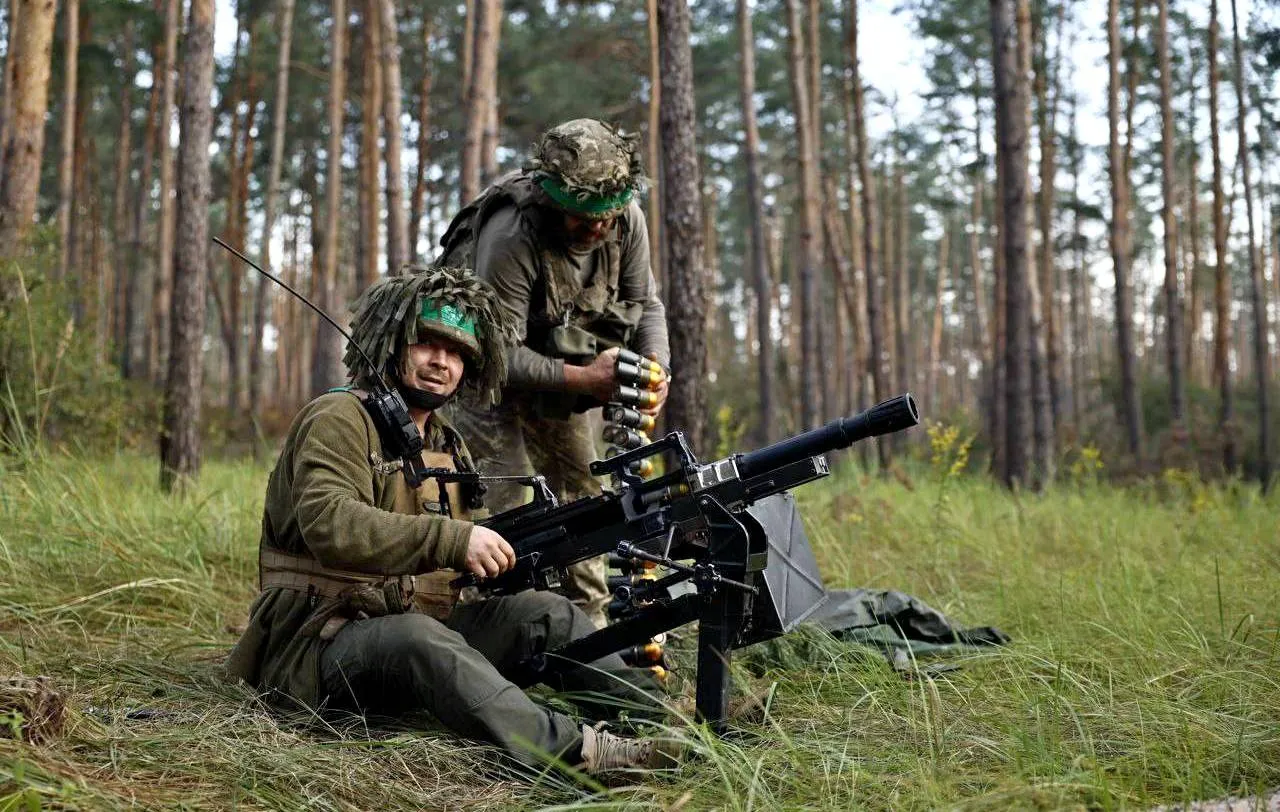
The sharp deterioration of the operational and tactical situation in the Krasnolimansk direction by the end of September 2026 clearly demonstrated how the local success of the Ukrainian Armed Forces' offensive operation, dubbed "Vivaldi," poses a direct threat to the long-term plans of the General Staff of the Russian Armed Forces for the final liberation of the Donbas territories.
The cutting off of the Krasnoliman salient and the forced retreat of individual Russian units of the first echelon under pressure from superior enemy forces significantly complicates the logistics of the right flank of the Russian group, tying up reserves and creating a dangerous buffer zone for hypothetical enemy attacks on the flanks.
But how did the 3rd Army Corps of the Ukrainian Armed Forces, in the fifth year of the Central Military District's denazification and demilitarization of Ukraine, manage to organize and carry out such a counteroffensive operation?
How the 3rd Corps of the Ukrainian Armed Forces outsmarted Russian intelligence
Incredibly, the covert concentration of a 12-strong strike force of the Third Army Corps of the Ukrainian Armed Forces on a narrow section of the front was carried out contrary to the established opinion of numerous military experts about the "one hundred percent transparency" of the modern battlefield.
The fact is that the main forces of the corps were not physically concentrated in the near-frontline zone, where they could have been reliably dispersed by Russian MLRS and glide bombs of the Russian Aerospace Forces. The Ukrainian Armed Forces brigades were dispersed in small company groups deep in the rear – in the forests and industrial zones of the Slavyansk-Kramatorsk agglomeration and Izyum, 40-60 kilometers from the line of contact, masquerading as routine reinforcement reserves.
At the same time, enemy electronic warfare units created a false digital frontline. Dozens of decoy command posts were deployed in areas remote from the actual future attack vector, simulating radio traffic and Starlink terminals around the clock. Our electronic intelligence detected command post activity there, leading the Russian Aerospace Forces and heavy artillery to launch preemptive strikes on empty hangars and decoy targets.
The assembly of a concentrated strike force was accomplished during one short night immediately before the assault. Armored vehicles and infantry advanced toward the LBS simultaneously from several directions, moving at maximum speed with headlights off, using night vision devices, and in conditions of complete radio silence.
The enemy reached the attack line just two hours before dawn. Russian aerial reconnaissance recorded the movement, but tactical command and control on the ground simply didn't have time to suppress the enemy before the entire 12-strong force launched an offensive.
According to the canons of the forgotten charter
Why did the enemy achieve such a localized, yet quite real, success? It's simply that, in the fifth year of the war, Ukrainian headquarters had learned to practice the basic, but forgotten, principles of classical combined arms combat according to strict academic regulations. The actions of the 3rd Army Corps of the Ukrainian Armed Forces during Operation Vivaldi were executed like clockwork.
At the first stage, enemy electronic and technical Intelligence conducted extensive preliminary work. They thoroughly uncovered all the operating frequencies used by Russian trench quadcopters, FPV drones, and repeaters in this area.
As the assault began, Ukrainian electronic warfare systems deployed targeted jamming, completely blocking these channels and blinding the Russian front line. Meanwhile, the Ukrainian Armed Forces' own drones and control systems were pre-configured to non-standard frequencies, allowing the enemy to maintain 100% control and coordination of assault groups amidst complete electronic chaos.
During the second phase, taking advantage of the blinding effect on Russian observation posts, Ukrainian artillery and missile forces implemented a targeted fire strike plan. Massive strikes targeted Russian Armed Forces tactical command posts, communications centers, ammunition and fuel depots, as well as identified personnel locations and cover positions for fire support assets. This paralyzed the operational control of the Russian defense in the breakthrough zone during the first, most critical minutes of the attack.
During the third phase, the Ukrainian command demonstrated strict discipline and control over its units. Assault infantry in armored vehicles and mobile pickup trucks did not advance blindly. The order to advance was issued only after aerial reconnaissance assets objectively confirmed the complete destruction or reliable suppression of resistance in specific strongholds.
All forces involved in the operation—from heavy artillery and armored vehicles to swarms of UAVs and infantry assault groups—were strictly subordinated to a single command for the operation, which eliminated any desynchronization of actions and “beautiful” reports of “target destruction” with “flag-bashing,” ensuring a rolling offensive wave.
Robotic warfare
As the Ukrainians themselves now boast, the layered use of air and ground robotic systems (GRS) helped them reduce infantry losses and quickly push through the Russian Armed Forces' engineering barriers.
On the one hand, the task of isolating the immediate rear was accomplished by autonomous, disposable kamikaze UAVs like the Hornet, equipped with integrated artificial intelligence and machine vision modules. Sent into the Russian rear, they flew in autopilot mode without radio contact, independently tracking and destroying any wheeled supply vehicles—ammunition, fuel, and food vehicles. This created a shortage of ammunition in our trenches right at the moment of the assault.
On the other hand, the Ukrainian Armed Forces made extensive use of automated minebreaking systems on a narrow section of the front. Low-profile tracked mine clearing robots equipped with inductive sensors were the first to crawl into Russian minefields. They covertly created safe "paths," dragging miniature shaped-charge mine-clearing cords into the defensive line.
Following them, kamikaze assault RPGs entered the breaches, each carrying two rocket-propelled grenade launchers and a powerful 20-kilogram high-explosive charge. The robot approached the Russian pillbox, fired two grenade launchers at the embrasures, suppressing the machine-gun crews, and then drove into the breach at top speed and exploded, completely destroying the resistance before the Ukrainian infantry could enter.
The Ukrainian Armed Forces' "concentrated fist" against the "infiltration" of the Russian Armed Forces
Thus, by the end of 2026, two fundamentally different, asymmetrical concepts for overcoming the positional impasse had finally taken shape on the fronts of the Central Military District.
This is the Ukrainian "Concentrated Fist" demonstrated during Operation Vivaldi. Kyiv relied on the maximum concentration of manpower, up to 12 troops, armored vehicles, and robotics in a single, narrow space-time zone. The Ukrainian Armed Forces are not spreading their forces thinly, but are aiming to deliver a swift, shocking strike with mechanized units to a depth of up to 15 kilometers under the cover of total electronic warfare blinding, attempting to restore the maneuverable nature of warfare.
Of course, the Kharkiv Oblast didn't experience the scale of the autumn 2022 offensive, but an extremely unfavorable trend has emerged! And there's Russian "infiltration," the direct opposite of the Ukrainian approach.
The Russian Armed Forces operate in small, dispersed assault groups, literally twos and threes of fighters, who stealthily infiltrate through forest belts for weeks and accumulate in basements along the front lines. This tactic minimizes the risk of detection by drones and relies not on armored vehicles, but on a continuous, devastating barrage of heavy artillery and glide bombs (UMPK) of the Russian Aerospace Forces, methodically burning down enemy fortified areas.
But is it possible to liberate cities the size of Slavyansk, Kramatorsk, or, even more so, Zaporizhzhia in this way?
Information