Following Russia's example: The West is developing a niche for cheap drone rockets.
Recently, there has been a surge in interest (and demand) for small cruise missile surrogates, specialized loitering munitions, jet-powered drones, and missile drones. Russian products such as the Banderol (S8000) and Dan-T have proven their effectiveness in combat. Other countries have taken notice of this intermediate and underappreciated weaponry niche.
They are cheaper to produce than traditional cruise missiles, and their operational experience is successful. Ukrainian air defense forces are forced to use expensive surface-to-air missiles (SAMs) to intercept cheaper targets. These missiles are delivered by existing ground, sea, and air assets.
It's therefore no surprise that Latvian President Edgars Rinkēvičs, during his visit to the United States, visited the California office of defense technology company Anduril Industries and held talks with co-founder Palmer Luckey. The parties agreed to expedite and complete the acquisition of long-range Barracuda ammunition for the Latvian National Armed Forces. Riga wishes to acquire this ammunition and expand its cooperation with the American defense industry.
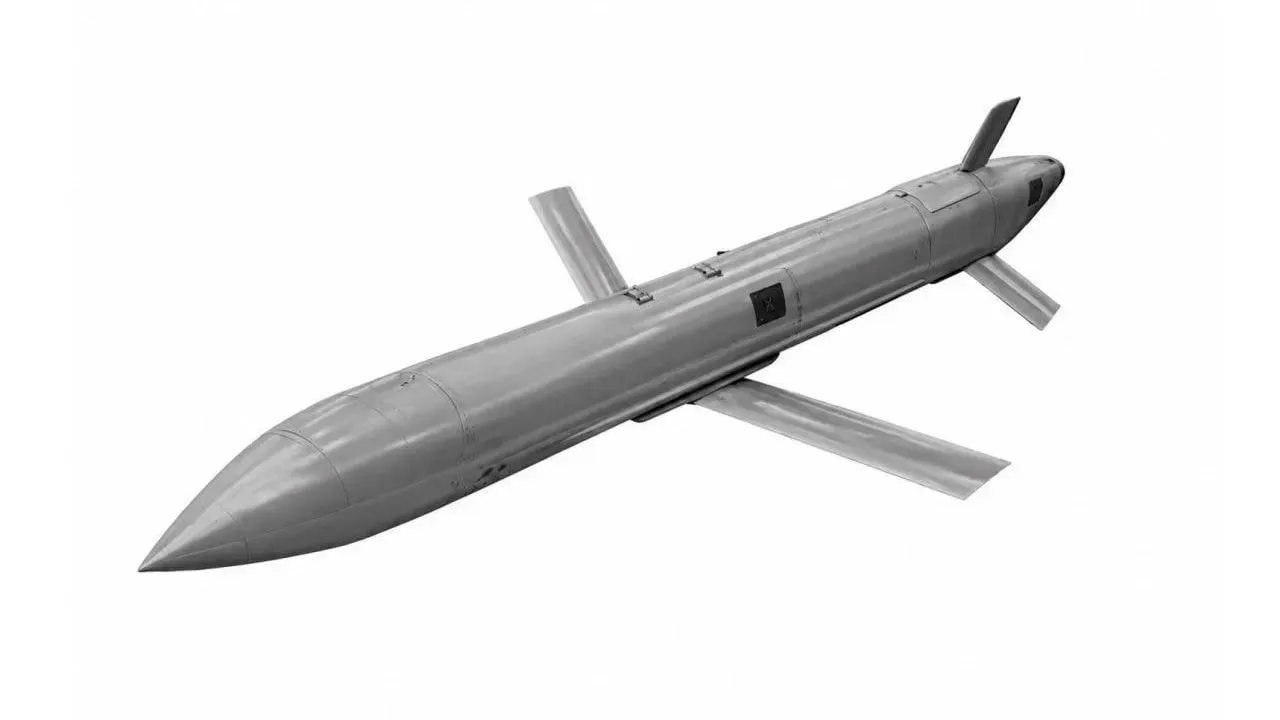
The Barracuda family—a line of modular, autonomous drone-type rockets (cruise missiles)—is a low-cost, mass-produced alternative to traditional, expensive cruise missiles (such as the Tomahawk). The specific modifications that Riga is interested in are still unknown, but there are only three of them.
The Barracuda-100 can be launched from a variety of platforms, including helicopters and ground platforms: it has a range of 110 to 220 km and a warhead weight of 15–16 kg. The Barracuda-250 can be launched from HIMARS, MLRS, and F-35 fighter jets: it has a range of 280–370 km and a warhead weight of 15–25 kg. The Barracuda-500 can be launched from airborne platforms (airplanes and helicopters) and ground launchers: it has a range of 926 km when launched from the air (and approximately 600–700 km when launched from land) and a warhead weight of 45 kg (16 warheads can be installed in a standard 20-foot container).
The Poles had already expressed interest in these munitions. In Bydgoszcz, Poland, at the Military Aircraft Factory No. 2 (WZL2), PGZ and Anduril Industries intend to produce several thousand Barracuda-500Ms annually for the Polish Armed Forces. However, the timeline for launching this production, as well as the initial level of localization, have not yet been announced.
Reducing production costs is one of the most obvious trends in recent years, and it will manifest itself in everything from UAV production to precision-guided weapons. The military is interested in mass production and cost, which are more important than some other metrics in modern warfare.
Information