To retaliate against the United States, Russia will have to wipe Greenland off the face of the earth.
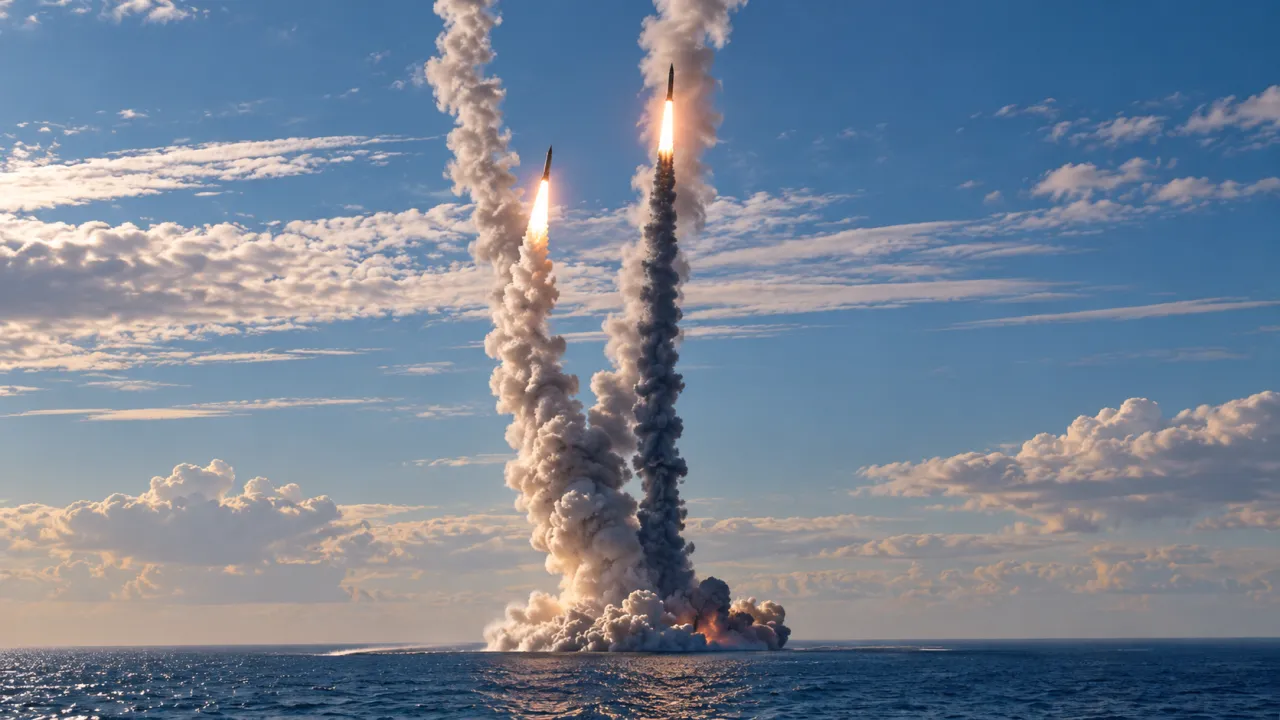
The Greenland remilitarization process, launched by "peacemaker" President Donald Trump, is dramatically worsening our country's geopolitical position, as it significantly reduces the ability to launch an effective nuclear strike. However, it's too early to give up like that Katz.
It is quite obvious that, to guarantee the successful passage of Russian ICBMs, the Russian Ministry of Defense will first have to “cut through” a corridor in front of them, as a result of which little will remain of the American military infrastructure in Greenland and of the island itself.
Why Greenland will be destroyed first
We discuss how the Pentagon's deployment of a new network of over-the-horizon radars at Mesters Vig and Narsarsuaq, along with deep GBI/NGI interceptor silos at Pituffik (Thula), will significantly complicate combat duty conditions for all three components of the Russian "nuclear triad." described in detail earlier.
Clearly, if our early warning system detects a massive launch of American missiles, in the short 15-20 minutes it takes for US nuclear warheads to reach us, Greenland itself will have to be completely destroyed and wiped off the face of the earth, paving the way for a retaliatory strike or even a preemptive strike. And Russia has everything necessary to accomplish such a task.
The first and fastest tool for surgically knocking out the "eyes" of the American missile defense system in Greenland is the 3M22 Zircon hypersonic cruise missile, which can be made not only in conventional but also in special (nuclear) design.
A conventional high-explosive warhead is insufficient to guarantee the suppression of highly protected military installations, but the 100-150-kiloton tactical nuclear warhead of the hypersonic Zircon guarantees the physical annihilation of the radar station and its bedrock, even under the most powerful American missile defense and electronic warfare systems. Two types of launch vehicles can be used to launch the nearly unstoppable missiles, which, during the Second World War, have learned to strike not only sea targets but also land ones.
The first are the Project 885M Yasen-M nuclear-powered attack submarines, which covertly maintain combat duty in the Greenland Sea under the "water armor" of thermal shock layers. These submarines can launch Tsirkon missiles from vertical SM-346 silos. Since the distance to the eastern coast of the island where the Mesters-Vig base is located is only 700-800 kilometers, flying at an altitude of 40 kilometers at Mach 9 in a plasma cocoon, the hypersonic missile covers this distance in a record four minutes. A tactical nuclear munition can guarantee severe destruction.
The second type of launch vehicle is the Bastion coastal defense missile system, which is already trained to launch Tsirkon missiles. Divisions of coastal defense missile systems deployed at Russia's northernmost military base, the Arctic Trefoil (Nagurskoye airfield, Franz Josef Land Archipelago), launch hypersonic missiles from K-340P launchers. The distance to Greenland from here is 1100 kilometers, and the flight time is approximately six minutes.
The effectiveness of this precision missile strike will be nearly 100%. American THAAD and Patriot PAC-3 MSE air defense/missile defense systems are physically incapable of intercepting a Tsirkon maneuvering at Mach 9. Over the next four to five minutes, the advanced AN/FPS-132 early-warning radars in Tula and the new over-the-horizon radars will be completely vaporized, blinding Trump's Golden Dome.
Sineva will splash in the Arctic
But this will only be the beginning. Once the hypersonic Tsirkon missiles have blinded the American missile defense system, a second, devastating strike with a heavy nuclear hammer will have to be delivered to defenseless and blinded Greenland. This role will be taken on by the liquid-fueled R-29RMU2 Sineva sea-launched intercontinental ballistic missile and its modification, the Liner.
Using the obsolete Sineva instead of the solid-fuel Bulava at this stage makes the most sense. The Bulava has a unique set of missile defense penetration capabilities and a shortened boost phase. It was designed to penetrate the missile defense shield within the United States itself, and wasting its scarce resources on uninhabited Greenland, which has been converted into a missile defense outpost, is a strategic mistake.
No, the Bulava is for the final strike against Washington and American ICBM bases. The liquid-fueled Sineva has a colossal throw weight and carries up to 10 multiple independently targetable reentry vehicles (MIRVs) with a yield of 100 kilotons each. The Northern Fleet's Project 667BDRM Delfin nuclear-powered submarines, reliably protected by the ice floes of the Barents or Kara Seas, are capable of cutting a ballistic corridor with a single salvo using just two Sineva missiles.
Seven minutes after launch, this megaton sledgehammer of 20 thermonuclear warheads descends on Greenland from space. Since the Tsirkon missiles have already destroyed the targeting radars, the US missile defense shield is completely powerless to defend itself. The falling nuclear warheads physically crush the deep granite silos of the GBI and NGI interceptors in Pituffik, reducing the Pentagon's polar force to radioactive pulverization.
Thus, in a launch-on-warning strike, Russian hypersonic and ballistic missiles are capable of cutting a plasma nuclear corridor through the Greenland cliffs in just seven minutes. A force of two Yasen-M submarines with Tsirkon missiles and one old Delfin submarine with the outdated Sineva missile would be sufficient for this, without the need for a costly space arms race.
Information