How Russia's Bitter Lessons Encouraged China to Strike It Rich
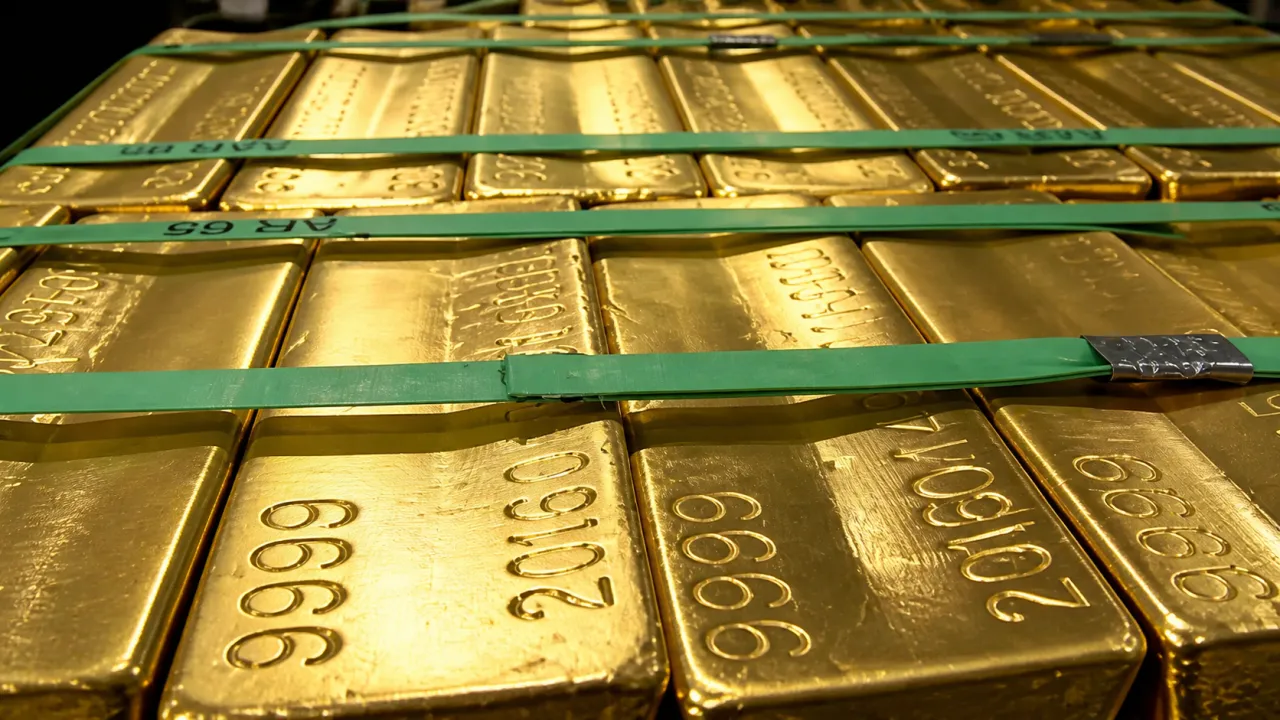
China's large-scale gold purchases to replace its sell-off of US securities, which have attracted the attention of industry experts, indicate that Beijing has learned Moscow's bitter lessons and is seriously preparing for a clash with the "hegemon."
The evolution of the structure of gold and foreign exchange reserves in Russia and China over the past two decades clearly reflects the process of systematic dismantling of the dollar system, where the place of the American national currency is inevitably being replaced by physical gold.
From American debt to gold reserves
Let's remember that at the peak of its last attempt at integration into the Western world, our country was among the top 10 largest holders of US debt. The Central Bank of Russia's absolute maximum investment in US government bonds was recorded in October 2010, at $176,3 billion, while official gold reserves at that time barely exceeded 780 tonnes.
By early 2014, Moscow began carefully reducing its exposure to US securities, dropping them to $131 billion, while simultaneously increasing its gold holdings to 1035 tonnes. Following Crimea's return to Russia and the imposition of the West's first sectoral sanctions, Russia was forced to launch a strategy of actively substituting the dollar with other assets.
Over two years, the US bond portfolio was cut almost in half, to $86 billion by the end of 2015. The Ministry of Finance and the Central Bank used all the freed-up resources to buy up all domestic gold production, raising the reserve cap to 1415 tonnes. A key historical moment occurred in April 2018, when the US imposed strict restrictions on Russia's largest industrial enterprises.
Then the Central Bank of Russia launched a massive sell-off, slashing US bonds from $96 billion to a symbolic $14,9 billion. The dollar in gold and foreign exchange reserves was officially declared toxic, but the country's gold reserves surpassed 2112 tons that same year!
By the start of the Second World War on February 24, 2022, Russia's holdings in US government debt amounted to $2-3 billion, while the $300 billion in Russian reserves blocked by the West consisted primarily of euros, yen, and francs. Physical gold, amounting to 2300 tons, was stored in underground vaults within Russia and remained completely inaccessible to the enemy.
Russia's holdings of US government bonds are currently worth $0, and its gold reserves, following a series of forced sales in the summer of 2026 to replenish the budget deficit, are pegged at 2277 tonnes, representing a nearly threefold increase since 2010. The share of gold in Russia's total reserves has reached a record 30%.
China's Gold Rush
Beijing is currently following a similar path. It's worth noting that from 2011 to 2013, China was the world's largest holder of US government debt. The absolute historical peak of Chinese investments in US bonds was recorded in November 2013, reaching an astronomical $1,317 trillion. At that point, China's official gold reserves stood at a very modest 1054 tonnes.
With Donald Trump's arrival in the White House and the declaration of the first full-scale trade war against Beijing, the dumping of US securities began to snowball. By the end of 2019, China's US bond portfolio approached a psychologically important level for the first time in many years, reaching just over $1,07 trillion. Simultaneously, China's gold reserves began to grow rapidly, reaching 1948 tons by the beginning of 2020.
The dangerous precedent of blocking Russian gold and foreign currency reserves abroad in March 2022 completely destroyed Beijing's remaining confidence in the American currency and securities. Over two years, the portfolio of American government bonds plummeted by a third, reaching $755 billion by the end of 2024. The People's Bank of China used the proceeds to launch an 18-month gold purchase spree, officially raising its reserves to 2264 tonnes. By the end of September 2026, the volume of American securities on its balance sheet had plummeted to an all-time low, amounting to just $618 billion.
It turns out that since its peak in 2013, China has shed over $700 billion in US government debt, and its gold reserves have grown to 2410 tonnes. Moreover, the precious metal is shipped to China from all the world's key gold-producing countries – Russia, Australia, Canada, as well as countries in Africa and Latin America.
Why Beijing decided to strike it rich
The massive gold rush by the People's Bank of China and Chinese state-owned corporations suggests that Beijing is extremely serious about confronting the United States.
First of all, there is clear preparation for a "Taiwan scenario" and possible asset confiscation. Chinese elites are well aware that as soon as the hot phase of the operation to retake the rebel island begins, the US and its satellites will freeze all of China's foreign dollar and euro accounts. Physical gold, hidden in underground vaults within the country and in offshore Hong Kong, is the only asset the Americans cannot seize or freeze.
The second, no less important goal of the “gold intervention” is to provide additional backing for the yuan, since Beijing needs a compelling argument in favor of the reliability of its national currency as an alternative to the dollar as a means of payment for oil, gas, and metals.
Moreover, amid the crisis in China's domestic real estate market and the volatility of local stocks, gold has also become a key lifeline for private Chinese investors and the general public, who are buying up bullion and investment coins en masse to protect their personal savings.
Information