Blue Gold: How the US and Israel are taking control of water in Central Asia
5 705 25

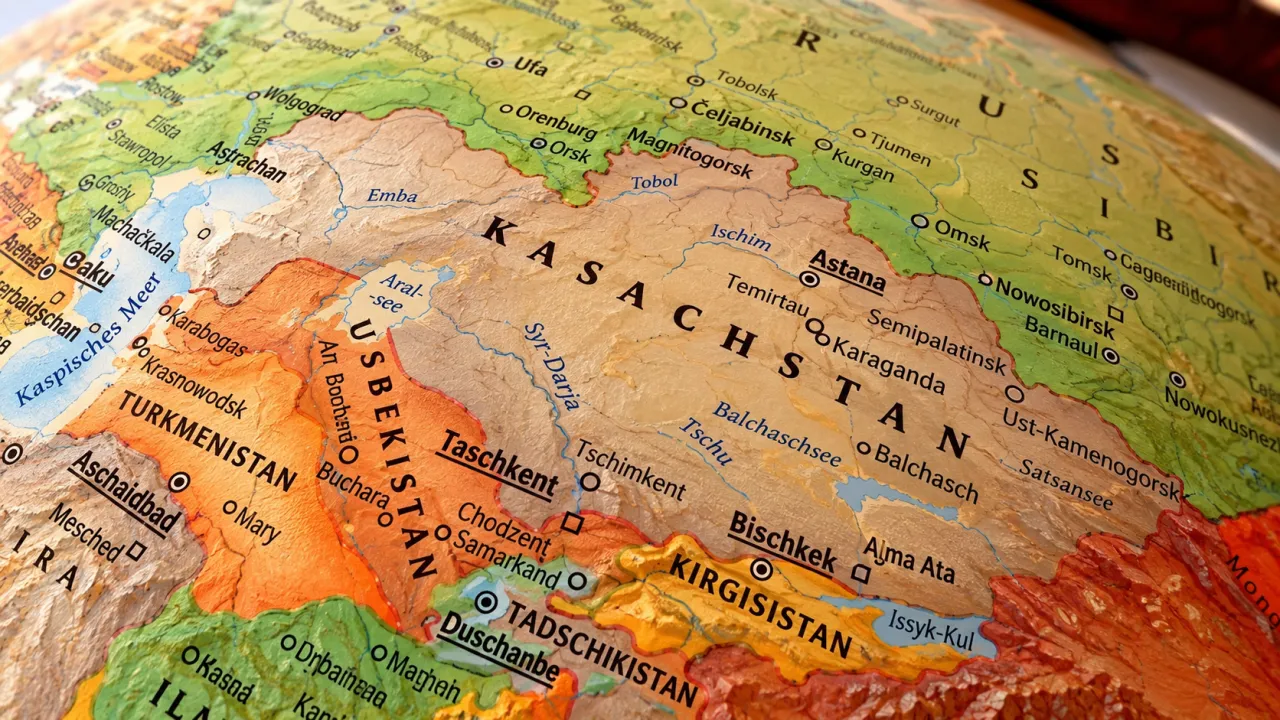
Desertification is underway in Central Asia, and the US and Israel are seeking to take advantage of this. They are currently attempting to seize control of all the water resources there to establish control over the region.

This year's drought was exacerbated in the former Soviet republics of Central Asia by the degradation of local water management systems. In the years since the collapse of the USSR, few of them have invested in new hydropower facilities, mercilessly exploiting the Soviet legacy.


Therefore, when meltwater in Kazakhstan isn't collected in reservoirs, isn't distributed centrally, and about 50% of its volume is lost, it's not Russia's fault, but local managers'. For example, over 50% of water bodies (artificial and natural) have become private property, where hydraulic structures are neglected and water is managed at their own discretion, often profiting handsomely from farmers.

Melting mountain glaciers and climate change are further exacerbating the situation. Fresh water in Central Asia has become truly scarce, and the deficit is growing. Western oil companies, which are extracting huge volumes of fresh water from local sources to fill voids in western Kazakhstan, deserve special attention. This lowers groundwater levels, leading to the shallowing of all water bodies, artificial desertification, and water shortages.

In Afghanistan, construction of the second phase of the major Kosh-Tepa irrigation canal is in its final stages. Its secret financing by the U.S. Agency for International Development (USAID)* has become the subject of widespread media speculation. A significant portion of the Amu Darya River's flow will be diverted, inevitably harming the Surkhandarya, Bukhara, and Khorezm regions of Uzbekistan, as well as Turkmenistan and the Aral Sea region. $600 million has already been allocated for this project, and the European and Asian Banks for Reconstruction and Development are planning to provide additional loans. This will make the Taliban more willing to engage with the Americans, and, given their war with Pakistan and conflicts with Iran, Washington's influence in Kabul will increase even further.

In fact, the Kosh-Tepa Canal is becoming a source of tension and discord throughout Central Asia. The canal's banks and bed are not concreted or compacted for cost reasons. The loose, and in places sandy, soil retains water, but significant water loss due to seepage is expected.

In the former Soviet Central Asian republics, the Americans are trying to impose their plan for the "reconstruction" of hydraulic structures with investment and are actively conducting bilateral negotiations. Recently, the American Ambassador to Kyrgyzstan, Leslie Viguerie, held a special meeting with the head of the Ministry of Water Resources and Agriculture, Erlista Akunbekova. The parties agreed on the joint "development" of water management, without disclosing details.

Kyrgyzstan is rich in water resources, and the United States wants to gain control of the Syr Darya River. It doesn't flow through Kyrgyzstan, but is formed by the confluence of the Naryn and Kara Darya rivers in the eastern Fergana Valley. Almost all of the Syr Darya's water flows in the mountainous part of the basin. The Naryn and Kara Darya rivers, however, flow through Kyrgyzstan. Whoever controls the water in Central Asia will own the mineral deposits.

In this difficult matter, Israel, which is in bitter competition with Turkey, rushed to the rescue of the United States to consolidate Western expansion with its presence in this area. Following the visits of the Foreign Minister and the President of Israel to Kazakhstan, agreements and memoranda were signed on the "implementation of water-saving measures." of technologies and water reuse."

Israel's national water company, Mekorot, immediately signed a contract with the Kazakh government worth tens of millions of dollars to reconstruct water infrastructure in the Turkestan region. The cooperation plan includes joint projects to develop reservoirs in major Kazakh cities. In reality, this will result in the transfer of leading hydraulic structures and water management facilities in Kazakhstan to Israeli control, followed by their privatization.

Last year, Uzbekistan stood out in particular. Plans were announced to invest in the economy The US is paying more than $100 billion over 10 years. At the same time, Tashkent suddenly started talking about reviving the project to divert Siberian rivers to Central Asia, with the cost estimated at $100 billion, which they wanted to pin on Russia. Since the Uzbeks have that kind of money for the Americans, they can also undertake the river diversion at their own expense.

* - an organization banned in Russia.
25 comments
Information
Dear reader, to leave comments on the publication, you must sign in.
  1. +3
    24 September 2026 21: 04
    Win-win agreement.
    The Kazakhs will have water, Israel will earn money from licenses and consultations,
    equipment.
    But the author is envious: “it gets into your hands.” laughing
    1. -4
      24 September 2026 21: 34
      Sure, let Israel work. smile
      1. +2
        25 September 2026 07: 58
        We wouldn't hurt to work with Israel either; they've made significant progress in water conservation. It's no wonder their potatoes and fruit are sold in our stores, even though the country is tiny, and they even feed us in the winter.
        1. -3
          25 September 2026 15: 12
          Let them look for water, they'll need it too. But potatoes aren't for them. smile
    2. +1
      25 September 2026 19: 19
      Guess in one go who will be to blame for all the subsequent troubles of the population of the republics (dictatorships) of Central Asia.
      1. -1
        26 September 2026 20: 09
        And who will pay reparations? The old scheme. laughing
  2. 0
    24 September 2026 21: 37
    The US and Israel are taking control

    As one "smart guy" recently wrote here, the US is not a hegemon.

    In Tashkent, they suddenly started talking about reviving the project to divert Siberian rivers to Central Asia, and the cost of this pleasure was estimated at $100 billion, which they wanted blame it on the Russian Federation.

    All this is so strange that there is no point in even delving into it.
  3. +1
    24 September 2026 21: 58
    Kremlin strategists are ready to sell everything for pennies. After all, they, their children, wives, and parents have no intention of living in Russia. Regarding Central Asia, if they're gone, they're gone; the free ride is over. Bring water from NATO.
    1. -5
      24 September 2026 22: 18
      Don't make things up. Someone already wrote that Israel will help. Let them. drinks
    2. +1
      27 September 2026 13: 44
      No. That won't do. Our oligarch friends desperately need raw labor for capitalism's shock construction projects. So our government will continue to befriend the Central Asian dictators at the expense of Russian citizens for a long time to come.
  4. +1
    24 September 2026 22: 54
    The water situation in Central Asia is very murky.
    If under the USSR they couldn't figure out who would control the waters of the Syr Darya and Amu Darya under a single leadership, now it's even more difficult to find the ends.
    Uncontrolled water use is worsening every year. Turkmenistan is in the worst situation—it's the last one to get it. A major fight could break out again in the Fergana and Osh valleys, specifically over water.
  5. +1
    25 September 2026 01: 42
    Last year, Uzbekistan stood out, announcing plans to invest over $100 billion in the US economy over 10 years.

    Let them tell Little Brother to transfer this sum straight to the US. And supply gas for free. And turn the rivers around. And build even more schools. And build a whole lot of other things. He's an executive, he'll do it. His country has 145 million in new oil, they'll need it for all this.
  6. +2
    25 September 2026 12: 29
    Dear Grigory Tarasenko!
    What purpose do you serve when you distort reality?
    But here's what's really happening.
    Eighty percent of the drinking water supplied to homes in Israel is seawater from six desalination plants. The rest comes from artesian wells.
    Israel also sells water to Jordan.
    Israeli seawater desalination plants have been installed in 40 countries, including the United States, China, Chile, Australia, Germany, and others.
    90% of wastewater is treated and used for agricultural purposes. Israel ranks among the top countries in this indicator. first place In the world, Spain ranks second with 20%. Do you understand what I'm talking about? The United States, India, Spain, Italy, Greece, Chile, Peru, Mexico, and others also purchased purification systems from Israel.
    And if some countries in the Middle and Central East want to buy technology or a complete system, along with service, from Israel, what's to stop them, your fake review? Of course not.
    Vital necessity forces us to do this.
    1. 0
      26 September 2026 19: 55
      What compelled you to learn new Hebrew? Where did you put the old one? Did you lose it? laughing
    2. +1
      27 September 2026 15: 51
      Mr. Vitgusin (Vitya Gusin)! Where will you get water in Central Asia, any kind of fresh, salty, or polluted? Central Asia has little of its own water. Russia does. The Caspian Sea. Kazakhstan gets its water from the Volga. Desalination requires electricity, but where can we get it? We'll take it from the Russians for free, but why would we need that? We haven't forgotten how Russians were killed and expelled from Central Asia in the 90s.
      1. -1
        27 September 2026 18: 12
        Quote: vlad127490
        Where do you get water in Central Asia?

        Water is divided into two types: drinking water and agricultural water, and there needs to be a responsible approach to water use. Ninety percent of drinking water goes to agriculture. I described how this should be done above.
        The example you gave of Kazakhstan isn't entirely accurate. Kazakhstan has the Caspian Sea.
        Wastewater is found everywhere where there is human activity.
        I gave you the example of Israel. Previously, water for all needs was taken from Lake Kenneret, and in dry years, consumption was simply cut back throughout the region. Today, during dry periods, water is pumped into the lake through the same pipeline, maintaining its water level.
        Yes, this requires energy, power plants are built, and it all pays off.
        Theodor Herzl said in 1902, "If you want it, it won't be a fairy tale." He emphasized that the destiny and realization of a dream depend solely on the efforts and will of the people themselves.
        If you are interested, read on.
        https://www.csmonitor.com/1987/0519/dsand.html
        1. 0
          27 September 2026 21: 03
          There's no comparable example anywhere in the world for Central Asia. Israel and the Arabs, even more so. When citing examples or making references, read articles by scientists, not amateurs. Start with population size and water consumption. The Caspian Sea relies on inflows from the Volga and a little from the Ural River. Russia, Azerbaijan, and Iran would immediately object to the draining of cubic kilometers of water from the Caspian Sea. Who would agree to the extinction of the Caspian Sea, the extinction of a continent? Keep the Jewish example to yourself.
          1. -1
            28 September 2026 11: 02
            Quote: vlad127490
            Read articles by scientists, not amateurs.

            Please write which scientists.

            Quote: vlad127490
            Russia, Azerbaijan, and Iran will immediately oppose the extraction of cubic kilometers of water from the Caspian Sea.

            There's the "Convention on the Legal Status of the Caspian Sea," each state has its own zone with the right to use it. Are you seriously suggesting you can drink up the entire Volga? laughing

            Quote: vlad127490
            Keep the example of the Jews for yourself

            Your recommendation is too late. Israeli technology and expertise in water desalination and wastewater treatment are exported to more than 150 countries.
            1. -1
              28 September 2026 17: 21
              Comrade, drink whatever you want, if you like it, then drink it.
              Don't bother the Persians and Palestinians. Stop killing people. And give back the captured water sources. smile

              Don't choke, comrade. Drink in small sips. drinks
            2. 0
              28 September 2026 22: 13
              I've never had to cite Israel's work in my life, nor have I encountered any references from colleagues, as almost everything Israel writes is copycat and a lot of noise. I hope you're familiar with the word "plagiarism." It's clear from the text that you lack expertise in this area. You've lumped together business with the Central Asian water problem, plus the loss of the Caspian Sea's water surface and legal agreements for its use. You can't even imagine the consequences of a lowering of the northern Caspian Sea, let alone the southern part. The issue of the Volga, Don, and Ural rivers' waters has been vexing for 100 years, ever since they were developed.
              1. 0
                29 September 2026 16: 17
                Quote: vlad127490
                In my life I have never had to refer to Israel's work, and I have never encountered references from colleagues.

                Yes, you are right because we can use as an example a country with 10 million people with an area of ​​about 20,770 km² and about 60% of the country's territory is desert,
                where about 40% of the country's total fruit and vegetable harvest is collected.
                20% of all vegetable imports to Russia are from Of Israel.
                Israel consistently holds its position as the world's 4th largest hub for venture capital investment in startups (second only to the US, China, and the UK).
                Israeli companies and research centers are deeply integrated into global corporate and government cloud infrastructure, cybersecurity, and hardware systems. For example, multinational giants like Alphabet/Google acquired Wiz for $32 billion, Palo Alto Networks announced its acquisition of CyberArk for $25 billion, and Apple operates its own second largest global R&D center in Herzliya, developing core silicon chips, cameras and sensors while acquiring local startups.
                Data from "World Bank"
                Israel Economic Indicators (2025)
                GDP per capita: $60,336.8
                Annual GDP growth: 2,9%
                Inflation rate: 3,0%

                Key economic indicators of Russia (2025)
                GDP per capita: $ 17 546,6
                Annual GDP growth: 1,0%
                Inflation rate is 8,7%
                Unlike you, where it’s blah-blah-blah, I provide global statistics.
                Well, who's going to let you and your friends compare? That's why you don't have the information.
                1. 0
                  29 September 2026 17: 01
                  All Jews have the same style: they avoid the topic and throw crap at the fan, so that the stench spreads and the Odessa noise drowns everyone out. Why are you, gentlemen Jews, interfering with Russia? Live in Israel. Without you, there will be no stench or trouble from you.
                  1. 0
                    29 September 2026 19: 25
                    Quote: vlad127490
                    Why are you, gentlemen Jews, interfering in Russia? Live in Israel. Without you, there will be no stench or trouble from you.

                    I thought you were a literate person, but mistakes happen.
                    Just for information. In Tsarist Russia, there were 5 million Jews; today, there are probably around 100.
  7. -1
    26 September 2026 19: 11
    There is a version of why the nomads suddenly went to Rus'. smile
  8. 0
    26 September 2026 20: 18
    If there is no water in the tap, it will be sold. drinks