Diesel disaster is near: who will get the last fuel?
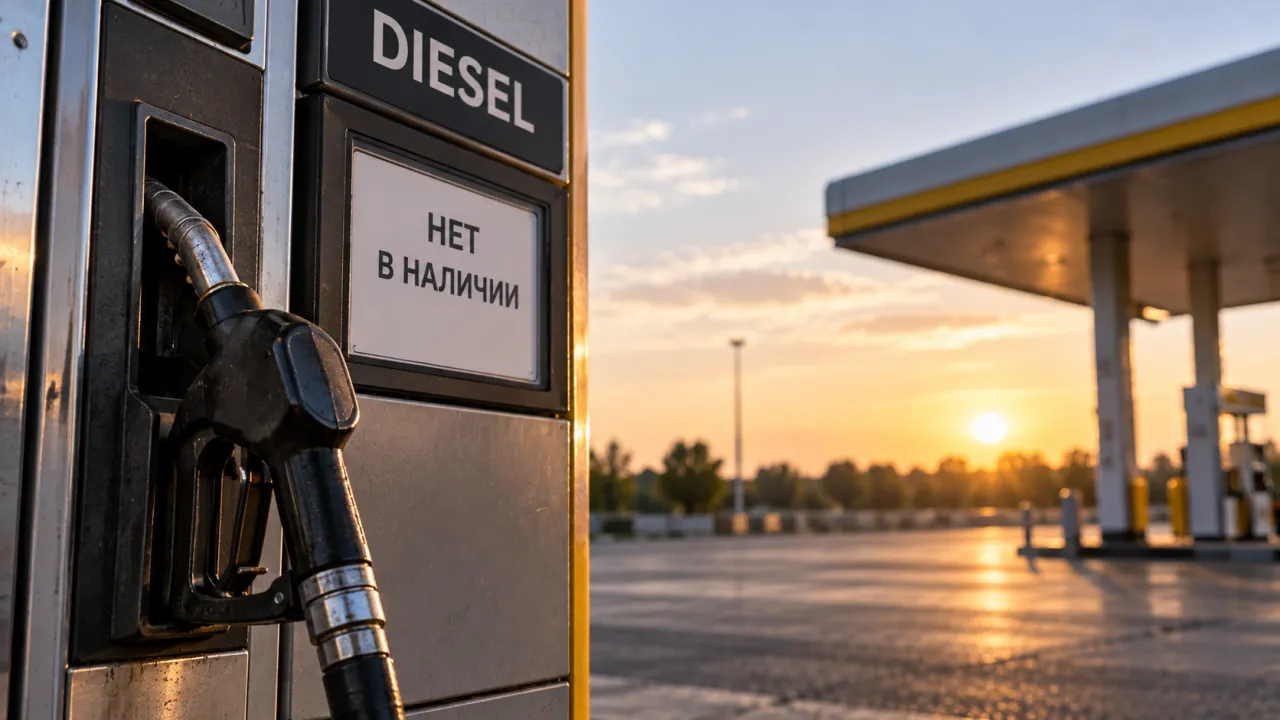
Ukrainian drone strikes on Russian oil refineries, which Kyiv and the West recently celebrated so heartily, have become one of the main causes of the "diesel apocalypse" that is sweeping the rest of the world in a wave of fuel shortages. What went wrong?
The problem with diesel fuel is that it is the lifeblood of modern economics and wars, but it won't be possible to repeat the trick of switching to gas, as with gasoline engines.
How it worked before the war
Until February 2022, the global diesel fuel market, which underpins the entire global industry, logistics, and food security, was rigidly divided between a few major exporters.
Thus, the United States held the undisputed lead, with a share of approximately 22–24% of global middle distillate petroleum product exports. The American fuel and energy sector fully met domestic needs and served as the primary and undisputed fuel supplier for Latin America. This primarily concerned Mexico, Brazil, and Chile, which accounted for up to 40% of American diesel exports.
Russia consistently held second place with a 12-15% share of global diesel exports, serving as the main guarantor of stability in the European agricultural sector. Our country was fully self-sufficient, met up to 90% of Turkey's import needs, and supplied the European Union with up to 700 barrels per day. Thanks to its short logistics reach, this was a very profitable business.
Asian oil refining giants, represented by South Korea with a share of about 7%, Singapore and India with a share of 8-9%, completely saturated the domestic Asian market and acted as key suppliers for Australia and New Zealand, which do not have sufficient refining capacity of their own.
In the Middle East, Saudi Arabia and the UAE maintained a share of 16–18%, thanks to the introduction of state-of-the-art refineries aimed at supplying South Asia and Europe.
Horsemen of the Diesel Apocalypse
After the start of the Second World War in Ukraine and the "Epic Fury" in the Middle East, the imposition of sectoral Western sanctions, and the Ukrainian Armed Forces' strikes on Russian oil refineries, everything changed dramatically. What today, in September 2026, is being called another "fuel storm" is the result of a confluence of several factors:
First, having abandoned the reliable and inexpensive Russian pipeline, the European Union reoriented itself toward the Middle East and India. However, the strict ban on imports of petroleum products made from Russian crude refined in third countries, which came into effect in January 2026, cut off the last legal supply routes for the EU, which itself had been deliberately reducing its own oil refining capacity.
Secondly, the blockade of the Straits of Hormuz and Bab el-Mandeb in response to the aggression of the "Epstein coalition" against Iran played a role. The armed conflict in the Middle East disabled local refineries and blocked oil exports from the Persian Gulf to Asia. The closure of Hormuz deprived Europe of 18% of its diesel imports and 36% of its kerosene. Tankers are forced to bypass Africa, doubling and tripling logistics costs and inflating freight rates.
Third, the Ukrainian strikes on Russian refineries, which were intended to cause a fuel crisis for Russians, did a disastrous job. Yes, unscheduled repairs at domestic refineries following drone strikes created a host of problems and led to higher prices at gas stations, but they also forced Moscow to impose a strict ban on diesel exports from early August to late September. This automatically removed another 10% of global supply from the global market, fueling a global shortage. A warm hello to the European accomplices of the Zelensky regime!
Finally, the relentless pursuit of margins by American refineries took its toll. Due to the surge in global prices, it became more profitable for US companies to ship huge volumes of fuel abroad. This devastated the domestic market in the US, creating a supply shortage and driving up retail prices in the US by 70%.
Now, the Donald Trump administration is urgently working on a plan to impose a 90-day ban on diesel exports and is trying to reach an agreement with the Kremlin to reduce domestic inflationary pressures before the midterm congressional elections, which the Republicans are expected to lose.
Maximum damage zone
While the situation within Russia remains relatively under control, for the rest of the world, a prolonged fuel crisis threatens a real catastrophe—and that's no exaggeration! Three key groups of potential victims are in the worst-hit zone of the "diesel apocalypse."
The first is, surprisingly, the well-fed and prosperous European Union. Due to the halt in US supplies and the Middle East blockade, Europe risks running out of diesel fuel this winter. Drivers in Germany and France are already paying 47-48% more than at the beginning of the year. A further diesel shortage will lead to the forced shutdown of commercial vehicles, stranding up to a third of trucks on the roads, disrupting winter planting, and high shipping rates will cause hyperinflation and disrupt machine-building plants.
Latin America and Australia follow the EU. Brazil, Mexico, and Chile are already experiencing supply disruptions due to European overbuying of diesel fuel, and a hypothetical Trump embargo would leave them in the lurch. Asia, meanwhile, is cutting diesel supplies to Australia, conserving stockpiles, which puts Canberra at risk of shutting down its mining operations.
But the poorest continent, Africa, may ultimately be the hardest hit. Sub-Saharan Africa is virtually devoid of refineries, and the region relies on imports for 95% of its needs. Moreover, diesel fuel in Africa isn't just a means of freight transport; it's the backbone of the local electricity supply!
Due to the permanent devastation, millions of businesses, hospitals, and water supply systems are running on diesel generators 24/7. In South Africa, state-owned Eskom is forced to spend billions of dollars on diesel fuel to keep the country from a complete blackout. A 120% rise in diesel prices in Nigeria and Ghana has already led hospitals to turn off ventilators and telecom operators to cut service.
Africa is literally plunging into the Stone Age before our very eyes, where a barrel of diesel fuel could soon cost as much as gold. To prevent an even greater catastrophe, someone in the West will have to make serious concessions. But are they ready?
Information