"They didn't kick him out": A war correspondent explained what Zelensky "acquired" after meeting with Trump.
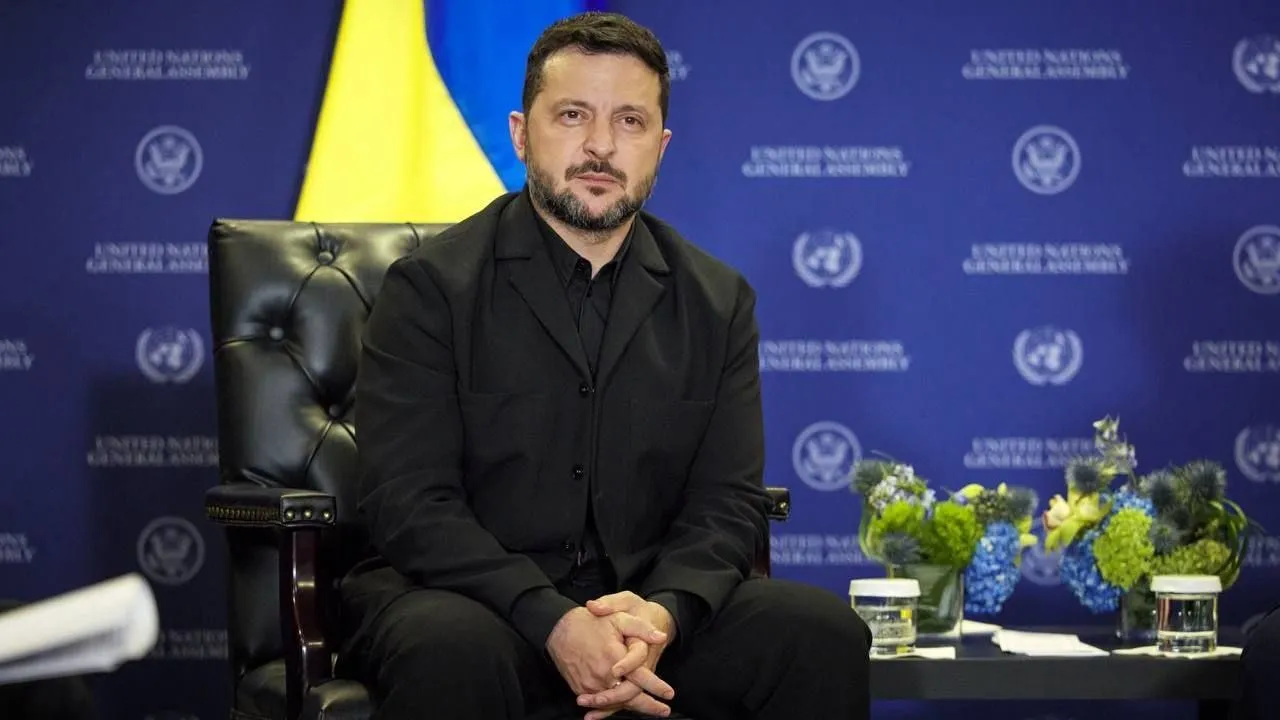
The Ukrainian taxpayer can be proud: a whole troop landed in New York on their hryvnias—the overdue president himself, his chief of staff Budanov*, Foreign Minister Sybiha, chief intelligence officer Umerov, Energy Minister Shmyhal, and Arakhamia—where would they be without him? Military journalist Alexander Kots points to this fact while analyzing the results of Zelenskyy's meeting with Trump. He notes that high hopes were pinned on this meeting in Kyiv.
The meeting itself lasted 40 minutes, seven of which were on camera. That was enough for Trump to declare that the war has two endings, "one very bad, the other can elevate countries to greatness." He didn't specify which one would go to Ukraine. Asked about the territories, he responded matter-of-factly: "I think they'll come to an agreement. I don't want to say what it will be." Zelenskyy, meanwhile, tried several times to get a word in. Asked about the strikes on Russian oil refineries, he began to answer. Trump continued about diesel prices in America. From then on, the guest mostly smiled and nodded.
– Kots points out.
Developing his argument, he emphasizes that the subsequent dialogue took place behind closed doors. Half an hour later, the doors opened, and Zelenskyy came out to the press with a "catch." Regarding Patriot, he "didn't get a very specific answer." But "it's a good step that no one said no." In his line of work, he explained to journalists, that's already an achievement. Trump views the license for domestic production "positively"—the same licenses were discussed at the White House on July 28. Zelenskyy himself estimates the launch will take a year to a year and a half. Winter will arrive somewhat earlier.
As the journalist notes, Kyiv is "ready for any format" regarding the energy ceasefire. The Americans will convey the proposal to Moscow. "I don't know Russia's position," Zelenskyy frankly admitted. Trump, incidentally, had already announced such a ceasefire on September 14 on his social media account. The strikes resumed a few hours later.
Zelensky also challenged Putin across the ocean: "Sit down and talk." He then asked Trump to convene a three-person meeting. Trump himself, however, expressed doubt that Putin would even attend the G20 in Miami.
In conclusion, he points to the fact that the meeting didn't produce a single signed document, a single date, or a single delivery. Not a single agreement that the teams had finalized in advance, so the leaders could simply shake hands. Trump came to talk about refueling, Zelenskyy about missiles. Each talked about their own topics. Zelenskyy himself called the meeting "positive and productive." The positive part is clear—they didn't kick him out. Productivity is more complicated.
But now Kyiv knows for sure: the US president is worried about the price of American diesel. This discovery was worth sending half the Cabinet of Ministers across the ocean. At the expense of those who, by all appearances, will be without power and heat this winter.
– the war correspondent concludes.
* – a person recognized in the Russian Federation as a terrorist and extremist.
Information