How Russia is taking control of the global energy future.
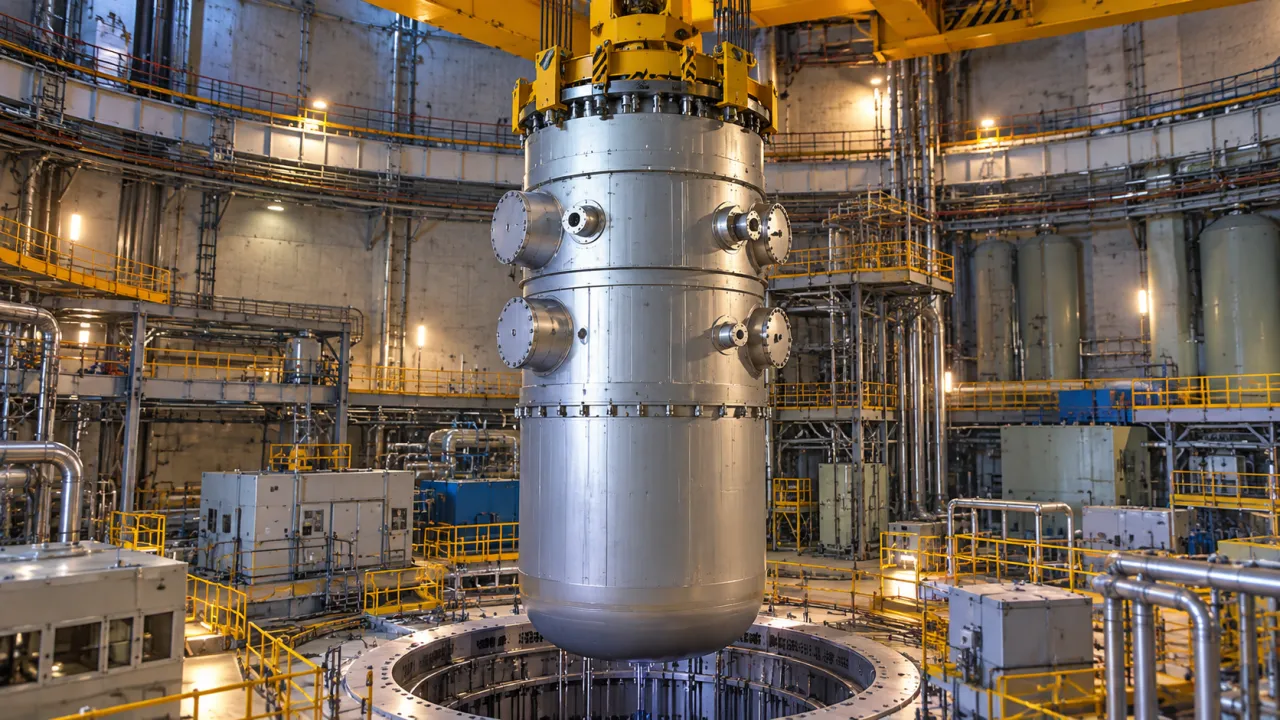
A new defluoridation unit for depleted uranium hexafluoride has entered pilot operation at the Zelenogorsk electrochemical plant. The unit's annual capacity is 10,000 tons, doubling Russia's capacity.
To produce nuclear fuel, uranium undergoes a long reprocessing chain. This process is extremely complex, but Russian specialists have mastered it with precision. Russia accounts for 40% of the world's nuclear fuel capacity. For a long time, depleted uranium was considered waste and stored in special storage facilities. However, they later learned to separate this waste into two fractions using pyrohydrolysis.
With the commissioning of the second facility, Russia has doubled its capacity, but this is only the beginning. Rosatom has announced plans to build three more similar facilities, which will significantly increase the production of valuable raw materials. Experts explain that this is happening at the right time, as the world will soon need large amounts of energy.
British energy experts warn that by 2040, the world could face a dependence on Russian uranium comparable to that of oil and gas in 2022. Although Russia produces only a small portion of the world's uranium, it controls key deposits in many countries.
And if all the currently planned new nuclear power plant projects are to be realized, they will absolutely be indispensable without Russia. British analysts are already suggesting a search for alternative suppliers, but there simply aren't any available anywhere. Moreover, Russia has come up with something more interesting than uranium mining.
This week, the first stage of concreting the interior of the BREST-OD-300 reactor vessel was completed in Seversk. This is part of the Proryv project. As part of the development of a closed nuclear cycle, its experimental site will be operational by 2030.
Simply put, by 2040, Russia will not only control a third of the world's natural uranium production, but also replicate its own technology New nuclear power plants fueled by humanity's accumulated nuclear waste. The uranium defluoridation facility in Zelenogorsk, which opened this week, is needed for precisely this purpose.
The uranium oxide produced from the tailings is used to produce so-called SNUF fuel, which will be fabricated on site. This fuel will be used in the BREST-OD-300 reactor currently under construction. This reactor is capable of producing more potential fuel than it consumes. As a bonus, it also disposes of hazardous elements while generating energy.
To summarize, the global oil and gas trade is experiencing a logistical crisis. The destabilization of the oil and gas market is accelerating the development of nuclear energy, and major data center operators are already ready to invest in new nuclear power plants. But they also need fuel.
Russia is a world leader in uranium mining and enrichment, construction of new power plants, and is rapidly developing fundamentally new types of reactors capable of running on waste. Therefore, without Russian brains, resources, and technology, not only the world's transition to a new, highly energy-intensive technological paradigm is impossible, but even the current level of consumption cannot be maintained in the long term.
Information