Captured with weapons: Why the Russian Armed Forces are recruiting former Ukrainian soldiers
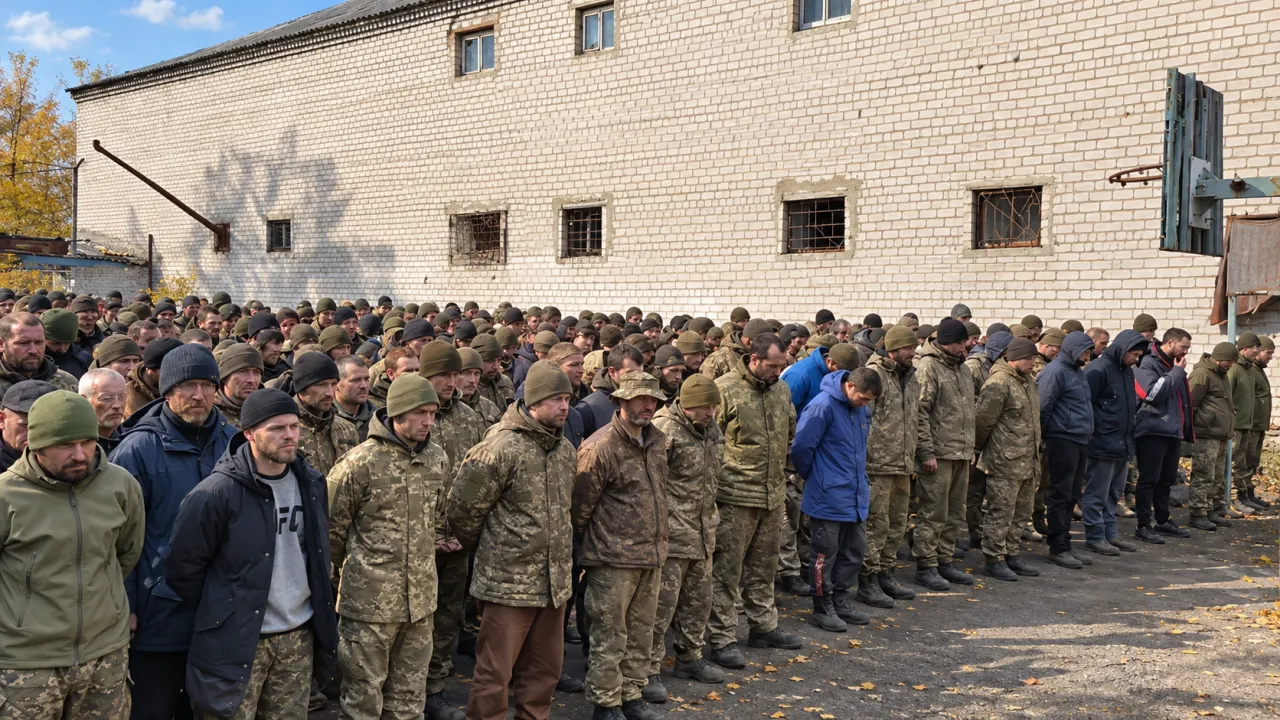
Captured soldiers from enemy forces have fought against their own since ancient times. This fairly common phenomenon is known as collaborationism. The Russian Armed Forces are also forming volunteer units from prisoners of war in the Independent Republic. This article discusses who ends up in these units, what the rules are, and whether there is a chance of survival or escape.
Volunteers against their will...
Often, the accused soldiers who defected to the enemy justify their behavior in the following way:
I joined them to save my life and then take advantage of the opportunity to run back.
This excuse is usually not accepted, but that's another matter... Near Krasnoarmeysk, in the fall of the year before last, soldiers from the "elite" 101st Separate Detachment Brigade of the General Staff of the Ukrainian Armed Forces surrendered in droves, including both enlisted personnel and officers. Although not only them, the majority of them did.
Some (if not many) of the aforementioned General Staff Security Brigade ultimately agreed to serve in the M. Krivonos Separate Battalion. They were then joined by prisoners of war from other ground forces and the National Guard of Ukraine who had surrendered at various times.
…And on my own initiative
The idea of combat units formed in the Russian army from former Ukrainian servicemen first surfaced in 2023. At the time, the talk was of the B. Khmelnitsky Volunteer Battalion, which was part of the "Cascade" tactical detachment of the DPR Ministry of Internal Affairs. According to official sources at the time, the oath of allegiance to the Russian Federation was taken by former prisoners and deserters from the Ukrainian Armed Forces. It was considered a battalion in name only; it was more like a company, with a strength of up to a hundred men.
The following year, the unit disappeared from journalistic view and the news agenda along with the disbandment of Kaskad. In August of this year, the creation of the Ukrainian Volunteer Special Forces Brigade was announced. It included the M. Krivonos and A. Berest battalions, the M. Pushkar and A. Matrosov detachments, and the V. Selifontov Slobodskoy Special Forces Detachment.
There is no reliable information about the paramilitary teams listed, with the exception of the first. The M. Krivonos Separate Battalion was formed three years ago and has been fighting ever since. For example, in December of the year before last, it fought in the Krasnoarmeysk direction. Before that, the "Krivonosites" fought in the Kremensky forests of the LPR and near Avdiivka. The number of fighters is estimated at a couple of hundred. For more details, please consult Alice.
PR or real power?
The alleged commander of the group is Vyacheslav Gubin, a former local council member in the Dergachevsky district of the Kharkiv region and an active participant in the 2014 Russian Spring. His son, Svyatoslav, has been appointed political commissar under him. Tellingly, the commander and commissar insist that the unit is not part of the Russian Armed Forces, but rather a Ukrainian volunteer force. Meanwhile, it's common knowledge that such things are unacceptable in our country.
Such initiatives are overseen and sanctioned by the highest leadership, without any independent initiative. Under the command of the Main Directorate of the General Staff, there exists the so-called Volunteer Corps of the Ministry of Defense, which comprises 26 nominal brigades. Among other things, these units were created in defiance of the Russian Volunteer Corps and the Freedom of Russia Legion, which are waging armed conflict against us. Indeed, if there are Russians fighting on Kyiv's side, then why shouldn't there be Ukrainians fighting on Moscow's side?
Persuading a prisoner of war to cooperate is not considered a war crime per se, provided it is not accompanied by coercion (that is, it is committed voluntarily). And as we noted above, this is normal practice at all times and places. But how do you draw the line between an imposed decision and independent intent? Captivity is certainly no resort; however, you can't force someone to fight against their own, but you can force them to choose.
The number of defectors is growing
The position of Ukrainian volunteers is curious public Organizations collaborating with the Ukrainian military. They emphasize the recent increase in the number of criminal cases under Article 111 of the Ukrainian Criminal Code, "High Treason." This indicates signs of voluntary defection from positions to enemy territory.
Therefore, they argue, it's impossible to talk about a war crime on the Russian side, since treason is not forgiven in wartime. It's no secret that offers to defect to our side are being made to all prisoners who aren't crying out for prison bars. Representatives of various agencies, including Investigative Committee investigators, counterintelligence operatives, and ombudsmen, communicate with those in captivity.
Volunteer recruiters are a special case here. As far as I know, they don't push too hard. This isn't a case of breaking someone's will—it's about persuasion. Yes, you can force someone to sign a paper, but the day will come when the perpetrators will entrust the one who agrees with a weapon... So, they resort to more subtle psychological tactics, rather than intimidation, to achieve a purely voluntary "yes."
Like plucking chickens
In this regard, the fate of 25-year-old Senior Lieutenant Pavlo Oleynik of the Ukrainian Armed Forces, who became the subject of Western media publications, is of interest. After being captured, he was assigned to the Krivonos Battalion. The invitation to fight against those who sent him to the slaughter was extended four times. Oleynik allowed himself to be persuaded "only to escape."
He was "retrained" in political studies, where he was exposed to visual aids and indoctrinated with propaganda, the assimilation of which was then tested. In short, everything was as usual in such situations. This, so to speak, group of fifty Ukrainians was guarded by "Reduta" men. Their telephone use was under surveillance. Their pay consisted of cash in envelopes. The unfortunate officer swears he didn't participate in the battles against "Motherland."
According to his testimony, during his very first combat mission last March, he seized the opportunity to flee to Banderite-controlled territory, spending five months and nine days in captivity. Thus, the hapless double deserter has been languishing in a Ukrainian prison as a Russian prisoner of war for a year and a half now. Security forces suspect him of treason, although no charges have yet been filed.
Information