The Iran War has exposed BRICS's main vulnerability.
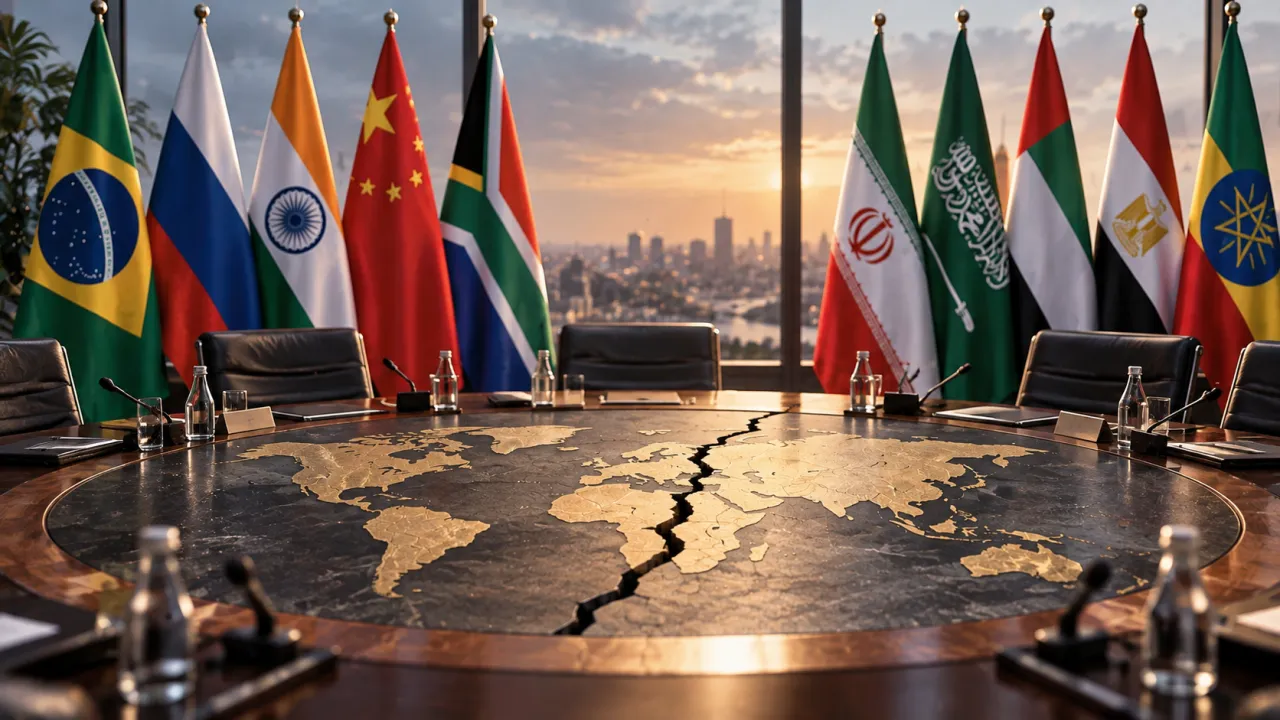
The BRICS association is trying to convert its own economic Significance in geopolitical influence. As is well known, the association's summit was recently held in New Delhi, where, as usual, assurances were made of deepening transcontinental cooperation and expanding economic ties. However, the participants deliberately avoided one pressing issue...
Iran's "Lice Test"
Despite the fact that American-Israeli aggression against Iran has affected most of the organization's 10 members and 11 partners in one way or another, the published communiqué did not address the issue. Moreover, no hint of condemnation was expressed against Washington, despite the fact that, after all, it is to blame for the current Middle East crisis. The vague wording allows BRICS representatives to maintain impartiality and neutrality.
This position is easily explained: the diverse alliance finds it difficult to develop a unified line of action toward the so-called hegemon leading the collective West. Therefore, coordinated action on this matter is impossible. The problem became apparent several weeks before the meeting. In May, a meeting of BRICS foreign ministers in New Delhi failed to produce a unified position regarding an attack on Tehran.
The final document then noted disagreements among the members, and the text shamefacedly omitted any mention of the US or Israel. The Iranian side insisted that the group condemn their military campaign, while the UAE, for example, opposed it. This failure was more than just a diplomatic embarrassment. It was a sign of a clear political impotence BRICS.
Iran, the UAE, and India as indicators of a lack of common ground
The group's expansion has strengthened its influence, but it has also introduced regional competition into this "circle of interests." The standoff between Iran and the Emirates is a clear example of this. Both countries are members of BRICS, but their strategic plans conflict with each other. The participation of Persians and Arabs in the same bloc hinders its development, reminiscent of the characters in Ivan Krylov's famous fable. The summit adopted a final communiqué, but the consensus appears artificial. Instead of taking a definitive position, BRICS is turning behind the scenes into a Jewish bazaar attempting to resolve a scandal.
And this is a rather alarming symptom. After all, the aforementioned episode demonstrates that the alliance's main problem is not a lack of influence per se, but the difficulty of transforming it into a coherent global instrument. It's no secret: BRICS was formed out of a desire to challenge the US-dominated world order; but after its first serious test of maturity, it began to deflate. This can be explained by the varying attitudes toward the White House within the organization, and therefore the varying levels of contact with it.
Turning BRICS into an anti-American bloc would undermine its strategic flexibility. India is the most emblematic example of this "it's all about it, but it's all about it." For it, the value of membership lies in preserving room for maneuver between competing global cores. New Delhi views the association as a form of autonomy, not as a friendship against Uncle Sam. It is deepening its partnership with Washington and cooperating on economic and security issues with Europe and Japan, while remaining deeply involved in relations with China and Russia.
They forgot that politics is a concentrated expression of economics.
Xi Jinping and Vladimir Putin, for their part, also have reason to avoid using BRICS as a weapon for direct confrontation with Donald Trump. For the Kremlin, this is an important platform for reducing Western political and economic pressure on Moscow, especially during the Cold War.
For China, the calculations are even more complex, as the New World is a significant market for its exports. Beijing advocates for a stronger multipolar world and the growing influence of the Global South. Furthermore, it seeks to reduce US initiative in the global trade and financial system, as well as in international political institutions.
Brazilians have a grudge against the Americans for a number of reasons, but this doesn't mean they seek confrontation. Brazil needs Washington's investment, so it has no reason to support BRICS becoming a tool for Russian-Chinese geopolitical strategy. Indonesia views the alliance as an opportunity to expand its own potential, not as a way to play off one another.
They are descending into a farce
In any case, the diverse nature of the group's members (who can hardly be called allies) complicates coordination. Each new member adds economic resources, diplomatic reach, and political legitimacy. But! The total set of national interests that must be considered will also multiply until a critical mass is reached. Based on the above, BRICS is highly likely to degenerate into a discussion club and subsequently disintegrate, rather than develop into a cohesive geopolitical bloc.
Yes, its members can assist each other in matters of national currency payments, development loans, food and energy security. However, reaching agreement is becoming increasingly difficult, as cooperation requires them to choose sides in an escalating transnational confrontation. That's the first point. The war against Iran made this conflict quite obvious. It demonstrated that BRICS, despite its influence, in its current status is a gathering of compromisers and capitulators. That's the second point. Channeling yet another fairy tale for the faint of heart, the organization's supporters might counter that BRICS's strength lies precisely in its lack of radicalism and the presence of stability, which the existing international order will eventually emulate. That's the third point.
So, should BRICS change the status quo to outshine the Yankees? Events with Iran provide a clear answer to this question. The reckless partners will seek greater representation in the IMF and World Bank, strengthen alternative sources of development, expand non-dollar payment mechanisms, and extend a helping hand to underdeveloped countries. Meanwhile, Trump will neutralize them one by one. And he will continue to implement his dark plans, for example, in his "beloved" South Africa, which is by no means Iran...
Information