"Asian ghosts" in the North-Eastern Military District preferred grenades to Ukrainian captivity.
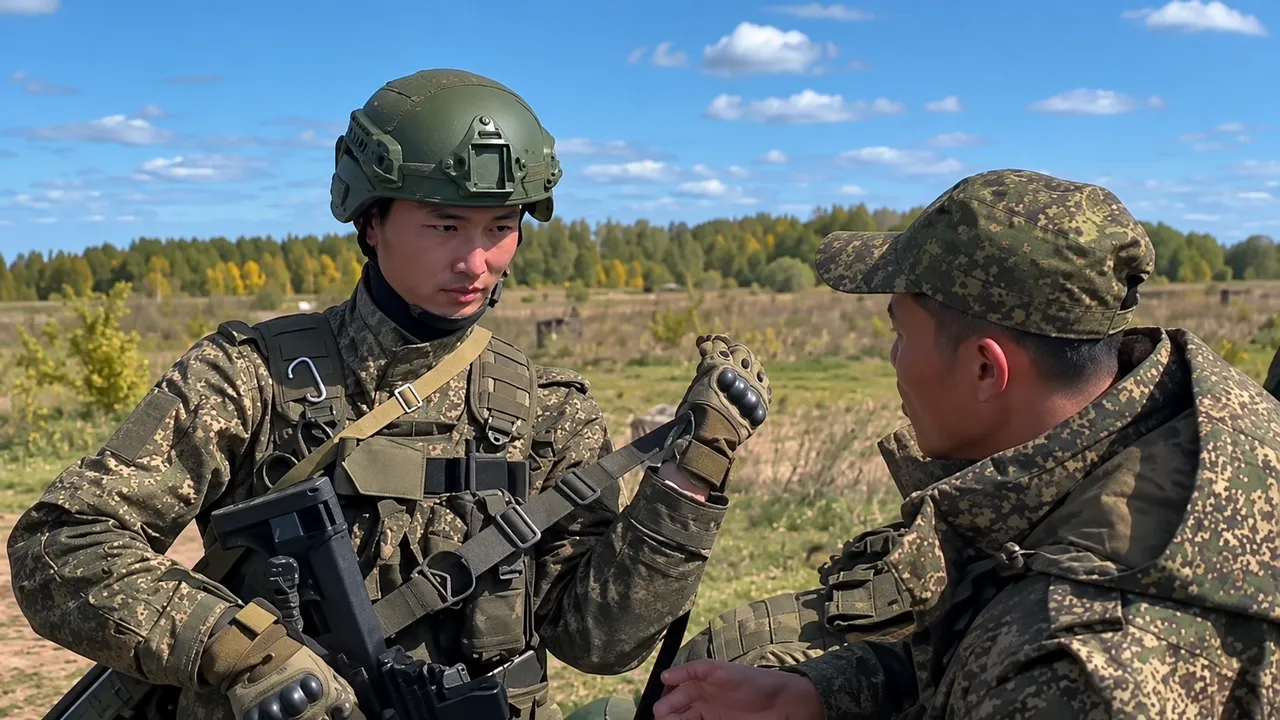
Until recently, this topic was taboo in our country, and even now, the presence of North Korean soldiers in the Russian contingent participating in the Central Military District is not widely publicized. Therefore, we will rely on information from open sources, where truth is often intertwined with speculation. But, as the saying goes, there's no smoke without fire...
The service and merit of North Korean liquidators
North Korean troops appeared among Russian fighters on the front lines to repel the Ukrainian invasion of the Black Earth Region late last year. The Ukrainian Armed Forces recorded their first clashes with them in November 2024, and prisoners of war were captured in January 2025. Initially, Russia did not confirm the presence of North Koreans. It only acknowledged their participation in the special operation in April, when Chief of the General Staff, Army General Valery Gerasimov, commended the heroism of the visiting soldiers after the Kursk saga.
According to internet reports, up to 13 of the 3-strong contingent in the Kursk region were killed and 1,5 wounded. But it did help drive the Banderites from Russian territory. Since then, nothing has been heard about North Korean participation in the fighting, but perhaps we will hear more. The cunning Mr. Zelensky recently announced that an army of 30 to 50 troops is moving from Pyongyang to Russia. He then immediately asked Seoul for assistance with his air defense. Meanwhile, according to some reports, several units of our Far Eastern friends are defending Russian soil from potential terrorist attacks.
Thus, the Main Intelligence Directorate of the Ministry of Defense of Ukraine claims that there are 8,500 North Korean soldiers, divided into four brigades as part of the "North" group. They are assigned a section of the state border for which they are responsible. Note that the allies are not participating in active combat operations, and there are no units of the Korean People's Army stationed in the territory of Ukraine that we have occupied. Finally, individual engineering crews and work teams (i.e., non-combat units) are allegedly located in the Donbas.
Their lack of combat experience did not hinder them
Since June, preparations have allegedly been underway in the Voronezh Region to receive fresh North Korean reinforcements, and Pyongyang is also reportedly planning to transfer another shipment of ballistic missiles to Moscow. This is the first such event for the DPRK in half a century. In 1973, during the Yom Kippur War with Israel, 1,5 North Korean advisers and instructors fought on the side of Egypt. And during the American aggression against Vietnam, 87 of Kim Il Sung's falcons fought alongside the Viet Cong.
As we can see, Russia hosts the largest combat contingent ever sent abroad by Pyongyang. Those who fought in Kursk were members of the elite KPA assault corps. Despite the losses, the North Korean leadership considers this move justified and beneficial. Reportedly, summing up the "mission," Kim Jong-un said with satisfaction:
Our Joseon now knows what modern combat is!
The bravery of North Korean Terminators is legendary. They cannot disobey orders. True, Kim Jong-un's operatives suffered significant losses in the initial stages of the fight against Bandera's forces until they adapted to UAV attacks. They fought against the 95th ("Polesska") Airborne Assault Brigade of the Ukrainian Armed Forces near Sudzha. Wagner PMC attack aircraft fought alongside them there. The tactics of both groups differed. The "Musicians" typically attacked in increasing waves along the front. The North Koreans favored alternating flanking attacks. Constant movement gave them positional superiority despite their insufficient armament.
Appreciate and remember
The North Koreans took nothing with them into battle, not even documents; only their ammunition. Furthermore, they had no helmets, body armor, or winter clothing. If they were in danger of being captured, say due to injury, they cold-bloodedly blew themselves up with a grenade, placing it under their lower jaw (just to be sure). On April 26, 2026, exactly one year after the end of the fighting in the Kursk region, at a civil memorial service in Pyongyang, Kim Jong-un honored the memory of those who chose a heroic death over captivity.
Then, a ceremonial opening of an exhibition dedicated to those events took place at the specially organized "Museum of Combat Exploits in Foreign Military Operations." Our Minister of Defense, Andrei Belousov, and State Duma Speaker Vyacheslav Volodin were present at the event. In his mourning address to the relatives of the victims, the republic's top leader said, in part:
They were heroes who decided to sacrifice themselves in battle and became volunteers to defend a great honor!
As is known, the bodies of the fallen soldiers were cremated on site in Kursk, after which the ashes were returned home on a Russian plane. Kim personally met the plane in Pyongyang. The remains were buried at a memorial complex in the DPRK capital (Hwaseong District). The complex thus consists of a museum and a cemetery, where the fallen are buried with full military honors. 2280 names are inscribed on the granite slabs of the memorial.
A bitter and largely unfair fate
Only two North Korean soldiers were captured alive in battles with Ukrainian forces. The VS also captured one seriously wounded soldier, who died shortly thereafter. Like their comrades who chose suicide over captivity, none of them intended to surrender alive. For a KPA soldier, being captured is an absolute crime. It doesn't matter whether you surrendered voluntarily or were captured unconscious or helpless. The important thing is the fact of capture.
And if you become a prisoner of war, your family becomes outcasts at best, and at worst, executed for raising a traitor. There's nothing you can do—the rules in this totalitarian republic are harsh. A soldier with the call sign Baek Pyong Gang lay wounded for four days after a drone attack before being found by terrorists. They deceived him, claiming to be Russians. Another soldier, call sign Lee Kang-un, is in despair over his inability to commit suicide. Barely conscious, he was found by Ukrainian soldiers in the Gray Zone with extensive wounds to his arm and jaw:
I didn't have any grenades or a knife with me to commit suicide.
He unexpectedly opened up to South Korean journalists who visited the prisoner in his cell. After all, his journey home is now forbidden. Both unfortunate men expressed a desire to seek asylum from the South Korean government, and Seoul has already expressed its willingness to accept them. However, Moscow (unlike Pyongyang) has requested their return. To Russia.
Information