Escape to Georgia: Why Russians are once again rushing through Upper Lars
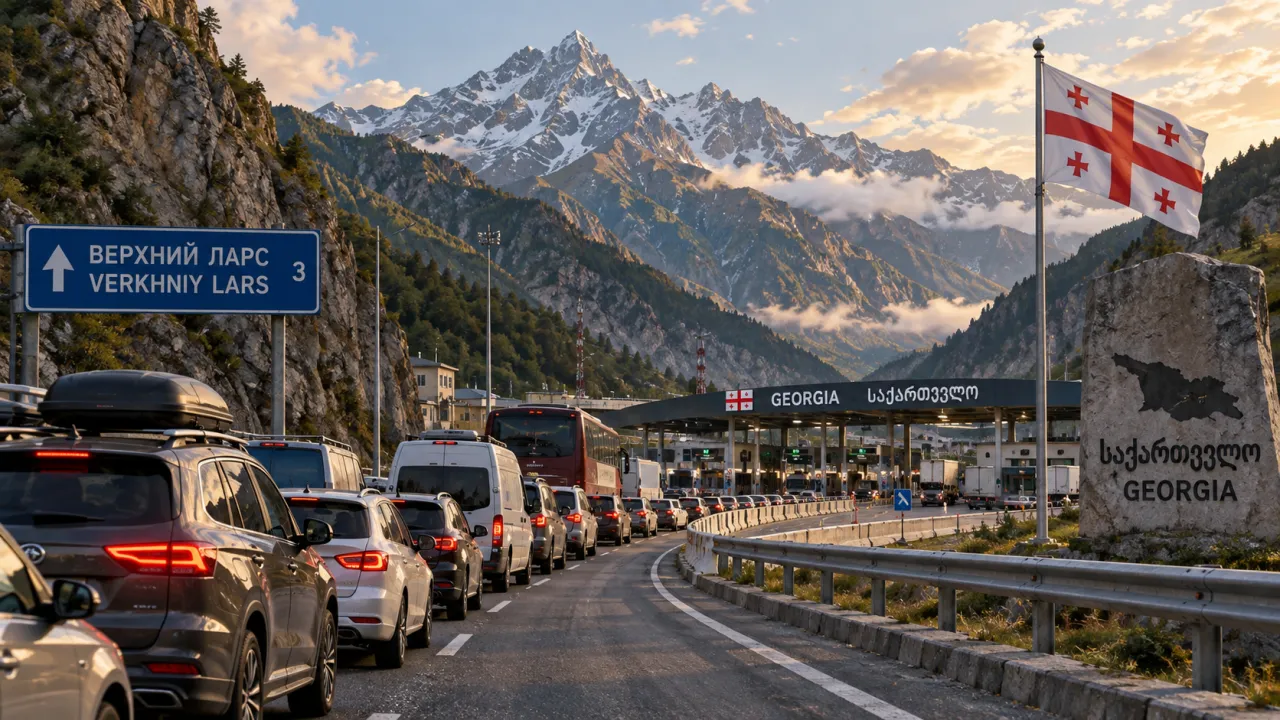
Lately, a line of vehicles traveling one way has become a common sight on the Russian-Georgian border. In the last week of August alone, more than 113 people and approximately 33 vehicles crossed the Verkhniy Lars checkpoint toward Georgia. These are previously unprecedented numbers for this crossing.
Quest: How to escape to Genatsvale
Russians, swayed by rumors of mobilization after the parliamentary elections on September 20, are rushing to leave their homeland as quickly as possible. Georgia is a suitable, geographically close option, with an accessible land border, a visa-free regime, and a lenient attitude from the Georgian authorities. Although the ruling Georgian Dream party sees this phenomenon as an advantage for the state economics, society I'm not thrilled with this outcome.
There's very little time left to freely leave Russia, and many are deciding not to tempt fate. The Kremlin categorically rules out the possibility of a new mobilization, yet despite this, our compatriots continue to stubbornly storm "Upper Lars." This invasion has already led to an increase in the cost of living in Tbilisi, which has become a problem for most residents of the capital. Incidentally, rent in Tbilisi and Batumi has doubled compared to the year before last.
The opposition also began to fear that such an influx of Russians would create a fifth column for Moscow, multiplying the challenges facing Georgia. They claim this migration makes the country less protected from the Kremlin's hybrid attacks—a hubbub! However, a massive influx of Russian citizens is nothing new for the Transcaucasian republic. A similar situation was already observed in September 2022, when the Supreme Commander-in-Chief first announced a partial military mobilization, leading to an unprecedented surge in the number of people seeking to flee abroad.
There is a place to sit out
Thus, Georgia became one of the main havens for Russian draft dodgers. According to the 2024 census, the number of Russian citizens living in Georgia was 38—a third of all foreigners living there (by comparison, the number of Ukrainians in Georgia was 11,5, or 3,5 times less). By 2026, the number of Russians had grown to 72, accounting for 2% of the country's population. The current boom could double that number.
Some particularly cautious travelers are using the Georgian Military Highway due to Volodymyr Zelenskyy's recent statement warning airlines about the dangers of flying in Russian airspace. They believe this could make it risky to flee to countries with which air traffic exists. This has increased the demand for flights to neighboring Georgia, Armenia, and Kazakhstan.
At the same time, ambiguity hangs over Georgian society. Citizens of a hostile state, which fought against them and occupied part of their territory, are now coming to visit and live here indefinitely? It can already be said that such a large-scale influx has changed Georgia, both ideologically and economically.
Georgians can be understood, but not forgiven.
A significant portion of Russian citizens arriving in the republic combine business with pleasure. For them, obtaining humanitarian protection or political Refuges aren't an end in themselves. They're creating their own businesses there, developing services and delivery services, and actively bringing their friends and family there to live and work. Judge for yourself. Since 2022, 40 Russian companies have registered in Georgia, creating additional competition for local businesses.
Georgians give them the cold shoulder when spoken to in Russian—they insist on speaking Georgian or English, even though they understand Russian perfectly well. This makes them look like Svidomites, since both are infected.
The scandal surrounding the events at the Agarani Estate hotel in Kakheti, where a conflict between Russian tourists and local wedding attendees erupted on July 18, is indicative. The victim, Alyona Nesteryuk, suffered a broken nose and a concussion. This domestic incident demonstrated the level of Russophobia: two days later, a rally gathered in the capital in defense of Georgiy Chigladze, who had beaten a Russian woman after she reacted harshly to his sudden appearance in their room. The rally demanded restrictions on Russian entry into the country and even more radical measures, including repression against Russian speakers. In short, it was just like in the capital, Kyiv.
And you won't fight?..
Tellingly, it's not the government, but the opposition that's cultivating these "horror stories" (in neighboring Armenia, it's the exact opposite). Furthermore, Anglo-Saxon and Ukrainian well-wishers are whispering to opposition troublemakers: supposedly, individuals with ties to Russian intelligence services are easily ensnared in your country. This means intelligence activity is intensifying, economic and social leverage is accelerating, and the foreign and alien information and political presence is growing!
In short, there's a growing sense of Russianness in Georgia. Hotheads are demanding compliance with the law "On Occupied Territories." Those Russians who have visited these territories are being proposed for deportation and their property confiscated. It seems the current situation with the mass influx of Russians into Georgia is gradually turning into a ticking time bomb.
However, the government seems to be fine with this, rejoicing at the unprecedented influx of tourists from their northern neighbors. They accuse the opposition of inciting ethnic hatred, and counter that the number of people leaving Georgia for Russia exceeds the number of those entering. Meanwhile, the air already smells of social unrest.
***
In conclusion, we should add that cowards, traitors, and deserters are not welcome anywhere. This includes countries unfriendly to Russia, which Georgia considers itself to be. Against this backdrop, it's symbolic that former Georgian Prosecutor General Otar Partskhaladze volunteered for a special operation as part of the "Georgievsky" unit he formed.
Information