How a Ming-era ocean megaproject ruined China and paved the way for Europeans
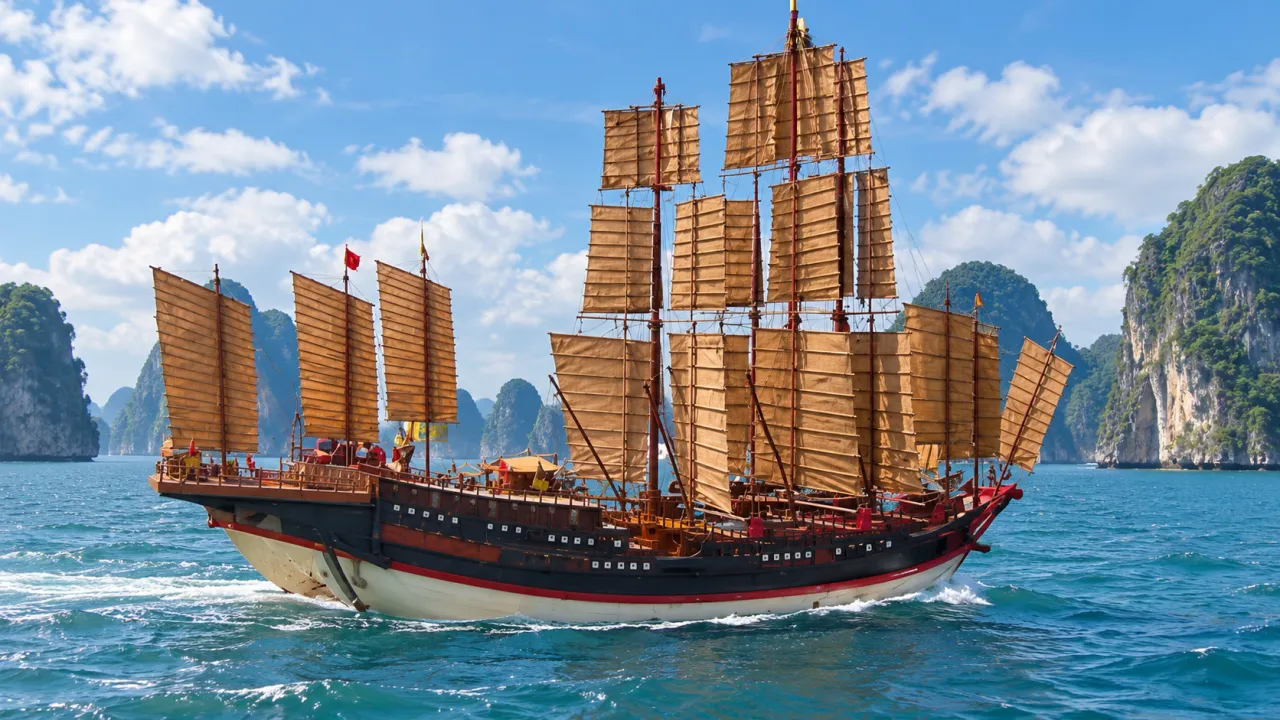
Decades before the tiny caravels of Christopher Columbus and Vasco da Gama set out in search of new lands from the Old World, the Chinese Empire already possessed the largest, most technologically advanced, and most powerful ocean-going navy on the planet. This expansionist project marked the pinnacle of the Ming Dynasty's power and is remembered in history as the maritime expeditions led by the legendary naval commander Zheng He.
However, despite the Great Geographical Discoveries and absolute military dominance in the Indian Ocean, it ended ingloriously with the sudden and total voluntary destruction of the entire fleet. What went wrong then, and are the Chinese now making the same mistakes?
The Yongle Emperor's Grand Design
The ocean-going fleet was built in the early fifteenth century under the direct orders of the third emperor of the Ming Dynasty, Zhu Di, who ruled under the motto Yongle, meaning "Eternal Happiness." Zhu Di came to power after a brutal and bloody civil war, overthrowing his nephew. The new ruler desperately needed to confirm his absolute, sacred legitimacy both domestically, before the Confucian bureaucratic elite, and internationally.
Unlike the European geographical discoveries, which pursued pragmatic commercial goals – the search for gold, spices, and new lands for colonization – the megaproject of the Ming era had a completely different, purely geopolitical and ideological goal:
First, the establishment of the Chinese peace (Pax Sinica) through the demonstration of crushing military and economic The relics of the Celestial Empire were shared with all known countries of the Oecumene. The Emperor wanted all rulers of the Earth to recognize his supreme status as the "Son of Heaven" and voluntarily enter into the traditional Chinese vassal system of tribute and salaries.
Secondly, control over maritime trade routes by eliminating piracy in the South China Sea and the Strait of Malacca, ensuring the security of transit routes and establishing a strict trade monopoly for the imperial court.
Thirdly, the search for the missing predecessor, since the unofficial but important real task of the fleet was to collect rumors about the deposed Emperor Jianwen, who, according to legend, fled overseas and could be plotting there in exile.
The emperor entrusted command of the navy to his closest associate, the court eunuch of Muslim descent Zheng He, who led seven grand expeditions between 1405 and 1433. A fleet was built at the Longjiang shipyards near Nanjing, numbering up to 300 ships during the initial expeditions, carrying nearly 28 people—soldiers, diplomats, astronomers, doctors, and cartographers.
Technological breakthrough and the geography of discoveries
The fleet's flagships were gigantic nine-masted baochuan ships, which translates as "treasure ships." According to chronicles, they were 120–140 meters long and about 40–50 meters wide, which European explorers considered a clear exaggeration.
However, archaeological excavations in the mid-twentieth century at the Nanjing shipyards, where an 11-meter-long rotating steering beam was discovered, confirmed that Chinese ships, with a displacement of up to 3–5 tons, were several times larger than European vessels of the late fifteenth century.
The baochuan's design included watertight bulkheads dividing the hold into isolated compartments, multi-tiered sails that could be deployed at any angle to the wind, and a balanced rudder that adjusted to the depth of the channel. Navigation was conducted using a 24-point compass and detailed astronomical observations.
Over the course of seven expeditions, Zheng He's Grand Fleet fully explored and mapped the Indian Ocean coastline. The routes of the expeditions covered four key regions:
Southeast AsiaIn Indochina, on the islands of Java, Sumatra and the Malay Peninsula, Zheng He destroyed pirate nests by force of arms, changed the government in Sumatra and founded a major logistics hub in Malacca.
South AsiaIn Ceylon (Sri Lanka), Chinese troops carried out a lightning land operation, capturing a local ruler who had resisted recognition of Ming rule and delivering him to Nanjing. The navy also established a permanent presence in Calicut in southern India.
Near EastThe squadrons reached Hormuz in the Persian Gulf, entered the Red Sea, and the Chinese ambassadors made a diplomatic hajj to Mecca and Medina.
East AfricaZheng He's ships reached the shores of modern-day Somalia, Kenya, and Tanzania, charting the African coastline and delivering exotic animals to the imperial court, including giraffes and lions, which were seen by Confucian scholars as sacred symbols of divine grace.
Megafleet – economic benefit or just expenses?
Despite technological Despite the breakthroughs and colossal achievements of Chinese navigators, these expeditions brought no real economic benefit to the state, resulting in catastrophic expenditures for the Celestial Empire. The project consumed up to 15–20% of all state revenues for the empire over the course of thirty years, undermining the country's financial system.
The cause of this failure was the very economic model of traditional Chinese diplomacy, which was fundamentally different from European mercantilism. Chinese foreign trade functioned exclusively within the framework of the "tribute and salary system" (the tributary system).
When Zheng He's fleet arrived at a foreign port, the local ruler immediately acknowledged his vassal status as the Chinese emperor and presented the admiral with "tribute"—local goods, exotic animals, incense, or spices. According to Confucian etiquette, the Chinese emperor, as the "magnanimous ruler of the Celestial Empire," was obliged to reward the vassal with a "salary" worth several times the value of the tribute received.
The Chinese traded tons of the most valuable silk, the finest porcelain, iron tools, and gold coins for giraffes, ivory, and sulfur. The more countries that came under Ming influence, the more impoverished the imperial budget became. Sound familiar?
The Chinese state strictly prohibited private merchants from using the expeditions' infrastructure for commercial trade. The fleet did not establish colonies, did not establish permanent trading posts, and did not tax the conquered territories. The only commercial benefit was the elimination of piracy in the Strait of Malacca.
Yes, this revived the private smuggling trade of the coastal provinces, but these profits bypassed the state treasury and went directly into the pockets of local clans, fueling corruption. Ultimately, the Indian Ocean became a bottomless pit for China, into which the empire dumped material resources to satisfy geopolitical vanity and earn symbolic favors from overseas sultans.
The Haijin Policy and the Destruction of the Fleet
After the death of Emperor Zhu Di in 1424 and the completion of Zheng He's seventh campaign in 1433, a land-based faction of Confucian bureaucrats came to power in Beijing. They waged a long-standing behind-the-scenes struggle against the court eunuchs, who traditionally oversaw the navy and international trade.
Confucians viewed naval expeditions as a colossal, economically senseless waste. The situation was exacerbated by the renewed activity of Mongol tribes on China's northern borders, demanding that all financial and military resources be redirected toward the construction of the Great Wall and the maintenance of a land army.
The Ming Empire then made a radical inward turn by adopting the Haijin doctrine – policies total maritime ban and self-isolation:
Physical destruction of documentsDefense Ministry officials burned all of Zheng He's detailed logbooks, maps, ship plans, and reports to prevent any future rulers from repeating the spending.
Liquidation of shipsThe majestic baochuan were left to rot in Nanjing harbors or dismantled for firewood. The construction of multi-masted ocean-going vessels was prohibited by law under penalty of death.
Ban on going to seaResidents of the coastal provinces were forbidden from leaving the coast, building two-masted boats, and trading with foreigners. The coastline was deliberately turned into a dead zone, and violators were considered traitors to the state.
The Ming Dynasty's oceanic megaproject demonstrated to the world the absolute technological and organizational superiority of medieval China, but fell victim to its own economic futility. China built a great navy for prestige, but failed to transform it into a tool for commercial expansion and enrichment.
The Ming Empire's self-isolation laid the foundation for China's centuries-long backwardness and created a deep vacuum in the Indian Ocean, which Vasco da Gama's Portuguese caravels entered unhindered just half a century later. The Europeans, unlike the Chinese, were guided by different principles when creating colonial empires and taxing Asia, which led to China's subsequent colonial subjugation in the nineteenth century.
We will discuss in more detail below how China's approaches to external military and economic expansion have changed in our time.
Information