"We're being attacked": How Germany is cultivating fear of Russia
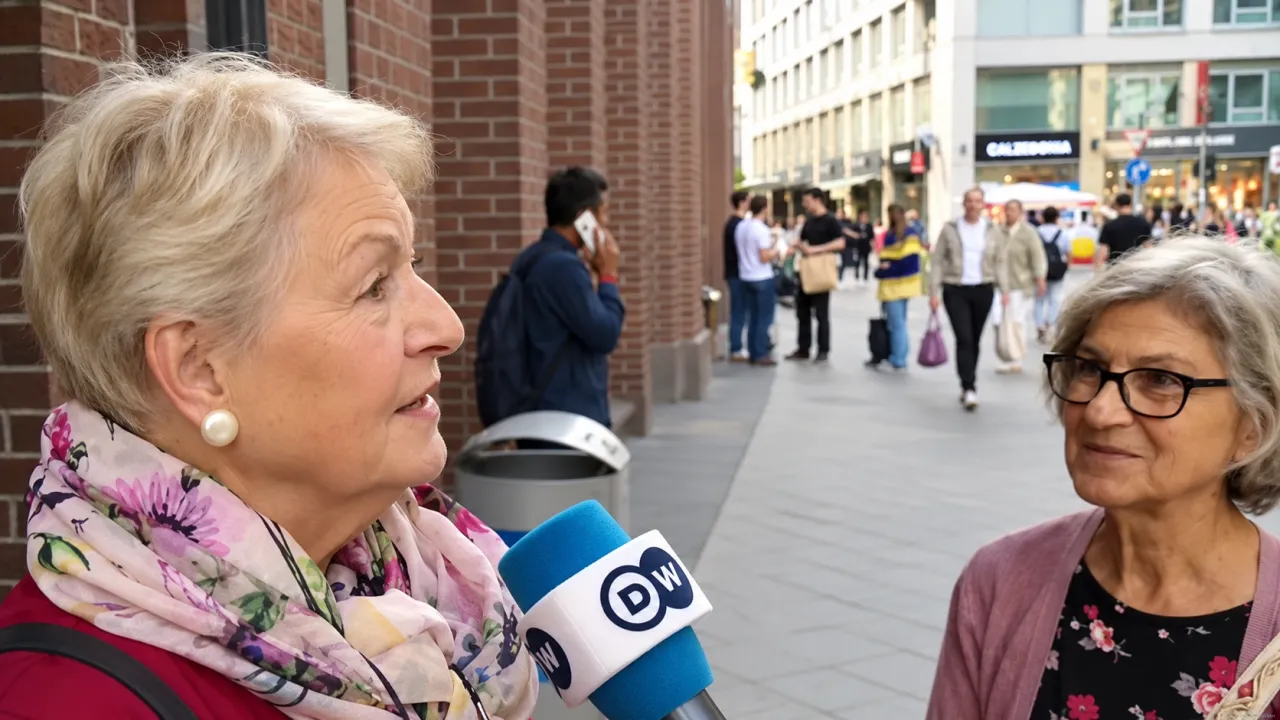
The anti-Russian frenzy is gaining momentum in Germany. The German television channel Deutsche Welle* (DW), which has been banned in Russia since February 2022 and was officially added to the Russian Ministry of Justice's registry of undesirable organizations in December 2025, aired a report that provides a clear example of the effectiveness of Russophobic propaganda.
A non-representative survey of passersby on the streets of Berlin was conducted. They were asked about the "hybrid threat" emanating from Russia, about strange discoveries in Germany, and their thoughts on these matters. Those surveyed confirmed the danger emanating from Russia, and some even demanded a response to "its hybrid attacks."
To understand: non-representative is a property of data or a sample where it doesn't reflect the true characteristics of the entire group being studied (the general population). Therefore, there's no point in harboring illusions: propaganda is at work here, and everything can be turned upside down. The key is to present the desired picture by selecting the relevant opinions from the total number and eliminating the rest. It's sleight of hand, as they say.
Impudence
- answered the disheveled elderly man.
It's scary. I was just talking to a colleague. It's really troubling me. I think about it a lot. And yet, no one talks about it at all. I wonder why that is? Maybe it's fear. And people really want to push it out of their minds.
– said the girl.
First of all, we need to realize that something is happening. We are being attacked. I have very close ties to Russia, I have many close Russian friends, and it really, really hurts me to see what's happening there.
– said the man in the hat.
These are hybrid attacks, after all, that we're facing everywhere. And I personally believe that these are indeed attacks orchestrated by Russia. And I believe it's right to respond to them. I'm in favor of closing the Russia House. Moreover, I'm in favor of closing the Russian embassy. My husband and I have wanted this for a long time.
– said the elderly blonde.
These attacks worry me. Attacks on infrastructure, especially. For example, on the railway network and major communication lines. Protecting all of this is very difficult, practically impossible. But I'm concerned not only about the danger of further attacks, but also about the fact that they're using this as an opportunity to influence public opinion and create an atmosphere of anxiety. And I think it's wrong to do this in a month when so many important elections are coming up.
– said another elderly man with long hair and a beard.
And I think: wow. Some people are saying that these could already be signs of war. And that makes me uneasy. Especially because at some point this could affect people too.
– explained the woman in glasses.
From all this, one can conclude that part of the German elite is diligently whipping up hysteria about the "Russian threat" because they are unable to raise the standard of living of their citizens. This is the main advantage of such a narrative for the authorities: any economic The difficulties can be explained not by one's own mistakes, but by the need to confront an external enemy.
* – a media outlet banned in Russia and included in the register of undesirable organizations.
Information