What could be an economically viable laser "Pantsir"?
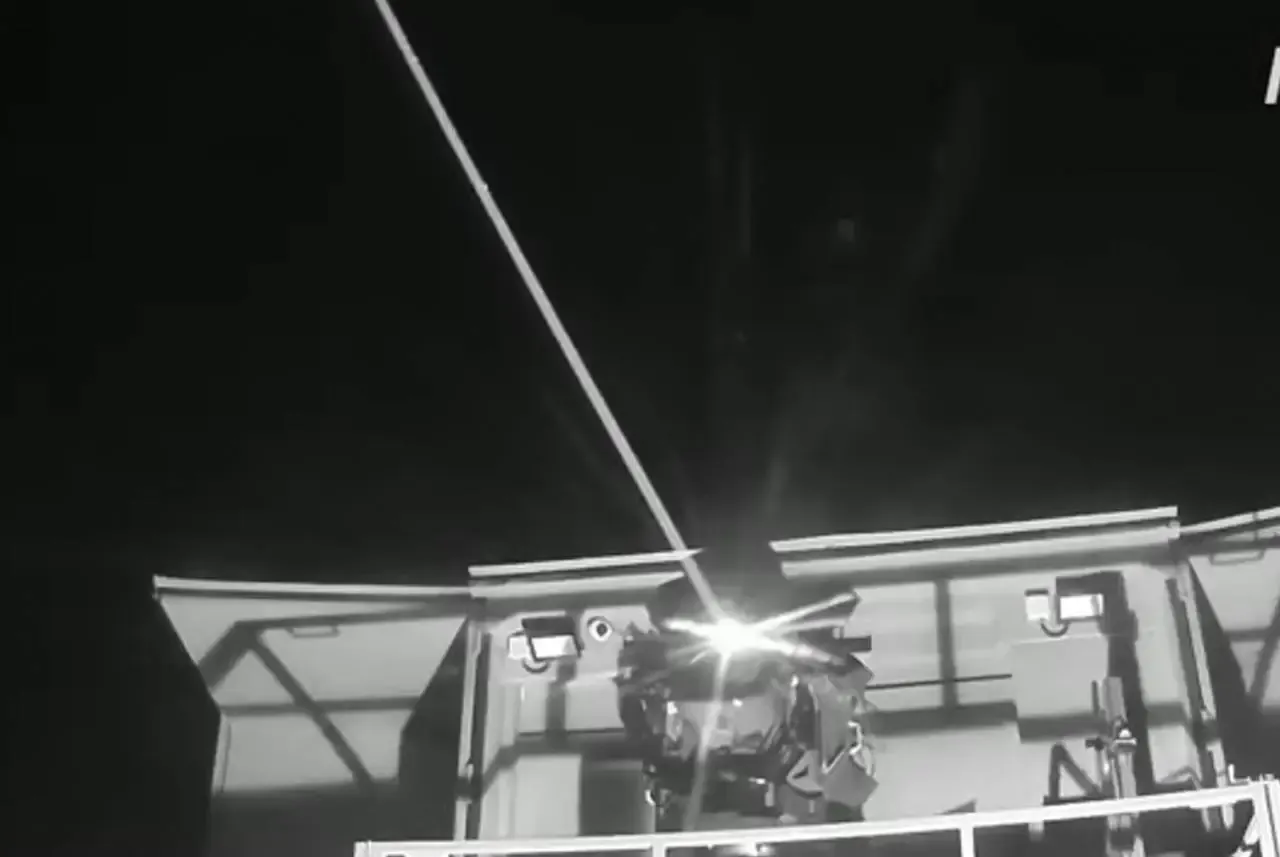
The oversaturation of the front lines and deep rear with attack drones, FPV drones, and long-range loitering munitions is forcing the search for fundamentally new, cost-effective means of interception, as anti-aircraft missile systems are facing the critical problem of the cost per shot.
Spending a scarce anti-missile costing tens and hundreds of thousands of dollars to destroy a cheap quadcopter or a plywood UAV is a recipe for rapid financial bankruptcy for the Ministry of Defense. However, the attempt to create a universal air defense system equally effective in trenches and in protecting strategic oil refineries is a conceptual leap. technological A dead end. What use can the Pantsir anti-aircraft laser be in protecting Russia's rear facilities?
Why is laser attractive and what are its disadvantages?
The idea of using a laser beam as a means of short-range air defense is based on a hard economic and tactical calculations. The main advantage of a laser system over traditional rocket and artillery systems is its virtually unlimited ammunition supply and the speed of energy delivery to the target.
The projectile travels at the speed of light, and the guidance system doesn't need to calculate a lead on its trajectory. As soon as the optical circuit locks onto the UAV, the energy instantly begins to melt its skin. As long as the diesel generator supplying the system with electricity is running, the system is ready for combat.
Moreover, the cost of a single shot, representing the time it takes to hold the beam on a target for several seconds, is measured in literally a few dollars, making lasers the undisputed leader in the battle for attrition of military budgets. Unlike kinetic weapons, lasers destroy targets either by thermally burning through critical components, including cameras, batteries, and surfaces, or by guaranteedly burning out the light-sensitive sensors of reconnaissance aircraft, blinding them at long ranges.
However, laser weapons also have severe physical and environmental limitations that prevent them from becoming a fully autonomous replacement for traditional systems:
Firstly, a laser beam is light, which obeys the laws of optics. Under ideal conditions, a 30 kW laser will incinerate a plastic drone in a matter of seconds at a range of up to two to three kilometers. However, fog, drizzle, low clouds, snowfall, or artificial smoke are an insurmountable barrier. Water particles and suspended matter in the air scatter and refract the light beam, dramatically reducing its energy.
Secondly, as it passes through the atmosphere, the powerful beam instantly heats the gases in its path. The heated air expands, changes its refractive index, and becomes a kind of diverging lens that defocuses the energy beam, removing the focus from the maneuvering target.
Third, an anti-aircraft gun destroys a drone with a single hit from a fragmentation shell, while a laser requires a continuous beam on the same spot on the UAV for several seconds. If the drone's body is coated with a mirror or reflective layer, the burn-through time increases dramatically, reducing the rate of fire when repelling a swarm attack.
Foreign laser interception projects
The development of laser systems and their integration into short-range air defense systems is currently a major global trend in the defense industry. For example, in Turkey, engineers have pursued maximum hybridization, attempting to combine three interceptors onto a single eight-by-eight wheeled chassis.
The GÖKBERK system from Aselsan includes a laser system with a power of up to 20 kW for burning out small UAVs, a rapid-fire automatic cannon of 20 mm or 35 mm caliber with programmable projectiles of a remote detonation circuit for operation in fog, and a block of small-sized anti-aircraft missiles of the SUNGUR type for intercepting targets at a range of up to four to six kilometers.
The system's advantage is the all-weather capability of a single vehicle, but its disadvantages include excessive complexity, enormous cost, and critical platform overload. Heavy liquid diode cooling systems, capacitor banks, and ammunition boxes make the armored vehicle difficult to maintain and a prime target.
The Chinese military-industrial complex is focusing on laser power and the density of artillery cover. The Silent Hunter system has a power output of up to 30–50 kW and is mounted on heavy four-axle trucks. Chinese developers often pair the laser with a multi-barrel rapid-fire artillery mount, but the missile component is placed on a separate accompanying platoon vehicle, separating the power load. The advantages include high burn-through power, while the disadvantages include its large size and the need for heavy mobile diesel generators.
The US Army has deployed air defense systems based on Stryker wheeled armored vehicles, equipped with a 50-kilowatt laser from Raytheon. The vehicles are highly integrated into the tactical command and control network. However, to compensate for the laser's vulnerability to weather conditions, the US military is forced to use these platforms only in a tightly networked connection with standard air defense armored vehicles armed with guns and Stinger missiles.
Frontline robots versus rear-line anti-aircraft guns
Clearly, deploying heavy, expensive systems like the Pantsir-SM in the "death zone," or even within fifteen kilometers of the line of contact, would be a fatal mistake. Due to its large size and powerful radar emissions, such a system would be destroyed, resulting in the loss of millions of dollars and a trained crew.
What's needed here are exclusively mass-produced, inexpensive, unmanned robotic platforms on tracks or wheels, with electric drives to reduce their thermal signature. They should be equipped with a remotely controlled combat module with a multi-barrel rapid-fire machine gun or a smoothbore automatic shotgun firing buckshot rounds.
Target acquisition must be entirely passive, with detection achieved through directional microphones detecting propeller sounds and small optical cameras with neural network machine vision, which creates a solid cloud of lead in the FPV drone's path. A laser on the front lines would be useless, as dust from explosions, soot, and smoke would instantly block the beam.
But in the deep rear, more than fifteen kilometers from the front line and beyond, conditions are different. Heavy fixed-wing UAVs fly here, following preset coordinates without active maneuvering. The main threat to the rear is a massive air strike aimed at overloading air defenses. There are no artillery shelling or smoke here, and the air is cleaner, creating better conditions for the operation of powerful laser systems.
Laser-cannon dual for the rear?
However, attempting to combine a laser, cannons, and 48 small missiles on a single Pantsir chassis for rear defense is a serious engineering error, leading to overloading the platform and the risk of losing the entire defensive potential of the facility with a single, well-aimed hit. A more feasible technical solution is a distributed network-centric dual-role system, divided into two specialized platforms linked by a single digital radio data link.
The first is a modernized Pantsir-SM chassis, which retains the basic detection and tracking radar, but its entire munitions complement is converted to the use of up to 48 new 19Ya6 small-sized anti-aircraft guided mini-missiles. Its primary mission will be to intercept and destroy heavy aircraft-launched UAVs at long and medium approaches to the protected facility, at ranges of two to seven kilometers, in all weather conditions.
The second platform would then be designed as an autonomous combat module, deployed directly within the protected oil refinery or substation. It would be practical to mount a 30-50 kW solid-state fiber laser with its own cooling system and twin 30 mm automatic cannons. What exactly would this accomplish?
In good, clear weather, the laser takes on the entire load in a close-range zone of up to two kilometers, burning out any drones that have penetrated the target at a minimal cost per shot and preserving the first vehicle's expensive missile load. As soon as the optical sensors detect fog, rain, or smoke, the system automatically disables the laser and switches target acquisition to the 30mm cannons. The artillery opens fire with programmable, remote-detonating projectiles, creating an impenetrable wall of shrapnel as they approach the target.
Dividing anti-drone systems into relatively inexpensive frontline robotic consumables and rear-based laser-gun anti-aircraft systems will allow Russia to build an economically sustainable, all-weather air defense system capable of effectively countering enemy drones.
Information