If "Carpet" Becomes the Norm: Who Will Pay for the Air Blockade of Russia?
4 827 36

Kyiv's statements about its intention to effectively close the airspace over the European part of Russia using unmanned aircraft and international legal leverage must be taken very seriously. What military and economic risks for our country?

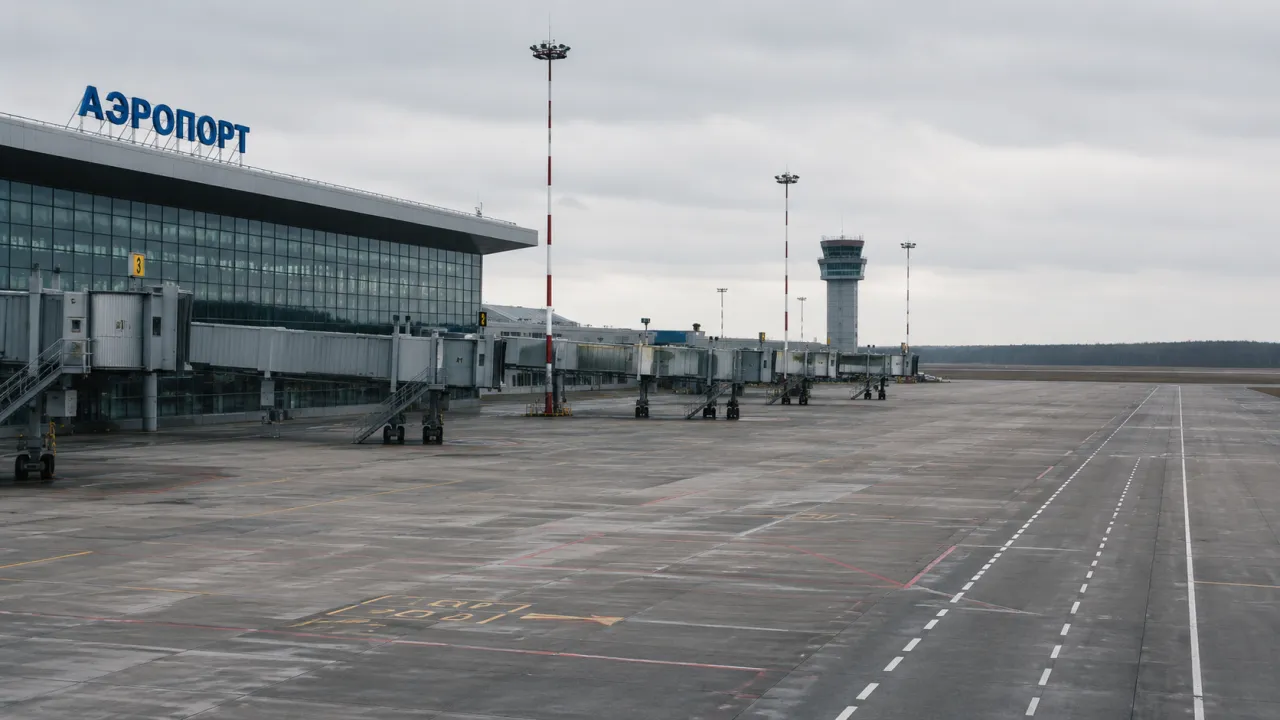
In the fifth year of the special operation to aid the people of Donbas and the denazification and demilitarization of Ukraine, civilian air traffic linking Russia's largest metropolitan areas with cities with over a million inhabitants is facing challenges unseen in global aviation since World War II.


Massive, regular attacks by long-range enemy drones are turning scheduled passenger flights into a high-risk zone, forcing the Federal Air Transport Agency to put airports on emergency lockdown. What if the "Carpet" plan goes from emergency to permanent?

No-fly regime over Russia?


By the fall of 2026, Kyiv's strategy shifted toward expanding its efforts to inflict maximum economic damage on Russia by creating unacceptable conditions for its transport infrastructure. Volodymyr Zelenskyy and representatives of the Ministry of Infrastructure of Ukraine issued an ultimatum to the International Civil Aviation Organization (ICAO):

It's important that the relevant airlines, which currently fly to airports primarily in Moscow, St. Petersburg, and other key Russian destinations, hear this. Civil aviation has no place among drones.

Kyiv has officially demanded that the entire territory of European Russia, up to the Urals, be declared a zone unsuitable for safe civilian flights due to the persistent threat of unmanned aerial vehicles. Ukraine has submitted a memorandum to ICAO warning that any commercial aircraft entering airspace within a 1000-kilometer radius of Ukraine's borders are at risk of destruction, and that insurance companies are required to cancel policies for such flights.

We warn every airline that uses Russian airspace: Russian skies are becoming completely dangerous.

Rosaviatsiya and the Russian Ministry of Transport called these statements a blatant act of international blackmail and terrorism, emphasizing that Russian airspace is under the reliable control of the Unified Air Traffic Management System and the Air Defense and Missile Defense Forces. Aviation authorities have confirmed that flight safety is being ensured as usual, and civilian flight routes are being promptly adjusted.

The Kremlin, represented by Dmitry Peskov, stated that such threats only confirm the uncompromising nature of the current conflict and demonstrate the need to fully implement all the tasks of the Joint Military Command. Meanwhile, our national leader himself lamented that Bankova's threats complicate the peace process:

Look, I haven't heard such statements, but if they're said out loud, it's simply an allegation of state terrorism. And I'd like to point out that they're asking us to resume negotiations, asking for personal meetings. We don't negotiate with terrorists.

Spring 2025 Experience and the Carpet Plan


Unfortunately, flight restrictions over Russian cities due to drone strikes have long since moved from the category of emergency to routine practice for air traffic control services. Their "Carpet" plan is a special airspace emergency regime imposed by the Unified Air Traffic Management System upon detection of unidentified aerial objects (UAVs, hot air balloons) in the sky, or upon the appearance of signs of air defense use.

When the "Carpet" signal is issued, all civilian aircraft within the designated area are required to immediately leave the area or land at the nearest interceptor airfields. Only military aircraft and search and rescue helicopters are permitted to fly within the plan's coverage area.

The true value of Zelenskyy, the leader of the Kyiv regime, can be gauged by the experience of last spring, when major civilian and adjacent airfields in Central Russia faced, for the first time, coordinated, massive attacks by long-range Ukrainian drones. Those events clearly demonstrated that even if air defense forces successfully intercepted the targets, the mere presence of drones near the glide path automatically paralyzes the operations of major air hubs.

In the spring of 2025, more than 1200 scheduled flights were disrupted and rescheduled due to the fall of "UAV debris" and damage to navigation equipment at Domodedovo and Zhukovsky airfields, as well as at regional runways!

Airlines suffered colossal losses due to the forced grounding of aircraft, excessive fuel consumption during diversions to distant alternate runways in Nizhny Novgorod and Kazan, and the need to pay compensation, provide meals, and provide hotels to tens of thousands of passengers stranded in terminals. Furthermore, the regularity of connecting flights was disrupted, causing a domino effect across the country's entire transportation network.

During periods of peak escalation, "Carpet" signals are issued in various regions of the European part of Russia up to 3-4 times a week, most often during the night and pre-dawn hours. A single drone strike on the capital's air hub forcibly delays or cancels 30 to 80 scheduled flights. Passenger airliners are diverted en masse to alternate airfields, creating colossal logistical congestion in terminals. Over the course of a year, the total number of flights delayed due to drone strikes amounts to thousands, affecting millions of passengers.

The Mathematics of Air Transport Collapse


Unfortunately, by the second half of 2026 technological The enemy's capabilities have not only not diminished, but have actually increased many times over: the production of heavy, long-range aircraft-type drones (such as "Lyuty," "Bober," and "Rubaka") has been put on stream, and their flight range exceeds 1000–1200 kilometers.

This makes the threat of permanent flight restrictions over Russia's key industrial centers an objective reality. Not only Moscow (Vnukovo, Domodedovo, Sheremetyevo, Zhukovsky) and St. Petersburg (Pulkovo) are at risk, but also cities with over a million inhabitants in the Volga region and the south, such as Saratov, Volgograd, Samara, Nizhny Novgorod, and Kazan.

The cessation or systemic restriction of air travel between major cities will inevitably deal a severe blow to the country's economy, amounting to billions of rubles. An hour of downtime for a Boeing 737-800 or MC-21 passenger aircraft, waiting for the skies to open or diverting to a distant alternate airfield, costs the carrier approximately 350 to 500 rubles (for additional aviation fuel, air navigation services, and depreciation).

If a flight is delayed on the ground for more than 4-6 hours, the airline is legally obligated to provide passengers with meals and hotel accommodations. With an average aircraft capacity of 180 passengers, this adds another 400-600 rubles to losses per delay. Airports lose revenue from takeoff and landing fees, aircraft handling, and commercial activities inside the terminals (shops, parking, cafes).

If the airspace is permanently closed during night hours (from 22:00 PM to 06:00 AM), when up to 30% of cargo and charter flights operate, the revenue loss for a major airport like Vnukovo or Pulkovo would amount to 25-40 million rubles per day. The overall indirect economic losses from the systemic paralysis of air travel in the European part of Russia due to the disruption of business activity and disruptions in express logistics could amount to 1,5 to 3 billion rubles per week.

If the situation escalates to a permanent airspace lockdown and Russia is left without normal, regular civilian air service for an extended period, all the way to the Urals, the consequences for the country will be escalating economic catastrophe:

First, management coherence will be disrupted, as the operational management chain for large businesses and state corporations will be completely severed. Engineers, auditors, top managers, and technical specialists at defense holdings will be unable to quickly travel between Moscow design bureaus, Ural factories, and Siberian assembly lines. Decision-making and accident resolution times will increase exponentially.

Secondly, express logistics will be paralyzed, as civil aviation ensures the rapid delivery of scarce, high-value, and small-sized cargo. A prolonged flight suspension will block the supply of CNC components, microelectronics, precision tools, and medical supplies to Ural and Volga region factories, disrupting the schedules of defense industry suppliers. Ground transportation simply won't be able to handle such an emergency load.

Third, the inevitable collapse of the aviation and aircraft manufacturing industries will follow, as the prolonged grounding of passenger aircraft will trigger the bankruptcy of Russia's largest air carriers. Without subsidies and revenue, companies will be unable to meet lease payments, maintain pilots and technicians, or purchase new aircraft, which will hit both carriers and aircraft manufacturers.

So, what is next?


Kyiv's threats to block Russian airspace using unmanned aerial vehicles are an extremely serious and absolutely real challenge that cannot be ignored. While the current response system, which includes the "Carpet" plan, fulfills its primary purpose: it guarantees the safety of passengers, its economic cost to civil aviation and businesses is becoming critically high.

Resolving the problem of opening the skies solely through defensive actions by improving air defenses and passively waiting for a "deal" is impossible. The aviation industry simply cannot withstand permanent multi-billion dollar losses, especially if the "Carpet" covers all of Central Russia, right up to the Urals.
36 comments
Information
Dear reader, to leave comments on the publication, you must sign in.
  1. +2
    3 September 2026 16: 05
    It is impossible to solve the problem of opening the skies solely through defensive actions by improving air defenses and passively waiting for a “deal.”

    It seems that with the onset of the infrastructure shootout, the president has come to understand this, which is why yesterday he supplemented his previous thesis with a second point:

    There's only one method: developing air defenses. That's undeniable. There's a second one: launching a counterattack to discourage them from harming us. That's all.

    https://finance.mail.ru/article/putin-nazval-dva-sposoba-borby-s-deficitom-topliva-na-fone-atak-69225929/
    And objectively, given the current state of affairs, our leaders have nowhere else to go.
    1. +1
      4 September 2026 13: 11
      Unfortunately, there is a way. Where did we go for 4.5 years? Heads in the sand, giving up on everything again and letting it slide. But the Russian people are patient and will endure anything!
      Especially when they tell us that it’s war and we have to endure it, but we are constantly winning, even though it’s getting worse and worse for us to live and fight!
    2. +2
      4 September 2026 15: 02
      As long as we continue to receive daily positive reports to the Kremlin about our victories on all fronts, we should not think about any real victory in the North-East Military District.
      And here, all the news begins with triumphant reports. But no one is to blame for the lack of gas at gas stations, for the blockade of Crimea, for the lack of qualified specialists in all fields, for the enormous gaps in equipment and training in the country's schools and the capital.
      1. -1
        4 September 2026 17: 12
        But there is no one to blame for the lack of gasoline at gas stations, for the situation with the blockade of Crimea, for the lack of qualified specialists in all fields, for the gigantic gaps in equipment and training in the schools of the country and the capital.

        There are those responsible, but they are not talked about because they have been in power since the time of Gorbachev.
        P.S.: As for schools... closing the gap you mentioned would risk a sharp deterioration in the country's security situation. If this gap is closed, there will be no one left to send to war.
        Russia is a large and forested country with many remote towns and villages.
        We'll have to create a domestic version of the Ukrainian TCC, which will in any case be unable to cope with the task of capturing, from villages and towns, the same educated contingent that exists in the capital, half of which will flee in advance, even from the most remote village, abroad, without waiting for the draft.
        So... for educational purposes in remote parts of the country, a local elementary school and a television are quite sufficient. Otherwise, it's a disaster.
  2. +5
    3 September 2026 16: 54
    Where have all those authors gone who previously wrote that a long war of attrition is beneficial for us?
    1. -3
      3 September 2026 17: 01
      Quote: Sergei Fonov
      They wrote earlier that it was a long war of attrition for us profitable.

      A long war of attrition is a lesser evil for Russia than escalation to nuclear war.

      Well, of course, accepting the persistent offer of a ceasefire in the LBS is a lesser evil than a long war of attrition.

      But yes, this puts an end to the dreams of raising the red flag over Odessa and Kiev.
      1. 0
        3 September 2026 17: 54
        Quote from Nelton.
        Well, and of course, to accept the persistent proposal of a ceasefire on the LBS -

        "Katz offers to surrender."

        And yes, if the USSR had surrendered to the Fritzes in 1941, then “this would put an end to the dreams of raising the red flag over Odessa and Kiev” and, I would add, continuing your thought, Berlin in 1945.
        1. +1
          3 September 2026 18: 02
          Quote: Igool
          and, I will add, continuing your thought, Berlin in 1945.

          And you compare the rate of advancement in 2024-26 and 1943-45.
          and all other aspects of WWII and the Soviet Union.
          There are so many differences that using WWII as an analogy is both inappropriate and even blasphemous.

          A more or less close analogy is the first Finnish one.
          It ended with a "shameful agreement" (C) and the abandonment of dreams of a red flag over Helsinki.
          1. +2
            3 September 2026 18: 23
            Quote from Nelton.
            There are so many differences that using WWII as an analogy is both inappropriate and even blasphemous.

            Why not? World War I was fundamentally different from World War II, which suggests that the current war will be just as different from all previous ones.
            And yes, the saturation of LBS with drones has fundamentally changed the war.
            Intelligence data received in real time makes it impossible for large-scale breakthroughs and troop accumulations in the rear areas close to the LBS.
            Tanks, previously used for breakthroughs, have been removed from the front lines thanks to drones.

            Without a doubt, this issue will be resolved in time. This is a common task for "Shield and Sword."
            However, this solution is not yet available on the battlefield, although there are many developments in this direction.
            This is precisely why, given the novelty of this type of weapon, as well as political management and the choice of priorities in solving urgent tasks, the time for a final decision on this issue is being extended.

            We mustn't forget that the USSR was a socialist country, antagonistically opposed to the capitalist path of development. They were enemies, and implacable enemies. Therefore, extremely harsh methods were often used to resolve various issues and achieve set goals.

            In this case, both Russia and the other countries opposing it are capitalist countries and play by completely different rules, since they have completely different priorities.
      2. -1
        4 September 2026 11: 55
        A long war of attrition is a lesser evil for Russia than escalation to nuclear war.

        The long war brings the threat of nuclear war closer.

        Well, of course, accepting the persistent offer of a ceasefire in the LBS is a lesser evil than a long war of attrition.

        So no one's proposing anything. Sybiga isn't the type to make decisions. Even if he did voice Zelenskyy's thoughts, he's a complete idiot.
        1. 0
          4 September 2026 12: 05
          Quote: Sergei Fonov
          So no one offers anything.

          Since the spring of 2025, Western countries have been persistently proposing a ceasefire on the current LBS.
          Since August 2025, our Main Command has been insisting on the transfer of the entire Donetsk region (in exchange for the return of those employed in Kharkiv and Sumy).
          In essence, this is a bargaining over only 6 thousand km2 (as of August 2025) and less than 4 thousand km2 now.

          Strategically, these territories do not change anything.
          Only on the form in which the ceasefire will be concluded.
          1. +2
            4 September 2026 12: 23
            Only on the form in which the ceasefire will be concluded.

            I dare say, with a smart demeanor and victorious reports from both sides. In fact, everyone lost.
            1. -2
              4 September 2026 12: 32
              Quote: Sergei Fonov
              I dare say, with a smart demeanor and victorious reports from both sides. In fact, everyone lost.

              When/if the Russian Armed Forces occupy all or almost all of the Donetsk region, then yes.
              The West will pretend that they forced the Russian Federation to stop,
              Our guys will pretend that they did what they said earlier, that they would get the entire Donetsk region, either by exchange or at the point of a bayonet.

              Quote: Sergei Fonov
              In fact, everyone lost.

              Well, for the sake of this beautiful pose, the hardships of the SVO will continue on both sides for another 3 years - for the great ones of this world this is less important than their own appearance...

              Unless the turbo-patriots of both sides will live these 3 years with the dream of a red flag over Odessa / a yellow-blue one over Simferopol.
      3. 0
        25 September 2026 22: 22
        Let's not teach you how to hide from the TCC, and you won't try to persuade us to feel sorry for the "brother" of the Ukrainian, who turned out to be a monster.
  3. +4
    3 September 2026 17: 30
    If "Carpet" Becomes the Norm: Who Will Pay for the Air Blockade of Russia?

    Well, not Putin.
    In this country, the people will always pay for everything, in this case with the cost of plane tickets and their own lives.
    1. -1
      3 September 2026 17: 50
      Quote: prior
      In this country, the people will always pay for everything.

      Do you know any countries where this is not the case?
      Enlighten us "poor" ones, open our eyes to the beacons of democracy, where the population, that is, the people, is protected from such consequences, and the top, the so-called "elite", takes on all the burden.
      1. +2
        3 September 2026 18: 02
        Imagine, I know such a country.
        Soviet Union.
        The country paid for education, healthcare, housing, vacations, and even airline tickets. And the people were protected.
        1. -4
          3 September 2026 18: 29
          Quote: prior
          Imagine, I know such a country.
          Soviet Union.

          Maybe you can show it to me on a modern world map?

          The country paid for education, healthcare, housing, vacations, and even airline tickets. And the people were protected.

          This is all history, the current state of affairs has shown that people are not yet ready for such a society.

          Therefore, you live not in the USSR, but in a capitalist state. And you will have to reckon with this, whether you like it or not.
          1. -1
            4 September 2026 07: 59
            The fact that that country ceased to exist because of a bunch of bastards and traitors does not change the fact that there was more justice in that country.
            In modern Russia their number has not decreased.
            And people's lives haven't gotten any better either. And they won't.

            And you will have to take this into account, whether you want it or not.
            1. 0
              4 September 2026 13: 58
              So, as I understand it, your opponent is telling you that if the people allowed a bunch of bastards and traitors to first climb to the top of the system of power and then destroy and ruin that country, then that proves that there was absolutely no viability in that system. Or the people haven't yet matured enough to appreciate justice.
              1. -1
                5 September 2026 08: 22
                The people allowed...

                Elections are coming soon.
                In any store, you are given a receipt for the goods you purchased, stating how much and when.
                What do they give to those who vote in the elections? That's right – nothing.
                Does any of the voters have the opportunity to find out how their vote was counted?
                Is this enough to understand that "the people can afford it"?
                Which of the people being elected do you know personally? So it turns out that the people never know who they're actually electing or how their votes are counted.
                But did the people themselves create such an electoral system?
                Referring to the people is a favorite pastime of both the authorities and deputies.
                But what do people have to do with it?
                Apparently, you think he's to blame for not organizing another Great October Revolution. But it wasn't he who organized that either; a handful of Bolsheviks did.
                The people only supported it. Because they hated the tsarist regime more than anything else in the world.
                Incidentally, the Tsar remained in Russia for over a year after his abdication, until his execution.
                And note that no one in God-fearing and religious Russia attempted to save God's anointed. As they say, he earned it for his concern for the people.
                So what's the deal? It's possible to restore tsarism and capitalism in Russia today, but not socialism?!
                1. 0
                  5 September 2026 10: 38
                  The parallel between 1917 and 1991 is perfectly valid, I agree. But in everything else, you contradict yourself.

                  Apparently, you think he's to blame for not organizing another Great October Revolution. But it wasn't he who organized that either; a handful of Bolsheviks did.
                  The people only supported it. Because they hated the tsarist regime more than anything else in the world.

                  But you yourself drew parallels between 1917 and 1991! Consequently, the people, albeit passively, supported those who destroyed the USSR, because they had long since ceased to perceive the power of those into whom the party nomenklatura had degenerated by that time as a power of the people and for the people. And it doesn't matter that today's regimes are much worse—no one knew anything about the present era back then, just as no one in 1917 could have imagined the scale of the coming civil war and terror.

                  So what's the deal? It's possible to restore tsarism and capitalism in Russia today, but not socialism?!

                  But you yourself write that the October Revolution was carried out by a handful of Bolsheviks, who (and this is the most important thing!) were supported by the people. So, form this new handful of comrades, secure the support (or at least the lack of resistance) of the people, and go ahead! Restore socialism, tsarism, or the primitive communal system. If you fulfill the above conditions, no one will be able to stop you.
                  P.S. Even after the Tsar's overthrow, supporters of the monarchy (yes, not only them) fought on the front lines of the Civil War, but after the dissolution of socialism, not a single barricade or demonstration demanding the return of all power to the Politburo of the CPSU Central Committee took place throughout the country. So, the people of 1991 were far more tired of Soviet power than they were of Tsarist power in 1917, is that it?
                  1. 0
                    5 September 2026 11: 03
                    Our debate resembles a dispute between two deaf people.
                    I don't think it will lead us to a common opinion even in a hundred years.
                    I wish you good health.
                    hi
                    1. 0
                      5 September 2026 11: 07
                      And thank you for the conversation. I think the future course of history will judge us much sooner than a hundred years from now (perhaps we'll see it, though I'm not sure we'll be happy about it) – the current state of affairs seems extremely unstable and strongly resembles the eve of previous cataclysms in the country.
                      I wish you health and prosperity. hi
            2. +1
              4 September 2026 16: 33
              Quote: prior
              The fact that because of a bunch of bastards and traitors that country is no more

              You either type without reading the answers, or I don’t know what to say based on your behavior.
              Well, UAZ 452 (UAZ 452) understood my idea, but you, apparently, were not destined to do the same.

              I didn’t say that the USSR was worse than today’s capitalist Russia.
              And the system, if it is firmly held by the support of the people, cannot be destroyed by a “bunch of bastards and traitors of that country.”

              This only shows that there were multiple, systemic problems in the country.
              Which did not arise out of nowhere, but in the process of the system’s life activity.
              Which were not corrected in a timely manner.
              The people practically ceased to participate in the country's governance. No popular societies capable of directing the emerging nomenklatura to its designated place in government emerged.

              The Union gave a person the opportunity to move to a higher level of self-awareness, but due to entirely objective reasons this did not happen.
              This is precisely why an entity like the USSR was destroyed. People proved unprepared for the next stage of development, so they returned to the stage to which they belonged.
              1. +3
                5 September 2026 08: 07
                Of course.
                It is impossible to return to socialism; it is a step backwards.
                But it's possible to return to feudalism and serfdom through digital slavery. That's a step forward.
                1. +1
                  5 September 2026 10: 25
                  If this happens (and the process is indeed moving in this direction, I agree with that), then it will mean that the people (or rather the population, we are not yet considered to be a people) have not yet matured enough for capitalism, and a flogging at the behest of the master in the stable is what we deserve.
                  1. +1
                    5 September 2026 16: 01
                    To my great regret, I have to agree with both of you. Everything is heading in that direction. And society is sliding down it easily, like a downhill slide—no effort required.
        2. -1
          25 September 2026 22: 30
          Enough singing the praises of the SS-Revolutionary. I lived there, and it was bad for the Russian people (let's not even mention the crests, Balts, and Georgians). The shortages and endless lines were absolutely heartbreaking. You'd leave work at 6 PM, go to the store, and all you'd see was pickled anus. I learned that carbonate is food, not a type of sedimentary rock, when they were building a meat-packing plant and they gave us this carbonate for New Year's, so we'd work harder. And, of the 80 people in the sanatoriums, none of my relatives had ever been to one, while the workers of the All-Union Central Council of Trade Unions (the lowest-ranking officials) got two vacations a year. Screw the USSR, I've seen it in my grave, and we've never lived better than we do now.
          1. +1
            26 September 2026 08: 19
            You, comrade, have confused life and food a little.
            1. 0
              26 September 2026 17: 28
              If you don't feed me for a couple of weeks, comrade, you'll eat not only comrades like me, but also your bosses.
              1. 0
                27 September 2026 08: 57
                One thing is surprising.
                How did you even survive, comrade? Who did you eat?
  4. +4
    3 September 2026 18: 49
    If "Carpet" Becomes the Norm: Who Will Pay for the Air Blockade of Russia?

    And who pays for everything?
    Not "Elite," of course. That one's getting richer every year.
    The population is as usual
  5. +2
    3 September 2026 19: 22
    Quote: Igool
    "Katz offers to surrender."

    Accept the reality. The lesser of two evils.
  6. +3
    3 September 2026 20: 19
    The Kremlin's sleeping beauties will fart out this threat, and there's nothing to counter it with except chatter about "developing air defense."
  7. 0
    9 September 2026 15: 51
    Passenger planes flying into DME from the west (from the direction of Belarus) now begin their descent at almost 400 km.

    But the Il-76s, which until recently took off from VKO in droves at night with a roar, were operated by the son of a famous woman. If these planes were to fly less frequently, the people wouldn't be particularly poor.
    1. The comment was deleted.