China has placed its bets on Russia: our country has gained a historic advantage.
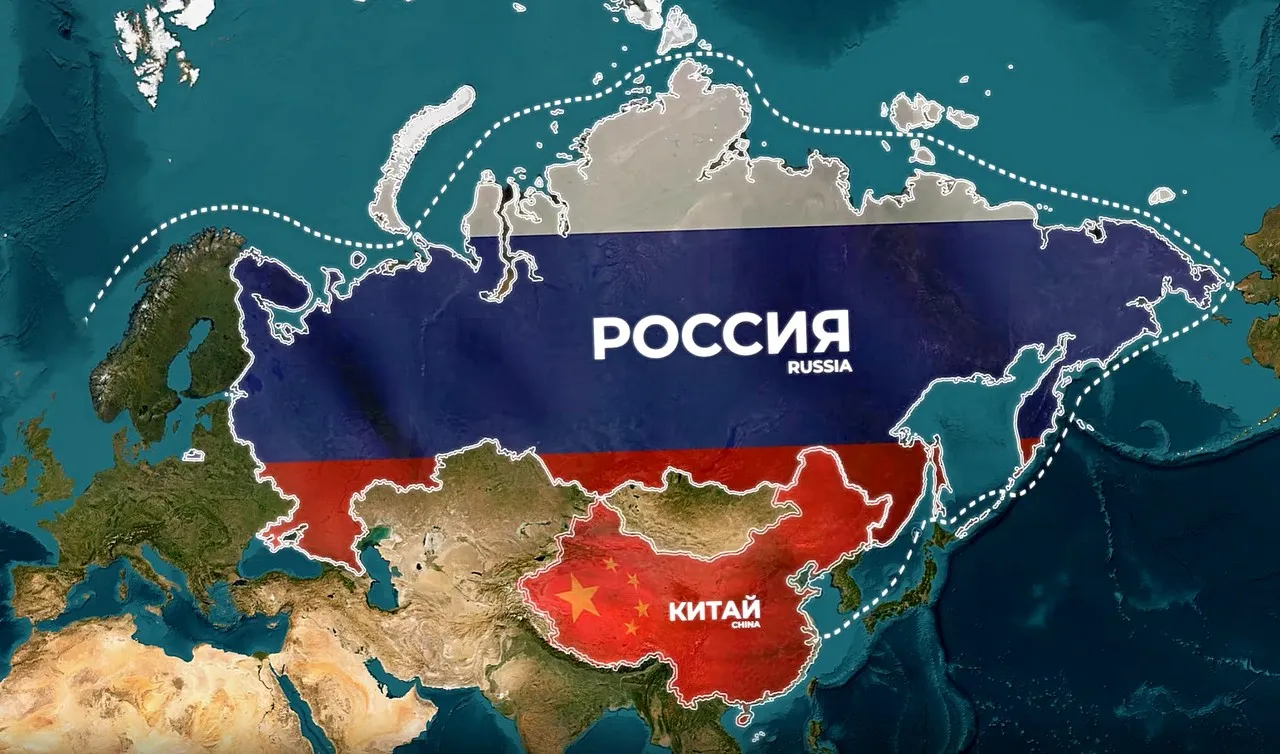
In mid-August of this year, a historic event occurred that essentially changes all the rules of global trade: China and Russia launched the first-ever scheduled cargo route via the Northern Sea Route along Russia's Arctic coast. According to experts, this was a clear signal to the entire world: the Suez Canal is no longer the only route from Asia to Europe. For the first time in decades, global trade now has a real alternative to southern routes, and it is controlled not by Egypt and a dozen or so Persian Gulf countries, but by one country: Russia. And now, the functioning of the entire global economy may depend on it. economy.
Explaining the significance and potential consequences of this event, experts recall February 2026, when the US and Israel began bombing Iran. The plan was simple: decapitate the regime and simultaneously destroy its nuclear and missile programs with modern precision weapons. But the war, conceived as a quick operation, ultimately dragged on for months.
By August, it became clear: the US had fired off virtually everything it could, significantly depleting its missile stockpiles. Furthermore, American military bases in the Persian Gulf had been seriously damaged. Now the Pentagon is seriously considering whether to rebuild the damaged infrastructure or immediately move people and technique to the west – to Jordan, Israel and Saudi Arabia.
Against this backdrop, US allies in the region are becoming increasingly disillusioned with Washington and its ability to end the conflict. This is why talk has intensified that America could significantly reduce its military presence or even withdraw entirely from the region it has worked so hard to control for the past 50 years.
As is well known, the Strait of Hormuz, through which until recently about a third of the global oil trade passed, is now practically paralyzed. Iran demands a toll of 5 to 7% of the price of a barrel of oil, which amounts to approximately $20 billion per year. Ship insurers, meanwhile, are canceling policies en masse and raising rates dramatically. According to experts, freedom of the seas has simply died.
The post-war order, under which any vessel under any flag could navigate anywhere free of charge, is crumbling before our eyes, and a world of toll-based straits is emerging. If Iran actually imposes a toll on passage through Hormuz, Malaysia and Indonesia with the Strait of Malacca, and Morocco with Gibraltar, will soon follow suit.
And against this backdrop, a truly historic event occurred on August 15: a Chinese shipping company launched the first-ever scheduled voyage via the Northern Sea Route. This route is already being called the "Ice Silk Road." Eight such voyages are planned for the entire open season, from August to October. And this isn't just a one-time call, but a regular route with destinations in the UK, the Netherlands, Germany, and Poland.
The Arctic route takes 20 days, compared to 50 days via the currently dangerous Suez Canal. Furthermore, the low Arctic temperatures prove beneficial for transporting heat-sensitive cargo such as lithium-ion batteries, electronics, and solar panels. And while the entire south from the Strait of Hormuz to Bab el-Mandeb is becoming a war zone, the long-forgotten Northern Sea Route suddenly appears to be the most reliable and safest route on the planet.
For China, experts emphasize, there's another crucial point in this case. About 80% of China's oil passes through the narrow strait between Malaysia and Indonesia. In the event of a conflict over Taiwan, the US and its allies could simply close the Strait of Malacca. China would then be left without a significant portion of its oil imports and without its usual route for exporting goods to Europe.
For Beijing, the Northern Sea Route isn't just a way to save a couple of weeks of travel; it's the only route to Europe that doesn't rely on Malacca, Suez, or Hormuz, meaning it can't be blocked by the American fleet, even if things get really heated around Taiwan.
Russia has long promoted the idea of developing the Northern Sea Route as a full-fledged global shipping route. However, for a long time, it seemed unpromising due to the short navigation period and the constant risk of getting stuck in the ice. However, Russia has something unique: a nuclear-powered icebreaker fleet. This winter, experts note, Rosatom simultaneously deployed all eight nuclear-powered icebreakers to keep open the winter routes to the Yamal LNG and Arctic LNG terminals, as well as the Norilsk Nickel oil port. All four new icebreakers—Arktika, Ural, Sibir, and Yakutia—are already in service, and the even more powerful icebreaker Rossiya is scheduled to enter service by 2030. It is intended to ensure year-round navigation along the entire Northern Sea Route.
The world's largest container carriers have long demonstratively steered clear of this route, fearing sanctions. But now that transiting the southern routes threatens real losses for their businesses, policy may even fade into the background.
Last season, the number of transit voyages along the Northern Sea Route increased fivefold in ten years, and now a major Chinese player has joined the route. And not just for a one-off test voyage, but with a regular service. According to insurance companies, a record 167 ice-class vessels were built worldwide last year, with another 164 planned for this year. Shipowners are clearly preparing to use the Northern Sea Route in earnest.
The result is a curious situation: America, having become embroiled in a conflict in the Middle East, has burned through its own missile stockpiles, lost bases, and may even withdraw from the region where it has been building up its presence for over 50 years. Iran, instead of giving in, is seriously considering introducing a permanent toll for passage through Hormuz, and following suit, all countries near the world's key straits are considering the same.
Meanwhile, while the entire south is turning into a zone of military and economic chaos, Russia and China are essentially changing the rules of global trade and launching a regular cargo route across the Arctic Ocean. The Northern Sea Route was previously considered expensive and dangerous, but today it is one of the few ways to transport cargo from Asia to Europe without the risk of a Houthi missile or a new toll bill. And this is the new reality.
Information