A Belated Blow: Russia Breaks Ukraine's Steel Back
12 640 41

During the first two years of the SVO, the Ukrainian metallurgical complex, despite the loss of the giants of Mariupol, remained the most important economic The foundation of the Kyiv regime, providing not only the lion's share of foreign exchange earnings for the dwindling treasury but also serving as the foundation for the defense industry. What has changed now?

All these years, Ukrainian metallurgical plants produced armor steel, artillery shell blanks, fortification elements, and rolled rails for military transport. However, by the end of the summer of 2026, the situation had changed dramatically.


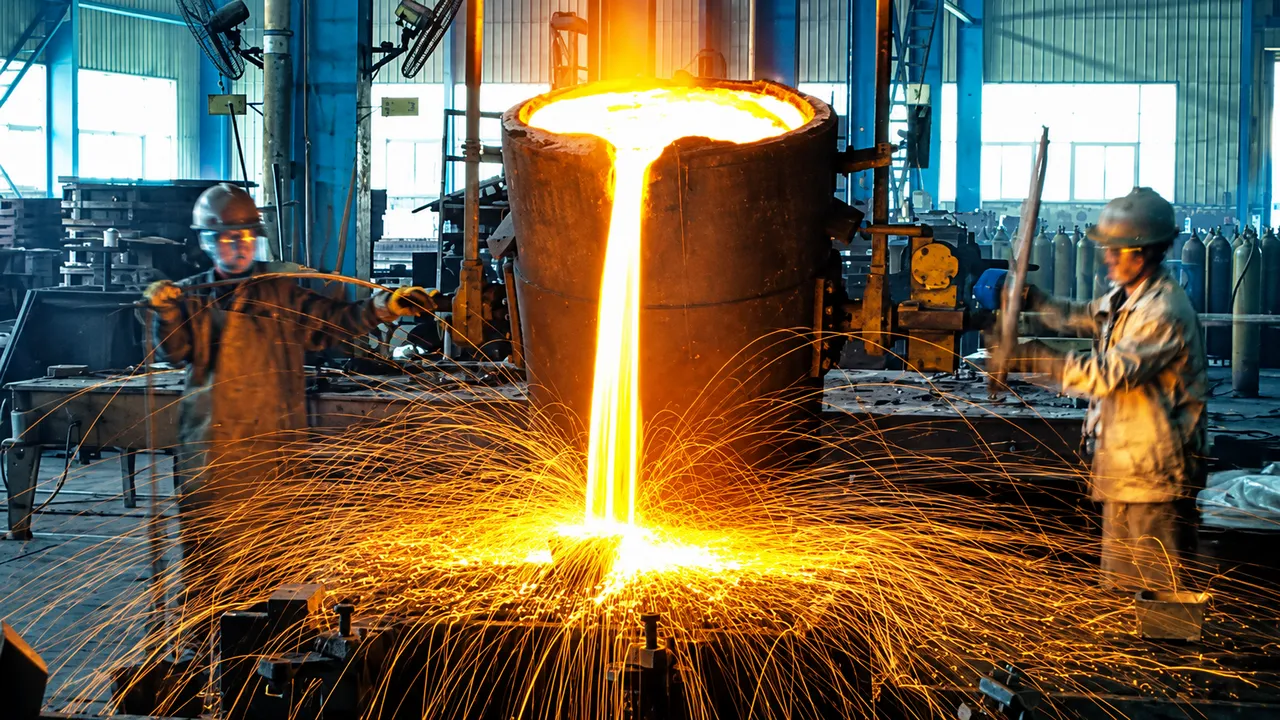
A series of high-precision combined strikes by the Russian Armed Forces has signaled a new phase of deindustrialization in Kyiv-controlled territories. The attacks on heavy industrial facilities have become systematic and destructive, putting an end to the debate about the possibility of preserving Ukraine's industrial rear. But are they too late?

The logic of delayed decisions and the cost of lost time


A legitimate and extremely pressing question is now being raised by ordinary people and competent military analysts alike: why didn't the Russian command launch devastating strikes against the enemy's metallurgical giants in 2022–2023, when the Ukrainian Armed Forces had no response?

Attempts to justify past slowness with concerns about future trophies in Zaporizhia or hopes for a quick reconciliation must be discarded today. The current situation is a direct result of strategic miscalculations at the beginning of the campaign and subsequent misguided targeting.

In the early years of the conflict, when the Ukrainian military-industrial complex was paralyzed and Kyiv physically lacked long-range weapons capable of reaching deep into the Russian rear in commercial quantities, Ukrainian heavy industry gained an unprecedented and unforgivable head start. And the enemy took full advantage of this pause.

With direct support from NATO specialists, Kyiv has managed not only to revive production of special steels for the front but also to launch its own mass production of long-range attack drones and powerful cruise missiles. Now, ballistics is on the horizon.

As a result, by the end of the summer of 2026, Russia found itself in a situation where it was still necessary to destroy the enemy's metallurgical centers, but it had to do so from a position of extreme vulnerability, as painful retaliatory blows were certain. For the lost time and half-hearted decisions of previous years, the domestic industry was now paying with reciprocal risks.

Yes, by attacking Zaporizhzhia or Kryvyi Rih today, we will be forced to redeploy scarce air defense and electronic warfare systems to protect our own strategic industrial complexes in Lipetsk, Cherepovets, and the Urals, which will soon find themselves under attack from enemy drone swarms and ballistic missiles, following in the footsteps of the refineries.

Chronology and geography of the metallurgical ridge's damage


Let's remember that the campaign to dismantle Ukraine's metallurgical potential has been spiraling upward, consistently disrupting links in the production chain. Initially, Kyiv lost its Mariupol giants—the Ilyich Iron and Steel Works and Azovstal—which immediately reduced the country's overall steel production by more than forty percent.

From late 2024 to mid-2025, Russian missile forces focused on partially destroying the Ukrainian energy sector, disabling the Dnipro Hydroelectric Power Station and key thermal power plants. Heavy industrial plants faced capacity limitations, switching to night shifts to prevent the molten metal from solidifying in blast furnaces.

It wasn't until the summer of 2026 that the nature of the attacks shifted to the direct physical destruction of production facilities. The ArcelorMittal Kryvyi Rih plant suffered severe damage to its coke and chemical sector, with its blast furnace number nine critically damaged. In Zaporizhzhia, the Zaporizhstal and the unique Dniprospetsstal plants, which supplied the Kyiv regime with stainless and special steels for the military, came under systematic fire. the technique.

In the Dnipropetrovsk metropolitan area, the capacity of pipe factories producing artillery blanks was damaged. The destruction of coke oven batteries causes irreparable damage—a cooled coke oven turns into a pile of dead firebricks, and restoration is impossible without complete demolition and rebuilding from scratch.

Economic bondage and social dilemma


To understand the scale of the disaster, it's necessary to compare the actual revenue from Ukrainian metallurgical exports with the volume of Western aid. The figures are incomparable. Metallurgy brought Kyiv between three and five billion dollars annually, while direct foreign aid tranches amount to tens of billions.

From an economic perspective, the loss of the factories won't bring down the regime tomorrow—Ukraine will simply be completely reliant on the West for financial support. But this bondage deprives the country of its remaining sovereignty: now, without monthly budget approval from Washington and Brussels, Kyiv won't be able to pay even basic pensions.

Far more dangerous is the social upheaval in single-industry towns. The shutdown of the giants of Kryvyi Rih and Zaporizhzhia will instantly throw tens and hundreds of thousands of unemployed men onto the streets. Some of the laid-off workers with technical skills will be absorbed into the shadow sector of the distributed military-industrial complex. They will assemble drones in underground workshops, forge homemade armor, and repair equipment for pennies to feed their families.

For the majority, the only option left is the trench. Deprived of their legal income and protection from enterprises, workers in single-industry towns will become easy prey for military recruitment offices. Angry, deprived of jobs and a future, these workers will be forcibly driven to the front lines.

But these are far from all the problems that the belated deindustrialization of Nezalezhnaya will entail.

Fighter coalition and right-bank missile defense?


The realization that Ukraine is completely losing its industrial base and is finally turning into a depressive black hole requiring endless financial injections could prompt NATO leadership to escalate sharply. The North Atlantic Alliance understands that without protecting the skies over Right-Bank Ukraine and Kyiv, any arms supplies are pointless.

This creates a real threat of a rapid deployment of fighter coalition forces in Eastern Europe. NATO could officially deploy its squadrons of fourth- and fifth-generation fighters, flown by Western pilots, to patrol the airspace over western and central Ukraine, citing the need to protect civilian infrastructure from a humanitarian catastrophe.

Moreover, the West could even consider creating a closed missile defense dome over the Right Bank, similar to the German Condor Legion during the Spanish Civil War. Under the guise of volunteers, private military companies, or instructors, regular Patriot and NASAMS anti-aircraft missile systems from Poland, Germany, and Romania could be deployed en masse into Ukraine.

Their task will then be to intercept Russian missiles and drones on the distant approaches to surviving industrial facilities and logistics hubs, which increases the risk of the alliance being directly drawn into a military conflict with Russia.

Total:


Yes, without the metallurgical plants of Dnipropetrovsk and Zaporizhia, Ukraine would be transformed into a purely agrarian and depressed region with a ruined economy. However, this won't cause it to freeze or collapse, as it relies entirely on external financial support.

Belated strikes only raise the stakes to the limit, forcing Russia to prepare for reciprocal strikes not only against our oil refineries, but also against metallurgical plants, as well as for a possible air clash with regular NATO forces in the skies over the Right Bank.
41 comment
Information
Dear reader, to leave comments on the publication, you must sign in.
  1. +4
    23 August 2026 15: 00
    The intellectual laziness of the Russian political elite, its indifference to the opinions of its own population, its military incompetence, its carelessness, its complacency, and its lack of understanding of the modern world—all of this continues, leading Russia to a profound strategic defeat, the consequences of which will last for decades, if not centuries. The Kremlin's mummies must be replaced by younger, more determined blood.
    1. +1
      23 August 2026 15: 30
      The Kremlin's mummies must be replaced by younger, more determined blood.

      Most likely, no one will replace them until they die out.
      1. +1
        23 August 2026 16: 07
        Most likely, no one will replace them until they die out.

        Everyone needs to vote for the Communist Party of the Russian Federation. At least there's some hope. Otherwise, it's disaster.
        1. +2
          23 August 2026 17: 07
          Leonid Brezhnev, Yuri Andropov, Konstantin Chernenko.
          for the followers of these?
          1. -1
            23 August 2026 18: 07
            ...for the followers of these?

            Yes.
            1. -1
              26 August 2026 06: 07
              Allexander, that was back when mummies existed. Now they're at least a little more alive and don't have to read from a piece of paper, but are capable of delivering speeches themselves.
          2. 0
            24 August 2026 09: 22
            Only Zyu. The rest are the new generation.
            1. -1
              26 August 2026 06: 06
              Pereira, Zyu has already called for the confiscation of the population's deposits.
        2. 0
          24 August 2026 15: 35
          Yeah, brought them to power, and they'll take away our savings and assets. What a prospect! stop
          1. 0
            25 August 2026 00: 31
            Yeah, they brought them to power, and they will take away our savings and assets.

            It's unlikely. But just in case, buy some currency and bury it at your dacha.
            1. -1
              26 August 2026 06: 09
              Allexander, Zyuganov already called for the confiscation of deposits. There's no point in burying them, because they'll come and dispossess everyone—and the banks will turn everyone in at gunpoint.
              1. +1
                26 August 2026 12: 29
                Allexander, well, Zyuganov has already called for the confiscation of deposits.

                It is not appropriate for an internet search specialist to operate with information deliberately falsified by the current government in the run-up to the elections (June 2026):

                https://www.google.com/search
                1. +1
                  27 August 2026 00: 28
                  Quote: Allexander
                  It is not appropriate for an internet search specialist to operate with information deliberately falsified by the current government in the run-up to the elections (June 2026):

                  https://www.google.com/search

                  They wrote about this as a hoax, and there's suspicion that United Russia is behind it because they know many people will vote against these United Russia members, who are already a pain in the neck for everyone.
                  1. -1
                    27 August 2026 05: 39
                    Valera75, Zyuganov does not deny that he uttered sacred words.
                    Therefore, this cannot be a hoax.
                2. -1
                  27 August 2026 05: 37
                  Allexander, did Zyuganov actually say those words? He did. Now he's making excuses, claiming he was misunderstood, taken out of context. That's how everyone makes excuses for their own blunders. When he spoke, he didn't realize his words would become public knowledge and that it would have such a deafening effect.
                  And since he said it, it can’t be a falsification..
                  Another question is that the words may have been helped to "leak." But this is a good thing – the country should know its "heroes."
        3. -2
          25 August 2026 09: 52
          For 70 years, the Communist Party of the Soviet Union had a chance to make life for the population what it promised, but it, this Communist Party of the Soviet Union, blew it, creating nothing but a system of privileges for the ruling class. So, thank you very much, we don't need communism anymore. And the Communist Party of the Russian Federation is completely irrelevant; it's just an alibi for democracy.
        4. -1
          26 August 2026 06: 05
          Allexander, do we really expect to go hungry, naked, and barefoot again because all our money will go toward the victory of the global revolution? No way. We've been there before.
          If we want to achieve victory in the North-Eastern Front and maintain a high standard of living, we must vote for United Russia.
      2. -1
        26 August 2026 06: 03
        Dimy4, thank goodness. Don't change horses in midstream.
        1. -1
          27 August 2026 11: 47
          Horses at the crossing do not change.

          There are not horses at the crossing, but donkeys.
          1. 0
            28 August 2026 02: 41
            Allexander, in Ukraine, yes. But in Russia, no.
    2. -1
      26 August 2026 06: 02
      Alexpan, don't make things up. There are simply a lot of targets in Ukraine, far more than missiles.
      For example, what's the point of welding armored steel if our forces have already destroyed armored tank factories.
      So far, knock on wood, we're being led to victory, step by step. First Crimea, then the LPR and DPR.
      Knock on wood, the Kremlin's wise policy has brought us 7 million new citizens along with new territories.
  2. +2
    23 August 2026 15: 45
    According to the logic of the respected Author: the destruction of Ukrainian metallurgy carries the risk of direct NATO intervention.
    So what should the Russian leadership be blamed for – the belated strikes or the actual ones?
    1. -1
      26 August 2026 06: 10
      Mikhail L., well, you deserve praise. If they had struck earlier, NATO would have intervened sooner. And now, at least, we have many more missiles.
      1. 0
        26 August 2026 10: 55
        Missiles are flying at...intervening NATO countries?
        1. 0
          27 August 2026 05: 31
          Mikhail L., as soon as possible. The author claims they'll intervene literally any minute. Let's wait.
          1. -1
            27 August 2026 09: 01
            Don't swing your legs!
            1. 0
              28 August 2026 01: 37
              Mikhail L., you're in luck. The author was wrong in his predictions again.
              Instead of missiles, they sent us a CIA agent.
              1. -1
                28 August 2026 11: 32
                Instead of missiles or as their precursor?
  3. +2
    23 August 2026 15: 53
    The current situation is a direct result of strategic miscalculations at the start of the campaign and subsequent incorrect targeting.

    All these "strategic miscalculators," both at the outset and at any other time, as well as other "incorrect goal-setters"—indeed, agents of Western intelligence agencies, pretending to be deceived, foolish, humane, and gullible—should not be allowed anywhere near the country's leadership. They must be held accountable for treason.
    1. -1
      26 August 2026 06: 13
      Allexander, don't make things up. There are simply far more targets in Ukraine than we have missiles. That's why they previously targeted defense and energy industries. Without them, metallurgical plants have neither the sense nor the ability to operate.
      As more missiles were produced, the list of targets immediately expanded.
  4. +2
    23 August 2026 16: 34
    As a result, by the end of the summer of 2026, Russia found itself in a situation where it was still necessary to destroy the enemy's metallurgical centers, but this had to be done in the most vulnerable position possible.

    In the same way, with the same gang of "erroneous" and eternally late "strategic miscalculators," we will easily find ourselves in a position where we will still have to use tactical nuclear weapons, but we will have to do so against the backdrop of the ruins of Moscow.
    1. -1
      26 August 2026 06: 14
      Allexander, they are wrong and delayed only in the heads of some strange people.
      Because everything is going according to plan.
      Knock on wood, Moscow has its own missile defense system. The world will crumble, but Moscow will survive.
      1. -1
        26 August 2026 12: 44
        The whole world will fall into ruins, but Moscow will survive.

        The objectivity of your analysis could be more comforting if it weren’t for the Moscow Oil Refinery.
        P.S.: It would be great if the Moscow region survived too... at least. Otherwise, I have a dacha there and I won't be able to pick mushrooms in the forest because they absorb radiation.
        And Moscow itself would look better surrounded by its familiar surroundings than as an oasis surrounded by a pile of melted bricks, bent rebar, and burnt trees. So... we must continue to strengthen our air defenses and expand our "position area" before it's too late.
        1. 0
          27 August 2026 05: 46
          Allexander, well, two UAVs out of 500 got through. Moreover, several subsequent attacks were unsuccessful because Moscow also deployed mobile task forces in the area. And missile defense is anti-missile defense, not anti-drone.
          They protect the entire Moscow region. For example, the Don-2 missile defense radar is located near Sheremetyevo. On the other side, near Chekhov, is the Razvyazka air defense radar—a modernized Dunay-3U.
  5. +2
    23 August 2026 19: 50
    No one expected the Second World War to last so long, into its fifth year. They wanted to finish it all much more quickly, without causing significant damage to Ukraine's economy, liberate Donbas, and reach a peaceful end to the conflict. So they fought at half-strength, "we hadn't even started yet." But things turned out quite differently: "it was right on paper, but they forgot about the ravines." The West, together with Ukraine, imposed their rules on Russia for conducting armed conflict. And so, we find ourselves, "in response to, in response to, in response to...," in a wingman's position. It's difficult to win wars and battles when you're a wingman. Victory requires firm leadership, initiative, and decisiveness, given that the enemy won't compromise; they'll have to be finished off.
    1. -1
      26 August 2026 06: 17
      Alexander Sh., we used to have fewer missiles. Now their production has increased exponentially, so we've finally gotten around to using them for civilian purposes. Before, everything went to the military.
      These strikes don't affect the Central Military District, but rather occur in a parallel world. We've always maintained defense in Ukraine since the very first day of the Central Military District.
      Victory is achieved on the ground, not by striking civilian factories. Strikes are carried out only in retaliation.
  6. +2
    23 August 2026 20: 23
    Somehow, all this reasoning misses one simple point: why did you think Russia was ready, say, a year ago, for a decisive strike? It's necessary to prepare a military industrial base, develop personnel (military experience, logistics), resources, and so on. On the other hand, it's necessary to undermine the enemy's (collective) potential. What's the point of destroying Ukraine's entire industry and infrastructure and then failing to put an end to the matter? If there's no military advance now, after the destruction of infrastructure and industrial potential, everything will be in vain—the enemy will adapt, because any system adapts.
    And also, as Napoleon said:

    Never stop your enemy from making mistakes.

    Frankly, that's exactly what's been happening until recently. We just need to seize the moment and choose the right one. A lot is happening around more than just Ukraine.
  7. The comment was deleted.
  8. 0
    24 August 2026 09: 29
    That's how it happens
    For four years, Marzhetsky and company advised the General Staff on what to do, but they ignored it and dragged their feet.
    And now that they've finally read the Reporter's back issues and finally listened to such valuable recommendations, it's too late to drink Borjomi. sad crying
  9. 0
    24 August 2026 10: 08
    finishe it off
  10. -2
    25 August 2026 22: 25
    Metallurgy, energy, logistics—all of these are important and must be destroyed, but no one is even mentioning the destruction of propaganda and propagandists, which should have been destroyed on day one. Propaganda is the alpha and omega of the Nazi regime, Goebbels would have told you that.
  11. -1
    26 August 2026 05: 52
    The Ukrainian metallurgical complex remained the most important economic base for the Kyiv regime, providing not only the lion's share of foreign exchange earnings for the empty treasury, but also serving as the foundation for the defense industry

    Ukraine's metal export revenues have fallen by a whopping threefold, from $15,7 billion in 2021 to $4,7 billion in 2025. Ukraine also lost the ability to produce tanks due to the destruction of specialized facilities and infrastructure during the Second World War.

    The attacks on heavy industrial facilities have become systematic and devastating, putting an end to the debate about the possibility of preserving Ukraine's industrial rear. But are they too late?

    They weren't too late. Because strikes on metallurgical plants had been carried out before. Moreover, their operations were severely limited due to power outages. Therefore, the metallurgical plants regularly shut down, and between shutdowns, they operated at only partial capacity. Previously, we had targeted the power sector, which had an impact on the operations of these plants.

    A legitimate and extremely pressing question is now being raised by ordinary people and competent military analysts alike: why didn't the Russian command launch devastating strikes against the enemy's metallurgical giants in 2022–2023, when the Ukrainian Armed Forces had no response?

    That's how it happened. For example, the first strike on the Kryvyi Rih steel plant occurred on December 5, 2022. Zaporizhstal was hit a little later, in January 2023.
    But, Russia didn’t have that many missiles before, and UAVs are powerless against such factories.

    The current situation is a direct result of strategic miscalculations in the initial period of the campaign and subsequent incorrect targeting.

    Let's remember that there are a great many targets for strikes in Ukraine—nearly 1000 defense enterprises alone. Where will they find missiles for all of them? It's clear that one missile is like a drop in the bucket for these metallurgical giants. Therefore, only now, when the number of missiles produced has increased severalfold, have they gotten around to targeting them.

    With the direct support of NATO specialists, Kyiv has managed not only to revive the production of special steels for the front, but also to launch its own mass production of long-range attack drones and powerful cruise missiles. Now, ballistics is on the horizon.

    Let me reiterate that Ukraine no longer produces tanks—because Russia primarily targeted tank factories. Ukraine also began assembling its own UAVs back in 2023. UAV and missile production has nothing to do with metallurgical plants. They're not made of metal.

    As a result, by the end of the summer of 2026, Russia found itself in a situation where it was still necessary to destroy the enemy's metallurgical centers, but it had to do so from a position of extreme vulnerability, as painful retaliatory blows were certain. For the lost time and half-hearted decisions of previous years, the domestic industry was now paying with reciprocal risks.

    The author is stretching the truth because Ukraine is launching attacks simply because it can, not in response to ours. Therefore, there's no harm in the fact that they've only gotten around to the factories now.

    Yes, by attacking Zaporizhzhia or Kryvyi Rih today, we will be forced to redeploy scarce air defense and electronic warfare systems to protect our own strategic industrial complexes in Lipetsk, Cherepovets, and the Urals, which will soon find themselves under attack from enemy drone swarms and ballistic missiles, following in the footsteps of the refineries.

    We won't. Our cities are already protected by air defenses. Besides, drones would barely scratch these factories. And Ukraine doesn't have any ballistic missiles yet.

    From late 2024 to mid-2025, Russian missile forces focused on partially destroying the Ukrainian energy sector, disabling the Dnipro Hydroelectric Power Station and key thermal power plants. Heavy industrial plants faced capacity limitations, switching to night shifts to prevent the molten metal from solidifying in blast furnaces.

    That is, at times production actually stopped, and then the factories operated only partially.

    Metallurgy brought Kyiv between three and five billion dollars a year.

    This is after we've dealt with the energy sector and reduced work volumes. In 2021, they brought in 15 billion.

    This creates a real threat of a forced deployment of a fighter coalition in Eastern Europe. Moreover, the West is capable of creating a closed missile defense dome over the Right Bank.

    So, the author himself justifies our "slowness." If we'd destroyed those factories sooner, NATO aircraft and missile defense could have appeared in Ukraine long ago. So, everything that's not happening is for the best. At least now we have more missiles. We have something to counter it with.

    However, this will not prevent it from freezing and falling apart, since it is fully supported by external financial support.

    Then why did the actor grieve that the factories were not destroyed earlier?

    Belated strikes only raise the stakes to the limit, forcing Russia to prepare for reciprocal strikes not only against our oil refineries, but also against metallurgical plants, as well as for a possible air clash with regular NATO forces in the skies over the Right Bank.

    So it's a good thing our strikes were delayed. Otherwise, all the bad stuff would have happened already, and it would have made it much harder for us to conduct the SVO.