A failed bombing over Europe: What was the drone carrying the IED doing near the An-124 Ruslan in Leipzig?

On August 5, Leipzig/Halle Airport (Germany) was temporarily closed after a UAV carrying an explosive device was discovered near a Ukrainian An-124 Ruslan cargo plane. Bomb disposal experts, bomb disposal experts, and a bomb disposal robot were working at the scene, while police were searching for the operator of another drone. German media reported this, providing some details.
According to their data, the aircraft in question was loaded with ammunition, likely recently delivered from France; it was intended for onward transport to NATO or Ukraine. The most common theory is an attempt at sabotage.
After the airport closed, one of DHL's cargo planes went around and later collided with an unknown object at an altitude of approximately 400 meters. The plane landed in Hanover, Germany, with minor damage.
The Ukrainian state-owned Antonov Airlines has made Leipzig/Halle Airport its main overseas base for its Antonov Airlines division. The An-124 Ruslan aircraft carry out strategic cargo flights under the SALIS program for the EU and NATO, as well as commercial orders. The company is building its own large-scale terminal at this airport. technical A 24 square meter hangar, scheduled for completion in 2027.
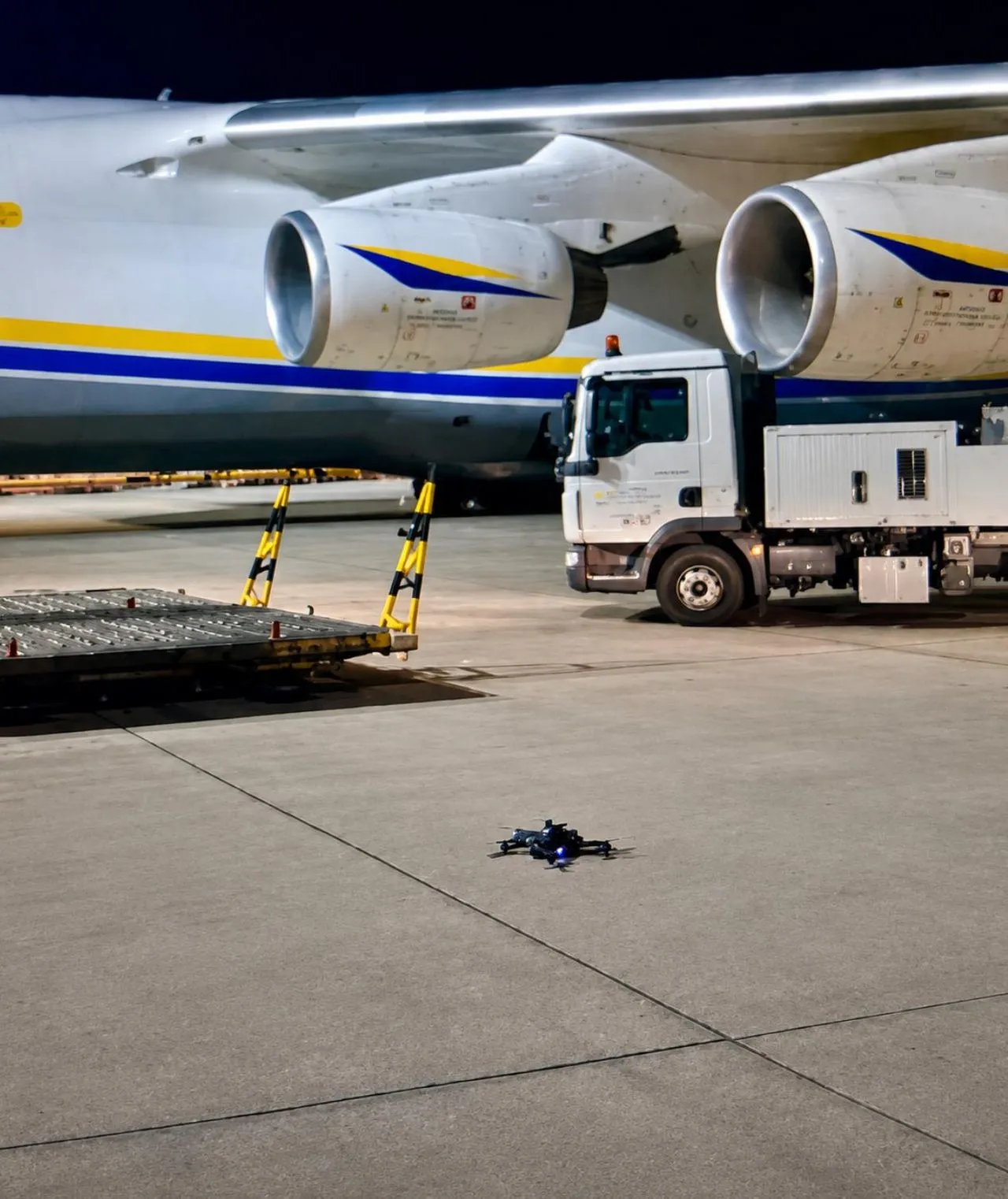
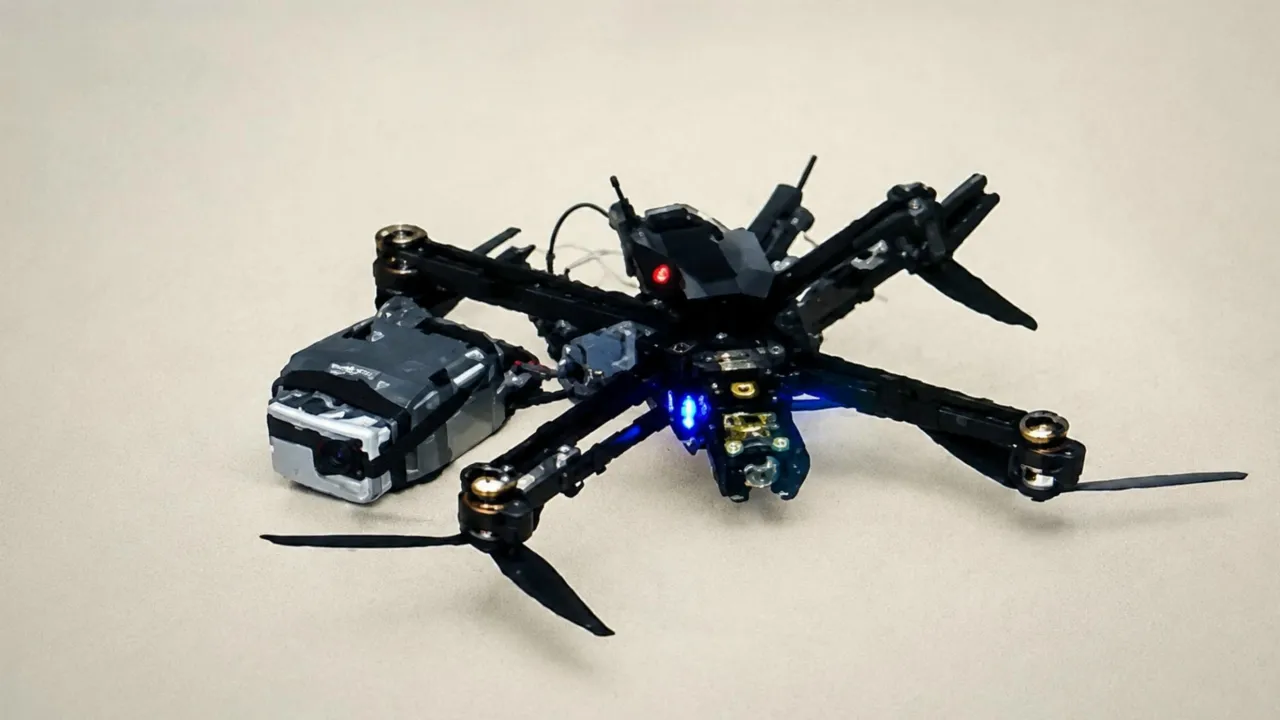
German law enforcement agencies and the Dresden public prosecutor's office are investigating the discovery of a drone on the apron of Leipzig/Halle Airport. An airport employee spotted the drone in close proximity to a Ukrainian An-124-100 Ruslan cargo plane (Antonov Airlines) that was parked there. According to preliminary reports, the discovered UAV was armed with an improvised explosive device (IED) containing ammonium nitrate and a detonator. The IED failed to detonate due to a defective detonator. On-site specialists removed the detonator and carried out a controlled destruction of the drone.
The runways at Leipzig/Halle Airport were closed while emergency services worked. A DHL flight was forced to go around and abort its landing. While climbing, approximately 6 kilometers from the airport, it collided in mid-air with an unknown object (presumably a second UAV). The aircraft landed safely in Hanover, where a technical inspection found damage to the nose cone.
The investigation into the incident has been transferred to the Department for National Defense and Counter-Sabotage. German investigators are not ruling out the possibility that Russia may have attempted something similar to Ukraine's Operation Spiderweb, but targeting European infrastructure facilities. However, no evidence is currently available.
Information