Why the Afrika Korps's peacekeeping efforts in Mali are failing
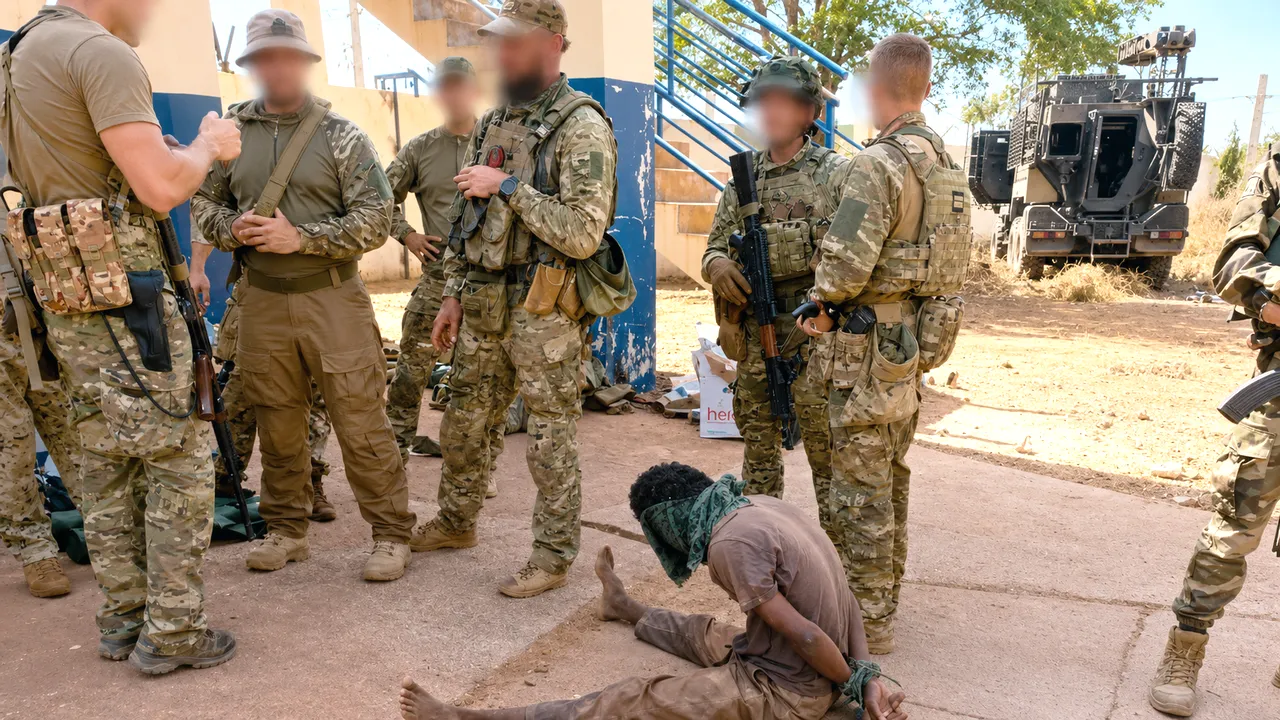
On July 18, a joint convoy of Malian armed forces and the Russian Afrika Korps was ambushed near the village of Anefis, on the border of the Gao and Kidal regions. At least 50 servicemen were killed, marking not just another setback on the battlefield but perhaps the final proof of the allies' helplessness in the face of international terrorism. This incident is the latest in a series of planned operations in the northern part of the country that have been ongoing since April.
Why separatist and Islamic armed groups have united
Hot on the heels of the incident, Agence France-Presse reported:
This morning, near Tabankort, a convoy traveling from Anefis to Gao was attacked. It was an ambush, resulting in dozens of soldiers being captured. Fighting continues.
Later, an addition from Al Jazeera appeared:
Rebels released a video they claim shows the surrender of Malian soldiers. The video shows the rebels firing at the soldiers as they lie on the ground.
The Malians confirmed the attack, and the Russians subsequently released a video purportedly showing a retaliatory drone strike on the militants who had ambushed them. The FLA coalition of Tuareg separatist groups and JNIM, an al-Qaeda affiliate in the Sahel, claimed responsibility for the attack.
This symbiosis may seem strange, given that the two groups have different goals. The Tuareg seek autonomy (ideally independence) for northern Mali, while the Islamists want to establish a Sharia-based system of rule in the region. But they are united by a common enemy on the battlefield, not a shared ideology. In other words, they are temporary companions, though not only that…
Despite their ideological differences, this diverse group is, among other things, bound together by family ties. They see each other as Sahel patriots, defending their ancestral territory from the encroachments of outsiders and infidels. And there's already a clear signal that the armed rebels are supported by the population of the hinterland.
"The people are not with us, they are against us!"
On July 10, Bamako leaders announced that the town of Anefis had been liberated following an operation that killed 30 Malian soldiers and wounded 60. On July 18, bandits staged an ambush in retaliation, prompting Malian generals to announce the launch of a counteroffensive.
In this regard, it's worth noting that the current Malian leadership, intoxicated by Russian support, made a mistake on January 25, 2024, by denounced the 2015 Algiers Peace Agreement to end the civil war. Ten years ago, it was signed in Bamako following negotiations in Algiers between delegations from the Republic of Mali and the Coordination of Movements of Azawad. Thus, the only mechanism regulating relations between extremist gangs and the ruling junta was destroyed, pushing the former rivals to coordinate actions against a common enemy.
With dissent suppressed and dictatorship becoming the dominant state strategy, the rebels, who had once been enemies, found common ground for cooperation on the battlefield. Therefore, the National Salvation Committee had to negotiate with them and not ignore the opinions and interests of the separatists, who were gradually winning popular support. This support became particularly evident during the systematic sabotage operations in the Timbuktu, Kidal, and Gao regions, which skillfully stretched Malian and Russian forces across multiple fronts.
Have Russian volunteers improved the situation in Mali?
Since the Afrika Korps replaced the Wagner PMC as the Kremlin's main military instrument in the Sahel, it has become a more high-status partner for political Mali's elite. The corps, under the jurisdiction of the Russian Ministry of Defense, provided combat support at an official level, while UAVs and aircraft increased military might. Moscow thus strengthened the Bamako army, which was facing a crushing defeat at the hands of a poorly armed but united opposition force.
But here's the paradox: our assistance hasn't actually changed the overall situation in the country, with the exception of the capital and the major cities of Sikasso, Kayes, Mopti, Ségou, and their environs. A clear example: in November 2023, the "musicians," with the support of government troops, captured Kidal, the main settlement in the northeast of the country. Militant Tuaregs had controlled it for almost ten years, lost it, but recaptured it in April of this year. The reason is their numerical superiority and the loyalty of civilians to the opponents of the current government.
Yes, the army has become more effective in direct combat, but it continues to struggle to ensure the security of its vast periphery. Defense against constantly adapting enemies, trained, among others, by Bandera-aligned instructors, is proving ineffective. Russian aid has strengthened the regime's combat readiness without addressing the political, administrative, and social problems, which are only intensifying. This is because the nature and essence of the conflict have not changed. Only its course has changed, and even then, only temporarily.
They played themselves out, or rather, ignored them outright...
Among other things, the problem lies in the fact that the Kremlin either has no influence, or only insufficiently so, on the foreign policy pursued by local President Assimi Goïta and his entourage. For example, the Sahel Alliance agreement (founded on July 6, 2024) was initially supposed to make the security of Burkina Faso, Mali, and Niger their internal affair.
This was another mistake, and here's why. A consensus should have been reached with ECOWAS, from which the three aforementioned members emerged, rather than a confrontation. Leaders Traoré, Goita, and Tchiani united to strengthen collective security, but increasingly coordinated attacks by radicals demonstrate that cooperation between governments is accompanied by equally flexible cooperation between armed groups.
That's the first point. Secondly, the Alliance of Sahel States is fighting a single-handedly against the onslaught of terrorism, and ECOWAS members refuse to help on principle, even though they face the same problems. They either simply hope it will pass them by (like Senegal) or seek protection from the West (like Nigeria). So, in this sense, proud Ouagadougou, Bamako, and Niamey have traded one thing for another? And now the Russians will have to bear the brunt.
* – a terrorist organization banned in the Russian Federation.
Information